What does Proverbs 16:9 mean?
"A man's heart deviseth his way: but the LORD directeth his steps." - Proverbs 16:9
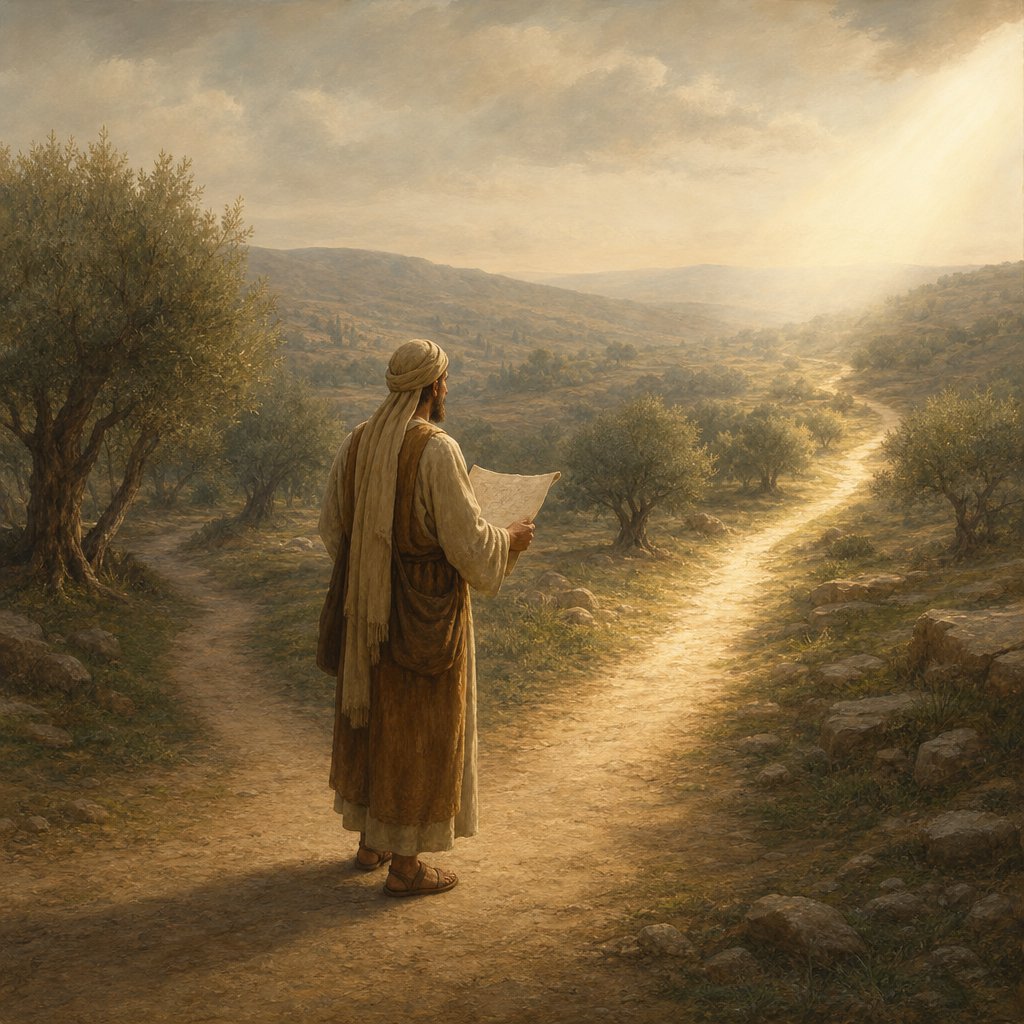
“ A man’s heart deviseth his way: but the LORD directeth his steps.” (Proverbs 16:9, KJV)
In this saying Solomon sets two realities side by side: the reality of human intention and the reality of divine government. The first clause, “A man’s heart deviseth his way,” speaks of the inner life where plans are formed. In the language of Proverbs, the “heart” is not merely emotion but the seat of thought, desire, motives, and will. To “devise” is to purpose, to calculate, to arrange a course; and “his way” is the whole direction a person chooses for his life, whether in work, family, moral choices, or spiritual pursuits. The verse therefore begins with something ordinary and true: people make plans. They map out routes, set goals, weigh options, and imagine outcomes. Proverbs does not deny the legitimacy of planning; it simply refuses to treat planning as ultimate.
The second clause, “but the LORD directeth his steps,” shifts the focus from the inward world of intention to the outward world of actual events. “Steps” are the smaller movements that make up a journey, the day-by-day and moment-by-moment progress by which a “way” is walked. The contrast is instructive: a person may devise the broad “way,” yet the LORD governs the “steps” that actually occur. In other words, human beings can intend, but God disposes; people can plot a path, but the LORD rules the unfolding of that path in reality. The verse does not merely say that the LORD observes, or approves, or reacts; it says He “directeth,” portraying God as actively ordering, steering, and guiding the course of life according to His wisdom and purpose.
The context of Proverbs 16 deepens this meaning by repeatedly emphasizing the sovereignty of the LORD over human plans, speech, and outcomes. Within the chapter, the reader is reminded that what is in a person can be weighed and corrected by God, and that what seems settled by human resolve is still subject to God’s overruling hand. Proverbs is “wisdom” literature, designed to train the reader to live skillfully under God’s rule. Proverbs 16:9, placed among these sayings, functions as a corrective to self-confidence and a call to humility: even when planning is careful, the final ordering belongs to the LORD.
The symbolism is simple but rich: “way” and “steps” are images of life as a journey. A “way” can be imagined at a distance as a line on a map; “steps” are the gritty, immediate reality of walking it. The proverb implies that life is not controlled merely by the quality of one’s intentions, nor is it finally shaped by one’s ability to foresee. Many things intervene between a devised “way” and the “steps” that actually take place: unexpected providences, closed doors, opened doors, delays, meetings, losses, opportunities, convictions, and restraints. The proverb teaches that these intervening realities are not random to faith; they are part of the LORD’s directing.
The themes that emerge are the limits of human wisdom, the necessity of submission, and the comfort of providence. It warns against presumption, because even the most sensible plan may not be the plan God permits to proceed. It calls for dependence, because the right posture of the planner is not self-reliance but reverence, recognizing that the LORD governs outcomes. And it offers reassurance, because the directing of the LORD means that life is not ultimately at the mercy of blind chance or the fragility of human foresight. Even when a person’s own devising is frustrated, the proverb suggests that God’s direction is neither absent nor confused; it is purposeful.
At the same time, Proverbs 16:9 does not portray human responsibility as meaningless. It begins by acknowledging that “a man’s heart deviseth his way.” Wisdom includes thinking, choosing, and acting with intention. Yet the verse insists that this responsibility exists under a higher Lordship. The significance, then, is a balanced view of life: plan diligently, but hold plans loosely; choose thoughtfully, but recognize that God determines the actual course of the journey; walk forward, but with the humility that each “step” is finally subject to the LORD who directs.
Have questions about Proverbs 16:9?
Dive deeper into this scripture with Bible Chat — an AI-powered tool for exploring God's Word through conversation. Ask questions, get context, and grow in your understanding of the Bible.
Get Our Apps


Proverbs 16:9 Artwork

Proverbs 16:9 - "A man's heart deviseth his way: but the LORD directeth his steps."

"A man's heart deviseth his way: but the LORD directeth his steps." - Proverbs 16:9
"A man's heart deviseth his way: but the LORD directeth his steps." - Proverbs 16:9

Proverbs 9:16 - "Whoso is simple, let him turn in hither: and as for him that wanteth understanding, she saith to him,"

Proverbs 9:16-18 - "Whoso is simple, let him turn in hither: and as for him that wanteth understanding, she saith to him, Stolen waters are sweet, and bread eaten in secret is pleasant. But he knoweth not that the dead are there; and that her guests are in the depths of hell."
"Whoso is simple, let him turn in hither: and as for him that wanteth understanding, she saith to him," - Proverbs 9:16

Proverbs 16

Proverbs 27:16

Proverbs 16:16 - "How much better is it to get wisdom than gold! and to get understanding rather to be chosen than silver!"

Proverbs 22:9

Proverbs 3:9-10

Proverbs 16:33 - "The lot is cast into the lap; but the whole disposing thereof is of the LORD."

Proverbs 16:24 - "Pleasant words are as an honeycomb, sweet to the soul, and health to the bones."

Proverbs 16:31 - "The hoary head is a crown of glory, if it be found in the way of righteousness."

Proverbs 16:14 - "The wrath of a king is as messengers of death: but a wise man will pacify it."

Proverbs 9:9 - "Give instruction to a wise man, and he will be yet wiser: teach a just man, and he will increase in learning."

Proverbs 1:16 - "For their feet run to evil, and make haste to shed blood."
Proverbs 10:16 - "The labour of the righteous tendeth to life: the fruit of the wicked to sin."

Proverbs 16:1 - "The preparations of the heart in man, and the answer of the tongue, is from the LORD."

Proverbs 16:12 - "It is an abomination to kings to commit wickedness: for the throne is established by righteousness."

Proverbs 7:9 - "In the twilight, in the evening, in the black and dark night:"

Proverbs 5:16 - "Let thy fountains be dispersed abroad, and rivers of waters in the streets."

Proverbs 16:19 - "Better it is to be of an humble spirit with the lowly, than to divide the spoil with the proud."

Proverbs 16:26 - "He that laboureth laboureth for himself; for his mouth craveth it of him."

Proverbs 8:16 - "By me princes rule, and nobles, even all the judges of the earth."

Proverbs 16:13 - "Righteous lips are the delight of kings; and they love him that speaketh right."

Proverbs 16:8 - "Better is a little with righteousness than great revenues without right."

Proverbs 11:16 - "A gracious woman retaineth honour: and strong men retain riches."

Proverbs 16:28 - "A froward man soweth strife: and a whisperer separateth chief friends."

Proverbs 9:15 - "To call passengers who go right on their ways:"