What does Numbers 5:8 mean?
"But if the man have no kinsman to recompense the trespass unto, let the trespass be recompensed unto the LORD, even to the priest; beside the ram of the atonement, whereby an atonement shall be made for him." - Numbers 5:8
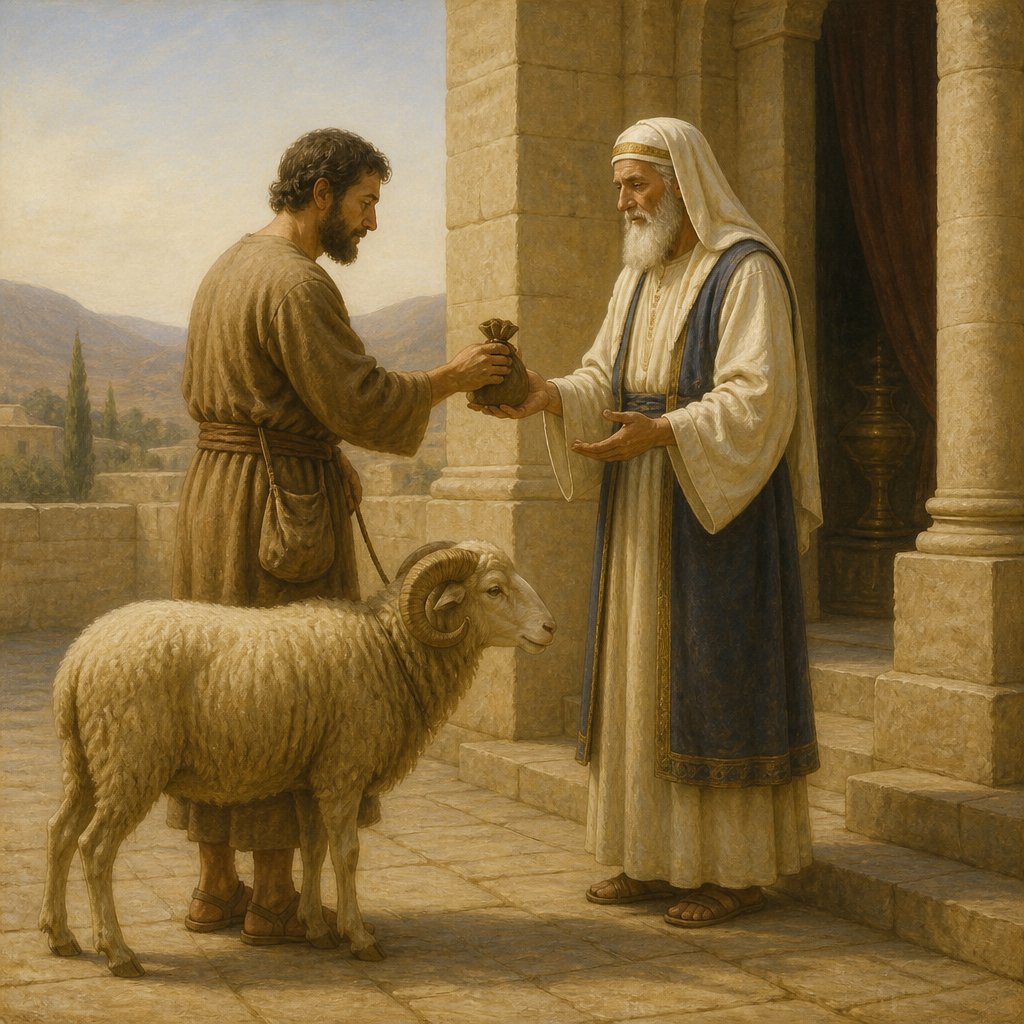
Numbers 5:8 (KJV) states: "But if the man have no kinsman to recompense the trespass unto, let the trespass be recompensed unto the Lord, even to the priest; beside the ram of the atonement, whereby an atonement shall be made for him."
This verse is from the book of Numbers, which is the fourth book of the Hebrew Bible and the fourth of five books of the Law, often referred to as the Pentateuch. The book of Numbers primarily focuses on the Israelites' journey from Mount Sinai to the edge of the Promised Land. It contains a census of the Israelites, as well as various laws and regulations for their journey and life in the wilderness.
The specific verse, Numbers 5:8, is part of a larger passage that deals with the purification of individuals who have wronged someone else and the process of making things right with both the wronged party and with God. In this verse, the focus is on what should be done if the person who was wronged has no living kinsman to whom the trespass can be recompensed.
The verse begins with the scenario of a man who has no kinsman to recompense the trespass unto. In this case, the trespass is to be recompensed unto the Lord, even to the priest. This means that instead of being able to make amends directly with a family member, the individual is to make restitution to the Lord and to the priest. This was a way of ensuring that justice and righteousness were upheld, even in cases where the typical means of recompense were not available.
The verse also mentions "the ram of the atonement, whereby an atonement shall be made for him." This refers to the practice of offering a ram as a sacrifice for atonement. Atonement was a central concept in the Old Testament, and it involved the process of reconciliation and forgiveness for sins or wrongdoings. By offering a ram as a sacrifice, the individual was seeking atonement from God for their trespass.
The themes present in this verse include the importance of justice, restitution, and atonement in the context of the Israelites' covenant with God. The verse emphasizes the idea that wrongdoing must be addressed and rectified, even if traditional means of recompense are not available. It also underscores the significance of seeking forgiveness and reconciliation with God through the atonement process.
In the broader context of the book of Numbers, this verse is part of the larger framework of laws and regulations that were intended to govern the Israelites' behavior and ensure that they lived in accordance with God's will. The book of Numbers contains numerous rules and instructions for maintaining purity, justice, and holiness within the community.
Symbolically, this verse can be seen as a representation of the principles of justice, accountability, and spiritual reconciliation. It serves as a reminder of the importance of acknowledging and making amends for our wrongdoings, both to those we have harmed and to God. The practice of offering a sacrifice for atonement symbolizes the need for repentance and seeking forgiveness in order to restore right relationships with God and others.
Overall, Numbers 5:8 (KJV) offers valuable insights into the moral and spiritual obligations of the Israelites, as well as timeless principles of justice and atonement that continue to resonate with believers today. It serves as a reminder of the significance of seeking reconciliation and forgiveness, both with our fellow human beings and with our Creator.
Have questions about Numbers 5:8?
Dive deeper into this scripture with Bible Chat — an AI-powered tool for exploring God's Word through conversation. Ask questions, get context, and grow in your understanding of the Bible.
Get Our Apps


Numbers 5:8 Artwork

Numbers 5:8 - "But if the man have no kinsman to recompense the trespass unto, let the trespass be recompensed unto the LORD, even to the priest; beside the ram of the atonement, whereby an atonement shall be made for him."
"But if the man have no kinsman to recompense the trespass unto, let the trespass be recompensed unto the LORD, even to the priest; beside the ram of the atonement, whereby an atonement shall be made for him." - Numbers 5:8

Numbers 8:5 - "¶ And the LORD spake unto Moses, saying,"

"¶ And the LORD spake unto Moses, saying," - Numbers 8:5

Numbers 5:5 - "¶ And the LORD spake unto Moses, saying,"

Numbers 14:8

Numbers 14:8

numbers 25:8

numbers 25:8

Numbers 14:8

Numbers 4:8

Numbers 11:5

Numbers 26:8 - "And the sons of Pallu; Eliab."

"For ye were sometimes darkness, but now are ye light in the Lord: walk as children of light:" - Ephesians 5:8

Numbers 4:7-8

Numbers 1:8 - "Of Issachar; Nethaneel the son of Zuar."

Numbers 13:8 - "Of the tribe of Ephraim, Oshea the son of Nun."

"¶ And the LORD spake unto Moses, saying," - Numbers 5:5

Numbers 8:1 - "And the LORD spake unto Moses, saying,"

Numbers 8:23 - "¶ And the LORD spake unto Moses, saying,"

Numbers 3:5 - "¶ And the LORD spake unto Moses, saying,"

Numbers 13:5 - "Of the tribe of Simeon, Shaphat the son of Hori."

Numbers 5:1 - "And the LORD spake unto Moses, saying,"

Numbers 5:11 - "¶ And the LORD spake unto Moses, saying,"

Numbers 27:5 - "And Moses brought their cause before the LORD."

Luke 8:5-8

"And the sons of Pallu; Eliab." - Numbers 26:8

Numbers 6:8 - "All the days of his separation he is holy unto the LORD."

Numbers 8:6 - "Take the Levites from among the children of Israel, and cleanse them."

Numbers 33:5 - "And the children of Israel removed from Rameses, and pitched in Succoth."