What does Numbers 32:39 mean?
"And the children of Machir the son of Manasseh went to Gilead, and took it, and dispossessed the Amorite which was in it." - Numbers 32:39

Numbers 32:39 (KJV) "And the children of Machir the son of Manasseh went to Gilead, and took it, and dispossessed the Amorite which was in it."
The verse Numbers 32:39 recounts the story of the children of Machir, the son of Manasseh, and their conquest of the land of Gilead. This passage holds significance both in its historical and symbolic implications.
In the context of the Book of Numbers, this verse is part of the narrative of the Israelites' journey from Egypt to the Promised Land. After wandering in the wilderness for forty years, the Israelites are now on the cusp of entering the land of Canaan. However, before they can do so, Moses and the leaders of the tribes of Reuben and Gad make a request to settle in the land east of the Jordan, known as Gilead. This verse is part of the account detailing the fulfillment of this request, as the children of Machir, a descendant of Manasseh, take possession of Gilead and dispossess the Amorites who were living there.
One of the prominent themes in Numbers 32:39 is the fulfillment of God's promises. Throughout the narrative of the Israelites' journey, God consistently fulfills His promises to them, despite their disobedience and doubts. The conquest of Gilead by the children of Machir is another testament to God's faithfulness in granting His people the land He had promised to them. It serves as a reminder of God's sovereignty and His ability to fulfill His promises, which is a recurring theme in the Bible.
Additionally, the verse highlights the theme of inheritance and ownership of the land. In the Old Testament, the concept of land and inheritance holds great significance, as it is intrinsically linked to God's covenant with His people. The conquest of Gilead by the children of Machir represents the fulfillment of their inheritance as descendants of Manasseh. It underscores the idea that the land belongs to the Israelites by divine right, and they are to take possession of it as a part of God's covenant with them.
Symbolically, the conquest of Gilead can be seen as a metaphor for the spiritual battles that believers face in their own lives. The land of Gilead, which was inhabited by the Amorites, represents the strongholds and obstacles that stand in the way of God's people. The victory of the children of Machir over the Amorites symbolizes the triumph of faith and obedience over adversity. It serves as a reminder that with God on our side, we can overcome any challenges or "Amorites" that may hinder us from possessing the blessings and promises of God.
In a broader theological context, Numbers 32:39 also points to the fulfillment of God's ultimate plan of redemption. The conquest of Gilead by the children of Machir foreshadows the future fulfillment of God's promises through the coming of Jesus Christ. In the New Testament, Jesus is portrayed as the ultimate fulfillment of God's promises to His people, and His death and resurrection bring about the ultimate conquest over sin and death.
In conclusion, Numbers 32:39 holds deep historical, symbolic, and theological significance in the biblical narrative. It serves as a poignant reminder of God's faithfulness in fulfilling His promises, the importance of inheritance and ownership in God's covenant with His people, and the spiritual victory that believers can experience through faith and obedience. Ultimately, it points to the greater fulfillment of God's redemptive plan through Jesus Christ.
Have questions about Numbers 32:39?
Dive deeper into this scripture with Bible Chat — an AI-powered tool for exploring God's Word through conversation. Ask questions, get context, and grow in your understanding of the Bible.
Get Our Apps


Numbers 32:39 Artwork

Numbers 32:39 - "And the children of Machir the son of Manasseh went to Gilead, and took it, and dispossessed the Amorite which was in it."

"And the children of Machir the son of Manasseh went to Gilead, and took it, and dispossessed the Amorite which was in it." - Numbers 32:39

Numbers 26:39 - "Of Shupham, the family of the Shuphamites: of Hupham, the family of the Huphamites."

Numbers 32:33

Numbers 22:39 - "And Balaam went with Balak, and they came unto Kirjath-huzoth."

Numbers 32:38
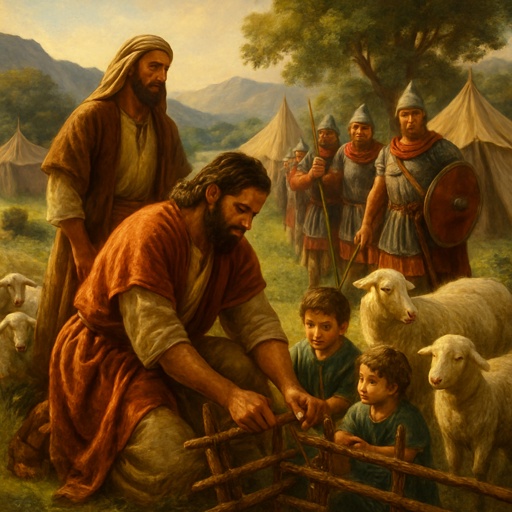
Numbers 32:16-18
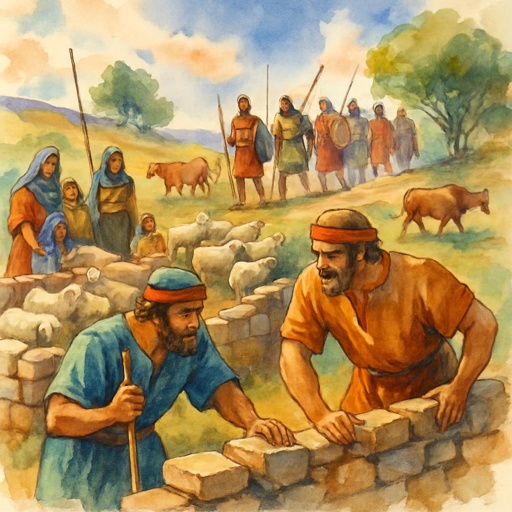
Numbers 32:16-18

Scene from book of numbers 14:39-45

Numbers 14:39 - "And Moses told these sayings unto all the children of Israel: and the people mourned greatly."

Jeremiah 32:39 - "And I will give them one heart, and one way, that they may fear me for ever, for the good of them, and of their children after them:"

Numbers 1:39 - "Those that were numbered of them, even of the tribe of Dan, were threescore and two thousand and seven hundred."

Numbers 32:35 - "And Atroth, Shophan, and Jaazer, and Jogbehah,"

Numbers 32:32 - "We will pass over armed before the LORD into the land of Canaan, that the possession of our inheritance on this side Jordan may be our's."

Numbers 33:39 - "And Aaron was an hundred and twenty and three years old when he died in mount Hor."

Numbers 7:39 - "One young bullock, one ram, one lamb of the first year, for a burnt offering:"

Numbers 31:39 - "And the asses were thirty thousand and five hundred; of which the LORD'S tribute was threescore and one."

Exodus 39:32 - "¶ Thus was all the work of the tabernacle of the tent of the congregation finished: and the children of Israel did according to all that the LORD commanded Moses, so did they."

Numbers 14:32 - "But as for you, your carcases, they shall fall in this wilderness."

Numbers 32:37 - "And the children of Reuben built Heshbon, and Elealeh, and Kirjathaim,"

Numbers 26:32 - "And of Shemida, the family of the Shemidaites: and of Hepher, the family of the Hepherites."

Numbers 32:34 - "¶ And the children of Gad built Dibon, and Ataroth, and Aroer,"

Numbers 33:32 - "And they removed from Bene-jaakan, and encamped at Hor-hagidgad."

Numbers 7:32 - "One golden spoon of ten shekels, full of incense:"

"Of Shupham, the family of the Shuphamites: of Hupham, the family of the Huphamites." - Numbers 26:39

Numbers 32:10 - "And the LORD'S anger was kindled the same time, and he sware, saying,"

Numbers 32:36 - "And Beth-nimrah, and Beth-haran, fenced cities: and folds for sheep."

Numbers 32:3 - "Ataroth, and Dibon, and Jazer, and Nimrah, and Heshbon, and Elealeh, and Shebam, and Nebo, and Beon,"

Numbers 16:39 - "And Eleazar the priest took the brasen censers, wherewith they that were burnt had offered; and they were made broad plates for a covering of the altar:"

"And Balaam went with Balak, and they came unto Kirjath-huzoth." - Numbers 22:39