What does Numbers 30:11 mean?
"And her husband heard it, and held his peace at her, and disallowed her not: then all her vows shall stand, and every bond wherewith she bound her soul shall stand." - Numbers 30:11
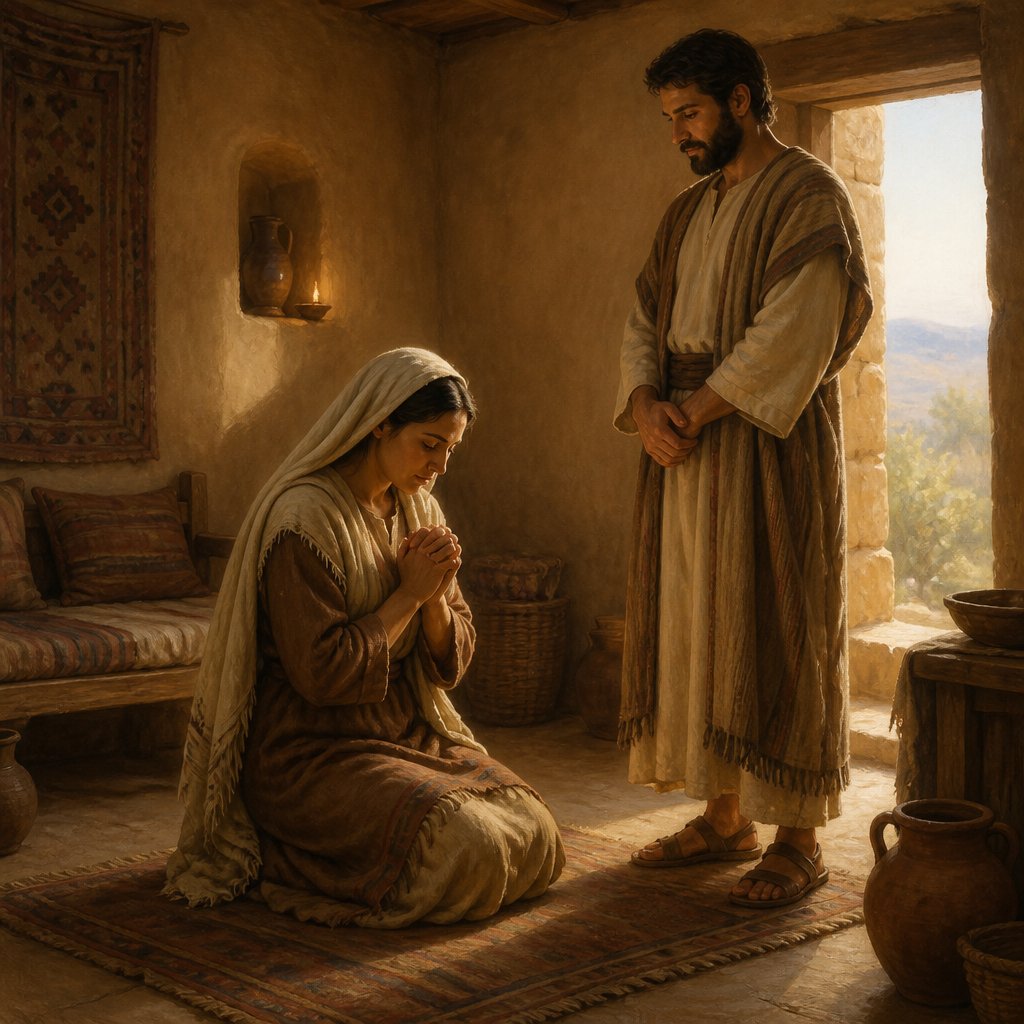
Number 30:11 from the King James Version of the Bible states, "And her husband heard it, and held his peace at her in the day that he heard it: then her vows shall stand, and her bonds wherewith she bound her soul shall stand." This verse is found in the Book of Numbers which is the fourth book of the Hebrew Bible and the Christian Old Testament. The Book of Numbers primarily focuses on the Israelites' journey from Mount Sinai to the borders of the Promised Land.
This particular verse is found in a section that deals with the various laws and regulations related to vows made by women. In the context of the verse, it speaks specifically about a wife's vow and the authority over her vow that her husband has. The verse emphasizes the power of a woman's vow when her husband remains silent upon hearing it. If the husband hears his wife's vow and does not oppose it, then her vow stands and she will be held accountable to fulfill it.
This verse brings to light important themes such as the role and authority of husbands and wives within a marriage, as well as the significance of vows and commitments made before God. It also reflects the cultural and social norms of the time, where a woman's vow was subject to the approval or disapproval of her husband.
One of the key themes in this verse is the concept of authority within marriage. In ancient Israelite society, the husband held a position of authority over his wife, and his approval or disapproval of her vows carried significant weight. This verse is part of the Old Testament Law and should be interpreted in its historical and cultural context. While this text may not directly apply to modern marriages, it does offer insight into the dynamics of marriage and authority in ancient Israelite society.
Another important theme in this verse is the concept of vows and commitments. In the Bible, making a vow or oath is a serious matter, and fulfilling one's vows is considered a moral and spiritual obligation. This verse highlights the consequences of making a vow and the importance of honoring it. It also underscores the idea that the words we speak hold weight and should not be taken lightly.
The symbolism within this verse lies in the power of words and the significance of a woman's vow. The verse portrays the spoken word as a binding force, capable of creating obligations and responsibilities. It also symbolizes the importance of trust and respect within marriage, as the husband's silence indicates his trust in his wife's judgment and commitment.
In conclusion, Numbers 30:11 from the King James Version of the Bible conveys important themes related to marriage, vows, and authority. It offers insight into the cultural and social dynamics of ancient Israelite society, as well as the significance of making and fulfilling commitments. While the verse may not directly apply to modern marriages, it provides valuable lessons about the weight of our words and the importance of trust and respect within relationships.
Have questions about Numbers 30:11?
Dive deeper into this scripture with Bible Chat — an AI-powered tool for exploring God's Word through conversation. Ask questions, get context, and grow in your understanding of the Bible.
Get Our Apps


Numbers 30:11 Artwork

Numbers 30:11 - "And her husband heard it, and held his peace at her, and disallowed her not: then all her vows shall stand, and every bond wherewith she bound her soul shall stand."
"And her husband heard it, and held his peace at her, and disallowed her not: then all her vows shall stand, and every bond wherewith she bound her soul shall stand." - Numbers 30:11

Numbers 11:30 - "And Moses gat him into the camp, he and the elders of Israel."

Psalm 30:11

"And Moses gat him into the camp, he and the elders of Israel." - Numbers 11:30

Numbers 23:30

Numbers 33:30 - "And they departed from Hashmonah, and encamped at Moseroth."

Making a vow to the Lord. Numbers 30

Numbers 28:30 - "And one kid of the goats, to make an atonement for you."

Numbers 26:30 - "These are the sons of Gilead: of Jeezer, the family of the Jeezerites: of Helek, the family of the Helekites:"

Numbers 3:30 - "And the chief of the house of the father of the families of the Kohathites shall be Elizaphan the son of Uzziel."

Numbers 29:30 - "And their meat offering and their drink offerings for the bullocks, for the rams, and for the lambs, shall be according to their number, after the manner:"

Numbers 2:30 - "And his host, and those that were numbered of them, were fifty and three thousand and four hundred."
Numbers 11

Numbers 23:30 - "And Balak did as Balaam had said, and offered a bullock and a ram on every altar."

Numbers 30:10 - "And if she vowed in her husband's house, or bound her soul by a bond with an oath;"

Numbers 7:30 - "¶ On the fourth day Elizur the son of Shedeur, prince of the children of Reuben, did offer:"

Genesis 30:10-11

Numbers 32:30 - "But if they will not pass over with you armed, they shall have possessions among you in the land of Canaan."

Leviticus 11:30 - "And the ferret, and the chameleon, and the lizard, and the snail, and the mole."

Numbers 11:17

Exodus 30:11 - "¶ And the LORD spake unto Moses, saying,"

Genesis 11:30 - "But Sarai was barren; she had no child."

"And they departed from Hashmonah, and encamped at Moseroth." - Numbers 33:30
Numbers 11 quail

Numbers 11:15

Numbers 11:5

1 Kings 11:30-31

1 Kings 11:30-31

1 Kings 11:30-31