What does Numbers 29:33 mean?
"And their meat offering and their drink offerings for the bullocks, for the rams, and for the lambs, shall be according to their number, after the manner:" - Numbers 29:33
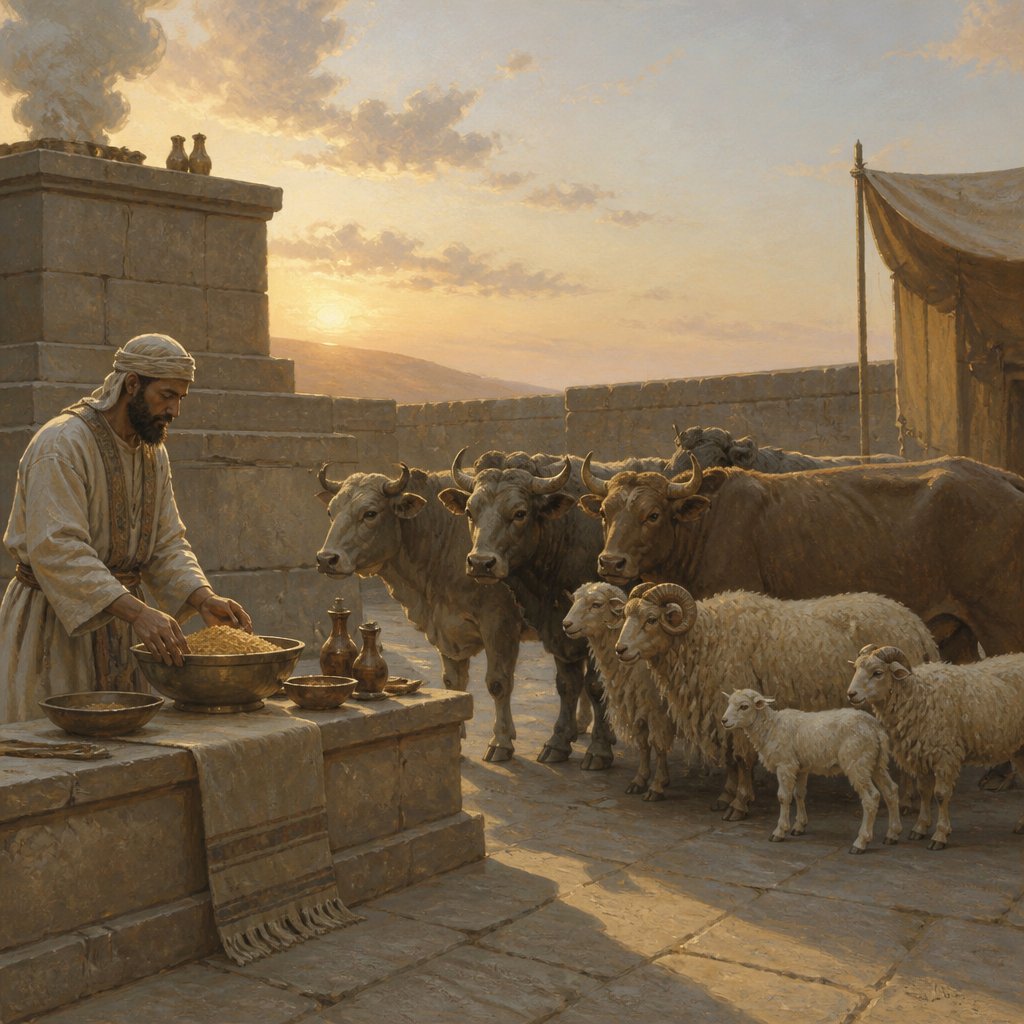
Numbers 29:33 in the King James Version of the Bible reads: "And ye shall offer a burnt offering, a sacrifice made by fire, of a sweet savour unto the Lord; one young bullock, one ram, and seven lambs of the first year; they shall be unto you without blemish."
This verse comes from the book of Numbers, which is the fourth book of the Bible. It is a part of the Torah, the first five books of the Old Testament, which are attributed to Moses. The book of Numbers details the Israelites' journey through the wilderness and their experiences with God.
In this particular verse, God is instructing the Israelites on the offerings they are to bring to Him. The burnt offering, also known as the whole burnt offering, was a type of sacrifice in which the entire animal was consumed by fire on the altar. This act symbolized complete surrender and dedication to God.
The specific animals mentioned - a young bullock, a ram, and seven lambs - were to be without blemish. This requirement reflected the holiness and purity of God, as only the best and unblemished animals were deemed worthy for sacrifice. The number seven is also significant in biblical numerology, representing completeness and perfection.
The phrase "a sweet savour unto the Lord" signifies that these offerings were pleasing and acceptable to God. The aroma of the burning sacrifice was symbolic of the pleasing nature of the Israelites' obedience and worship to God. Throughout the Bible, the concept of a pleasing aroma is used metaphorically to describe acts of worship and offerings that are acceptable to the Lord.
The burnt offerings were a key element of the Israelites' worship and were an integral part of their relationship with God. By offering these sacrifices, the Israelites demonstrated their reverence and obedience to God. The act of sacrifice was also a way for the Israelites to seek atonement for their sins and to express gratitude for God's provision and faithfulness.
In a broader context, this verse is a reminder of the importance of offering our best to God. Just as the Israelites were instructed to bring unblemished animals for sacrifice, we are called to offer our lives as living sacrifices, holy and pleasing to God (Romans 12:1). This means giving God our wholehearted devotion, surrendering our will to His, and striving for a life of holiness and righteousness.
The symbolism of the burnt offering also points to Jesus Christ as the ultimate sacrifice for the forgiveness of sins. The New Testament describes Jesus as the "Lamb of God" who takes away the sins of the world (John 1:29). His sacrifice on the cross provides redemption and atonement for all who believe in Him, fulfilling the need for further animal sacrifices.
Overall, Numbers 29:33 serves as a reminder of the importance of offering our best to God, seeking His pleasure and demonstrating our devotion. It also points to the ultimate sacrifice of Jesus Christ, whose death and resurrection provide salvation and reconciliation with God. This verse encourages believers to live lives of dedication and worship, giving honor and glory to the Lord.
Have questions about Numbers 29:33?
Dive deeper into this scripture with Bible Chat — an AI-powered tool for exploring God's Word through conversation. Ask questions, get context, and grow in your understanding of the Bible.
Get Our Apps


Numbers 29:33 Artwork

Numbers 29:33 - "And their meat offering and their drink offerings for the bullocks, for the rams, and for the lambs, shall be according to their number, after the manner:"

"And their meat offering and their drink offerings for the bullocks, for the rams, and for the lambs, shall be according to their number, after the manner:" - Numbers 29:33

Numbers 33:29 - "And they went from Mithcah, and pitched in Hashmonah."

"And they went from Mithcah, and pitched in Hashmonah." - Numbers 33:29

2 Chronicles 29:33 - "And the consecrated things were six hundred oxen and three thousand sheep."

Numbers 33:33 - "And they went from Hor-hagidgad, and pitched in Jotbathah."

Numbers 32:33

"And they went from Hor-hagidgad, and pitched in Jotbathah." - Numbers 33:33

Numbers 31:33 - "And threescore and twelve thousand beeves,"

Job 33:29 - "Lo, all these things worketh God oftentimes with man,"

Numbers 33:18 - "And they departed from Hazeroth, and pitched in Rithmah."

Numbers 33:43 - "And they departed from Punon, and pitched in Oboth."

Numbers 33:42 - "And they departed from Zalmonah, and pitched in Punon."

Numbers 33:34 - "And they removed from Jotbathah, and encamped at Ebronah."

Numbers 33:21 - "And they removed from Libnah, and pitched at Rissah."

Numbers 33:13 - "And they departed from Dophkah, and encamped in Alush."

Numbers 33:27 - "And they departed from Tahath, and pitched at Tarah."

Numbers 33:22 - "And they journeyed from Rissah, and pitched in Kehelathah."

Numbers 33:28 - "And they removed from Tarah, and pitched in Mithcah."

Numbers 33:26 - "And they removed from Makheloth, and encamped at Tahath."

Numbers 29:7

Numbers 33:25 - "And they removed from Haradah, and pitched in Makheloth."

Numbers 33:30 - "And they departed from Hashmonah, and encamped at Moseroth."

Numbers 33:24 - "And they removed from mount Shapher, and encamped in Haradah."

Numbers 33:41 - "And they departed from mount Hor, and pitched in Zalmonah."

Numbers 33:17 - "And they departed from Kibroth-hattaavah, and encamped at Hazeroth."

Numbers 33:31 - "And they departed from Moseroth, and pitched in Bene-jaakan."

Numbers 33:19 - "And they departed from Rithmah, and pitched at Rimmon-parez."

Numbers 33:35 - "And they departed from Ebronah, and encamped at Ezion-gaber."
Numbers 33:23 - "And they went from Kehelathah, and pitched in mount Shapher."