What does Numbers 26:37 mean?
"These are the families of the sons of Ephraim according to those that were numbered of them, thirty and two thousand and five hundred. These are the sons of Joseph after their families." - Numbers 26:37
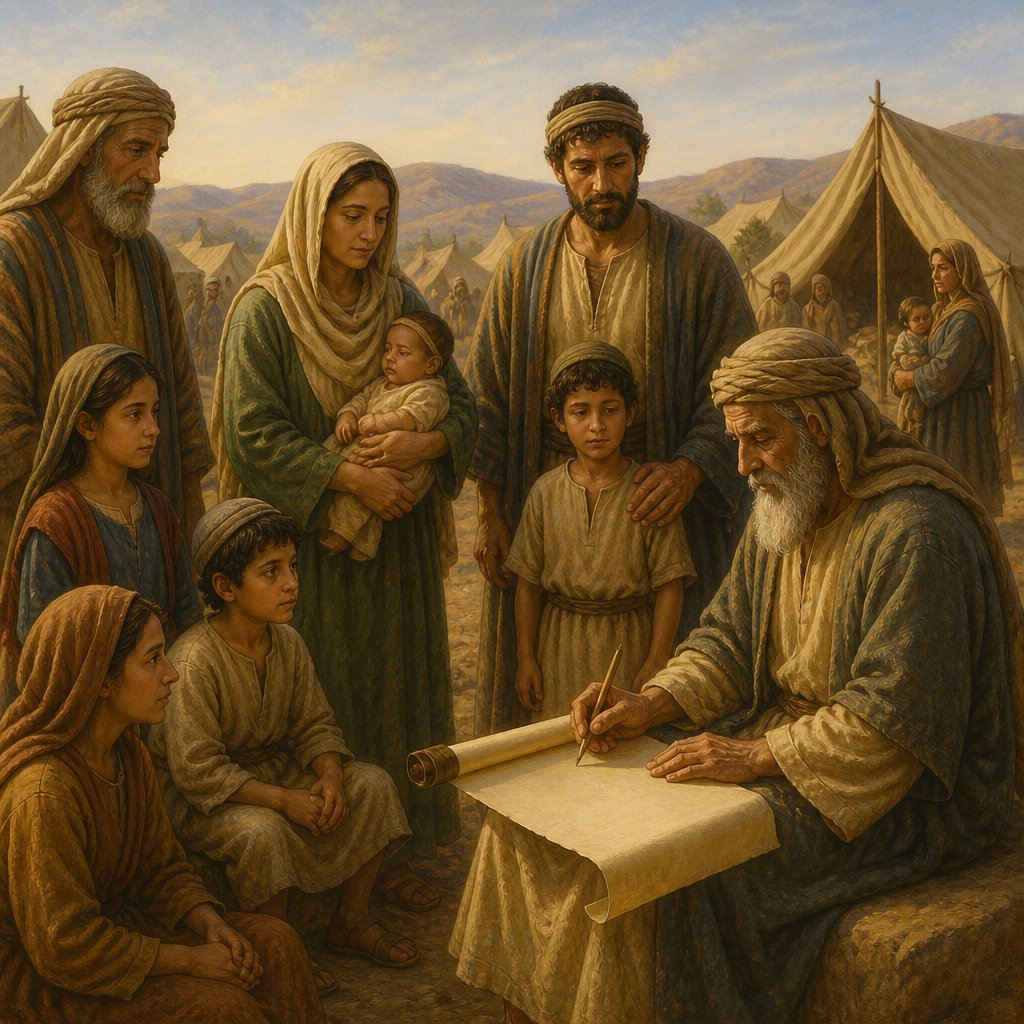
Numbers 26:37 (KJV) reads: “These are the families of the sons of Ephraim according to those that were numbered of them, thirty and two thousand and five hundred. These are the sons of Joseph after their families.”
This verse is part of the book of Numbers in the Old Testament, which is the fourth book of the Bible. It is a historical account of the Israelites journey from Mount Sinai to the plains of Moab on the border of Canaan.
In this specific verse, the focus is on the descendants of Ephraim, who was one of the sons of Joseph. The verse states that there were thirty-two thousand and five hundred individuals who were numbered as part of the families of the sons of Ephraim. This verse is part of a larger census that was conducted to count the number of Israelites who were able to go to war.
To truly understand the meaning and significance of this verse, it is important to delve into the context and background of the book of Numbers. The Israelites had been enslaved in Egypt and were led to freedom by Moses. They wandered in the wilderness for forty years as a result of their unfaithfulness and disobedience to God. During this time, Moses took two censuses of the people, one at the beginning of their journey and one towards the end. The purpose of these censuses was to organize the people for military purposes and to divide the land among the tribes of Israel.
In this verse, the focus is on the tribe of Ephraim, which was one of the twelve tribes of Israel. Ephraim was the son of Joseph, who was sold into slavery in Egypt by his brothers but eventually rose to power and became a key figure in the Egyptian government. Joseph, in turn, brought his family to live in Egypt during a time of famine.
The mention of “thirty-two thousand and five hundred” individuals in this verse is significant as it illustrates the size and strength of the tribe of Ephraim. The large number of people indicates that the tribe was populous and had the potential for military strength. This is in line with the overall theme of the book of Numbers, which is the organization and preparation of the Israelites for their entry into the Promised Land.
Furthermore, the reference to “the families of the sons of Ephraim” is a nod to the importance of family and lineage in the Bible. Genealogy and ancestry are highly valued in the Old Testament, as they were crucial in determining inheritance, land distribution, and tribal affiliation. This verse serves as a reminder of the significance of familial ties and the role of each tribe within the larger community of Israel.
In addition, the mention of Joseph in this verse is noteworthy. Joseph is a prominent figure in the book of Genesis, where his story is detailed. He was favored by his father, Jacob, and was sold into slavery by his jealous brothers. However, Joseph’s ability to interpret dreams ultimately led to his rise to power in Egypt and the eventual rescue of his family from famine.
The significance of mentioning Joseph in this verse lies in the fact that the tribe of Ephraim descended from him. Joseph’s legacy and the fulfillment of God’s promises to him are reflected in the prosperity and strength of his descendants. This serves as a testament to God’s faithfulness and the fulfillment of his covenant with the Israelites.
From a symbolic perspective, this verse can be seen as a representation of God’s faithfulness and provision for his people. The large number of Ephraimites signifies God’s blessings and the fulfillment of his promise to make the Israelites into a great nation. It also highlights the importance of unity and strength within the community, as reflected in the organization and enumeration of the tribes for warfare.
In conclusion, Numbers 26:37 (KJV) provides a detailed account of the descendants of Ephraim and their place within the larger community of Israel. It underscores the themes of family, lineage, and military organization that are prevalent throughout the book of Numbers. Through its mention of Joseph and the large number of Ephraimites, the verse also serves as a reminder of God’s faithfulness and the fulfillment of his promises to the Israelites. As such, it holds significant historical, cultural, and religious value within the context of the Old Testament and the larger biblical narrative.
Have questions about Numbers 26:37?
Dive deeper into this scripture with Bible Chat — an AI-powered tool for exploring God's Word through conversation. Ask questions, get context, and grow in your understanding of the Bible.
Get Our Apps


Numbers 26:37 Artwork

Numbers 26:37 - "These are the families of the sons of Ephraim according to those that were numbered of them, thirty and two thousand and five hundred. These are the sons of Joseph after their families."
"These are the families of the sons of Ephraim according to those that were numbered of them, thirty and two thousand and five hundred. These are the sons of Joseph after their families." - Numbers 26:37

Numbers 15:37 - "¶ And the LORD spake unto Moses, saying,"

Numbers 32:37 - "And the children of Reuben built Heshbon, and Elealeh, and Kirjathaim,"

Psalms 37:26 - "He is ever merciful, and lendeth; and his seed is blessed."

Numbers 3:37 - "And the pillars of the court round about, and their sockets, and their pins, and their cords."

Numbers 31:37 - "And the LORD'S tribute of the sheep was six hundred and threescore and fifteen."

Numbers 33:37 - "And they removed from Kadesh, and pitched in mount Hor, in the edge of the land of Edom."

Numbers 29:37 - "Their meat offering and their drink offerings for the bullock, for the ram, and for the lambs, shall be according to their number, after the manner:"

Matthew 26:37 - "And he took with him Peter and the two sons of Zebedee, and began to be sorrowful and very heavy."

Numbers 1:37 - "Those that were numbered of them, even of the tribe of Benjamin, were thirty and five thousand and four hundred."

Numbers 11:16-26

Numbers 26:8 - "And the sons of Pallu; Eliab."

"¶ And the LORD spake unto Moses, saying," - Numbers 15:37

Numbers 26:26 - "¶ Of the sons of Zebulun after their families: of Sered, the family of the Sardites: of Elon, the family of the Elonites: of Jahleel, the family of the Jahleelites."

Numbers 26:46 - "And the name of the daughter of Asher was Sarah."

Numbers 26:11 - "Notwithstanding the children of Korah died not."

Genesis 37:26 - "And Judah said unto his brethren, What profit is it if we slay our brother, and conceal his blood?"

Numbers 33:26 - "And they removed from Makheloth, and encamped at Tahath."

Numbers 14:37 - "Even those men that did bring up the evil report upon the land, died by the plague before the LORD."

Israelites taking census in Numbers 26

"And the children of Reuben built Heshbon, and Elealeh, and Kirjathaim," - Numbers 32:37

Numbers 26:52 - "¶ And the LORD spake unto Moses, saying,"

Numbers 26:36 - "And these are the sons of Shuthelah: of Eran, the family of the Eranites."

Numbers 26:53 - "Unto these the land shall be divided for an inheritance according to the number of names."

Numbers 26:39 - "Of Shupham, the family of the Shuphamites: of Hupham, the family of the Huphamites."

Numbers 26:31 - "And of Asriel, the family of the Asrielites: and of Shechem, the family of the Shechemites:"

Numbers 26:6 - "Of Hezron, the family of the Hezronites: of Carmi, the family of the Carmites."

Numbers 26:49 - "Of Jezer, the family of the Jezerites: of Shillem, the family of the Shillemites."

Numbers 26:24 - "Of Jashub, the family of the Jashubites: of Shimron, the family of the Shimronites."