What does Numbers 26:32 mean?
"And of Shemida, the family of the Shemidaites: and of Hepher, the family of the Hepherites." - Numbers 26:32

Numbers 26:32 in the King James Version (KJV) of the Bible reads: "And the sons of Jada the brother of Shammai; Jether, and Jonathan: and Jether died without children."
This verse is part of a larger passage in the book of Numbers that catalogues the genealogy of the Israelites as they prepare to enter the Promised Land. In this particular verse, we are given a glimpse into the family line of Jada, the brother of Shammai. We are told the names of Jada's sons, Jether and Jonathan, and we also learn that Jether died without children.
This verse, like many others in the Bible, may seem straightforward at first glance, but upon closer examination, we can uncover deeper meanings and themes. One of the central themes of this verse is the fragility and temporality of life. The fact that Jether died without children speaks to the idea that even the most promising and prosperous lineage can be cut short. It is a reminder of the unpredictable nature of life and the impermanence of human existence.
Further, the absence of offspring for Jether also carries significance in the context of ancient Israelite society. In biblical times, having children was of utmost importance, especially for men. It was seen as a way to carry on the family name and lineage, as well as a form of security in old age. The fact that Jether died without children would have been seen as a great loss for the continuation of his family line.
This verse also touches on the theme of legacy and inheritance. In ancient Israel, an individual's worth and influence were often measured by the descendants they left behind. By mentioning that Jether died without children, the verse highlights the potential end of his legacy and the void left by his passing. It serves as a poignant reminder of the impact that individuals can have on future generations through their actions and choices.
Symbolism can also be found in this verse. The name "Jether" can be translated to mean "abundance" or "excellence." Therefore, the fact that Jether died without children can be seen as a symbolic representation of the fleeting nature of earthly riches and success. It serves as a cautionary tale about the limits of human achievement and the ultimate futility of material wealth in the face of mortality.
Additionally, the names of the individuals mentioned in this verse hold significance. "Jada" means "knowing" or "wise," while "Shammai" means "renowned" or "famous." These names can be seen as indicative of the prominence and wisdom of the family line from which Jether and Jonathan come. The fact that Jether died without children adds a layer of tragedy to this narrative, highlighting the potential loss of the family's wisdom and renown.
In conclusion, Numbers 26:32 is a seemingly simple verse that holds deeper meanings and themes about the fragility of life, the importance of legacy, and the limits of human accomplishment. It serves as a reminder of the unpredictability of existence and the enduring impact of one's actions and choices. Through its exploration of lineage, inheritance, and symbolism, this verse offers valuable insights into the human experience and the eternal truths of the human condition as presented in the King James Version of the Bible.
Have questions about Numbers 26:32?
Dive deeper into this scripture with Bible Chat — an AI-powered tool for exploring God's Word through conversation. Ask questions, get context, and grow in your understanding of the Bible.
Get Our Apps


Numbers 26:32 Artwork

Numbers 26:32 - "And of Shemida, the family of the Shemidaites: and of Hepher, the family of the Hepherites."

"And of Shemida, the family of the Shemidaites: and of Hepher, the family of the Hepherites." - Numbers 26:32

Numbers 32:26 - "Our little ones, our wives, our flocks, and all our cattle, shall be there in the cities of Gilead:"

"Our little ones, our wives, our flocks, and all our cattle, shall be there in the cities of Gilead:" - Numbers 32:26

Numbers 32:33

Numbers 32:38
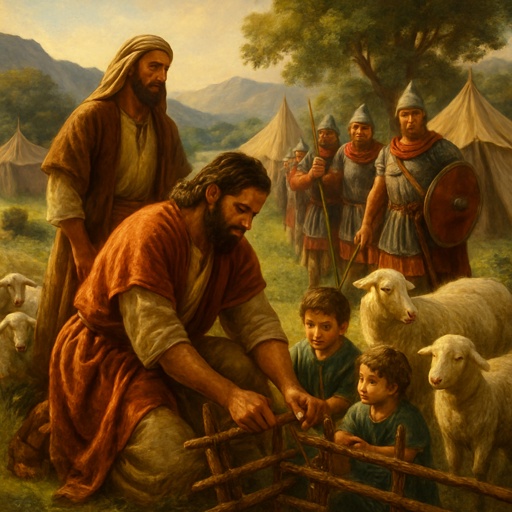
Numbers 32:16-18
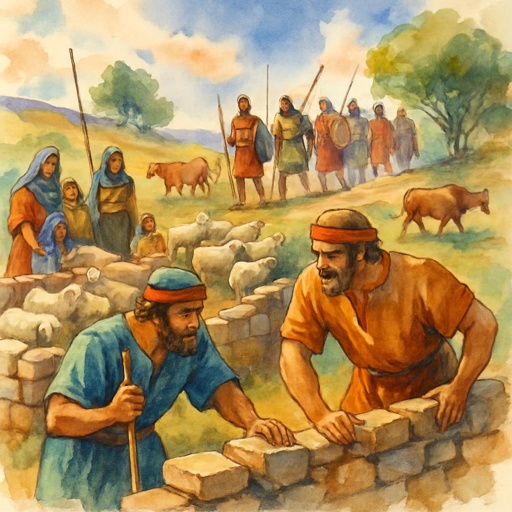
Numbers 32:16-18

Numbers 32:35 - "And Atroth, Shophan, and Jaazer, and Jogbehah,"

Numbers 32:32 - "We will pass over armed before the LORD into the land of Canaan, that the possession of our inheritance on this side Jordan may be our's."

Jeremiah 32:26 - "¶ Then came the word of the LORD unto Jeremiah, saying,"

Numbers 14:32 - "But as for you, your carcases, they shall fall in this wilderness."

Numbers 32:37 - "And the children of Reuben built Heshbon, and Elealeh, and Kirjathaim,"

Numbers 32:34 - "¶ And the children of Gad built Dibon, and Ataroth, and Aroer,"

Numbers 7:32 - "One golden spoon of ten shekels, full of incense:"

Numbers 33:32 - "And they removed from Bene-jaakan, and encamped at Hor-hagidgad."

Numbers 32:10 - "And the LORD'S anger was kindled the same time, and he sware, saying,"

Numbers 11:16-26

Numbers 26:8 - "And the sons of Pallu; Eliab."

Numbers 32:36 - "And Beth-nimrah, and Beth-haran, fenced cities: and folds for sheep."

Numbers 26:26 - "¶ Of the sons of Zebulun after their families: of Sered, the family of the Sardites: of Elon, the family of the Elonites: of Jahleel, the family of the Jahleelites."

Numbers 32:3 - "Ataroth, and Dibon, and Jazer, and Nimrah, and Heshbon, and Elealeh, and Shebam, and Nebo, and Beon,"

Numbers 26:46 - "And the name of the daughter of Asher was Sarah."

Matthew 26:32 - "But after I am risen again, I will go before you into Galilee."

Numbers 26:11 - "Notwithstanding the children of Korah died not."

Draw map east of Jordan described in Numbers 32.

"And Atroth, Shophan, and Jaazer, and Jogbehah," - Numbers 32:35

Numbers 32:39 - "And the children of Machir the son of Manasseh went to Gilead, and took it, and dispossessed the Amorite which was in it."

"And Atroth, Shophan, and Jaazer, and Jogbehah," - Numbers 32:35

Numbers 33:26 - "And they removed from Makheloth, and encamped at Tahath."