What does Numbers 19:10 mean?
"And he that gathereth the ashes of the heifer shall wash his clothes, and be unclean until the even: and it shall be unto the children of Israel, and unto the stranger that sojourneth among them, for a statute for ever." - Numbers 19:10
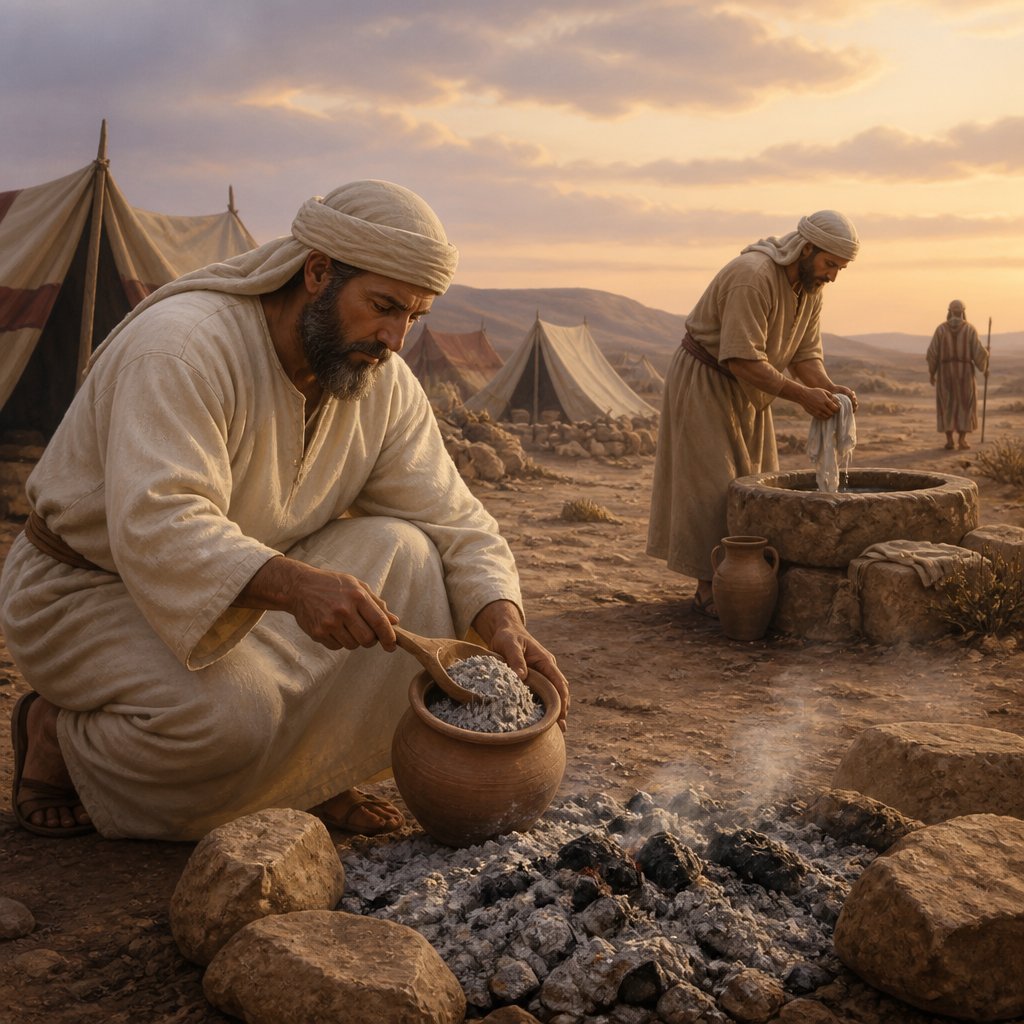
Numbers 19:10 (KJV) reads, "And he that gathereth the ashes of the heifer shall wash his clothes, and be unclean until the even: and it shall be unto the children of Israel, and unto the stranger that sojourneth among them, for a statute for ever."
This verse is part of a longer passage in the book of Numbers that describes the ritual for purifying someone who has become ceremonially unclean by coming into contact with a dead body. In ancient Israelite society, contact with a corpse or attending a funeral would make a person ritually impure. To regain their purity, they would have to undergo a process of purification involving the ashes of a red heifer.
The red heifer was a unique and rare sacrifice in ancient Jewish tradition. According to Jewish law, a red heifer without blemish or defect had to be taken outside the camp, slaughtered, and then burned along with cedar wood, hyssop, and scarlet. The ashes of the heifer were then collected and mixed with water to create a cleansing solution.
In the context of Numbers 19:10, the verse highlights the requirement for the person who gathers the ashes of the heifer to undergo a period of ritual impurity. They must wash their clothes and remain unclean until the evening. This emphasizes the seriousness and importance of the purification process, and the need for those involved to approach it with reverence and respect.
The verse also states that this statute of purification applies not only to the Israelites but also to the strangers or foreigners living among them. This demonstrates the inclusive nature of the Israelite religious laws, which were intended to apply to all who lived within their community, regardless of their nationality or background.
One of the key themes in this verse is the concept of ritual purity and impurity in the ancient Israelite religious system. The laws and rituals surrounding purity were central to the Israelite's understanding of holiness and their relationship with God. Being in a state of ritual impurity meant being unable to participate fully in religious activities and was seen as a barrier to approaching God.
The use of the heifer ashes to purify the unclean also carries symbolic significance. The red heifer was considered a rare and special sacrifice, and its ashes were believed to possess special cleansing power. This ritual serves as a foreshadowing of the ultimate cleansing that would be made possible through the death and resurrection of Jesus Christ in the Christian tradition.
Additionally, the inclusion of the strangers or sojourners in the statute emphasizes the universal applicability of the laws and rituals of purification. It reflects the Israelite's belief in the universal principles of holiness and purity, and their responsibility to extend these principles to all who lived among them.
In conclusion, Numbers 19:10 in the King James Version offers insight into the ancient Israelite religious practices surrounding ritual purity and impurity. It underscores the significance of the purification process and the inclusive nature of the Israelite religious laws. The verse also carries symbolic significance that extends beyond its immediate context, pointing to the ultimate cleansing and redemption that would be made possible through the sacrifice of Jesus Christ.
Have questions about Numbers 19:10?
Dive deeper into this scripture with Bible Chat — an AI-powered tool for exploring God's Word through conversation. Ask questions, get context, and grow in your understanding of the Bible.
Get Our Apps


Numbers 19:10 Artwork

Numbers 19:10 - "And he that gathereth the ashes of the heifer shall wash his clothes, and be unclean until the even: and it shall be unto the children of Israel, and unto the stranger that sojourneth among them, for a statute for ever."
"And he that gathereth the ashes of the heifer shall wash his clothes, and be unclean until the even: and it shall be unto the children of Israel, and unto the stranger that sojourneth among them, for a statute for ever." - Numbers 19:10

Numbers 10:19 - "And over the host of the tribe of the children of Simeon was Shelumiel the son of Zurishaddai."
"And over the host of the tribe of the children of Simeon was Shelumiel the son of Zurishaddai." - Numbers 10:19

"For the Son of man is come to seek and to save that which was lost." - Luke 19:10

Numbers 19:14-19 Touching a dead is unclean

Numbers 1:19 - "As the LORD commanded Moses, so he numbered them in the wilderness of Sinai."

Numbers 21:19 - "And from Mattanah to Nahaliel: and from Nahaliel to Bamoth:"

Numbers 33:19 - "And they departed from Rithmah, and pitched at Rimmon-parez."

Numbers 3:19 - "And the sons of Kohath by their families; Amram, and Izehar, Hebron, and Uzziel."

Numbers 34:19 - "And the names of the men are these: Of the tribe of Judah, Caleb the son of Jephunneh."

Numbers 19:1 - "And the LORD spake unto Moses and unto Aaron, saying,"

Luke 10:18-19

Luke 10:18-19

Luke 10:18-19

Luke 10:17-19

Numbers 2:19 - "And his host, and those that were numbered of them, were forty thousand and five hundred."

Luke 10:18-19

Luke 10:18-19

Luke 10:18-19

Luke 10:17-19

Numbers 19:15 - "And every open vessel, which hath no covering bound upon it, is unclean."

Numbers 13:10 - "Of the tribe of Zebulun, Gaddiel the son of Sodi."

Luke 19:10

Genesis 19-10

Numbers 10:1 - "And the LORD spake unto Moses, saying,"

Numbers 25:10 - "¶ And the LORD spake unto Moses, saying,"

Numbers 19:11 - "¶ He that toucheth the dead body of any man shall be unclean seven days."

Numbers 26:19 - "¶ The sons of Judah were Er and Onan: and Er and Onan died in the land of Canaan."

Numbers 21:10 - "¶ And the children of Israel set forward, and pitched in Oboth."