What does Numbers 17:7 mean?
"And Moses laid up the rods before the LORD in the tabernacle of witness." - Numbers 17:7
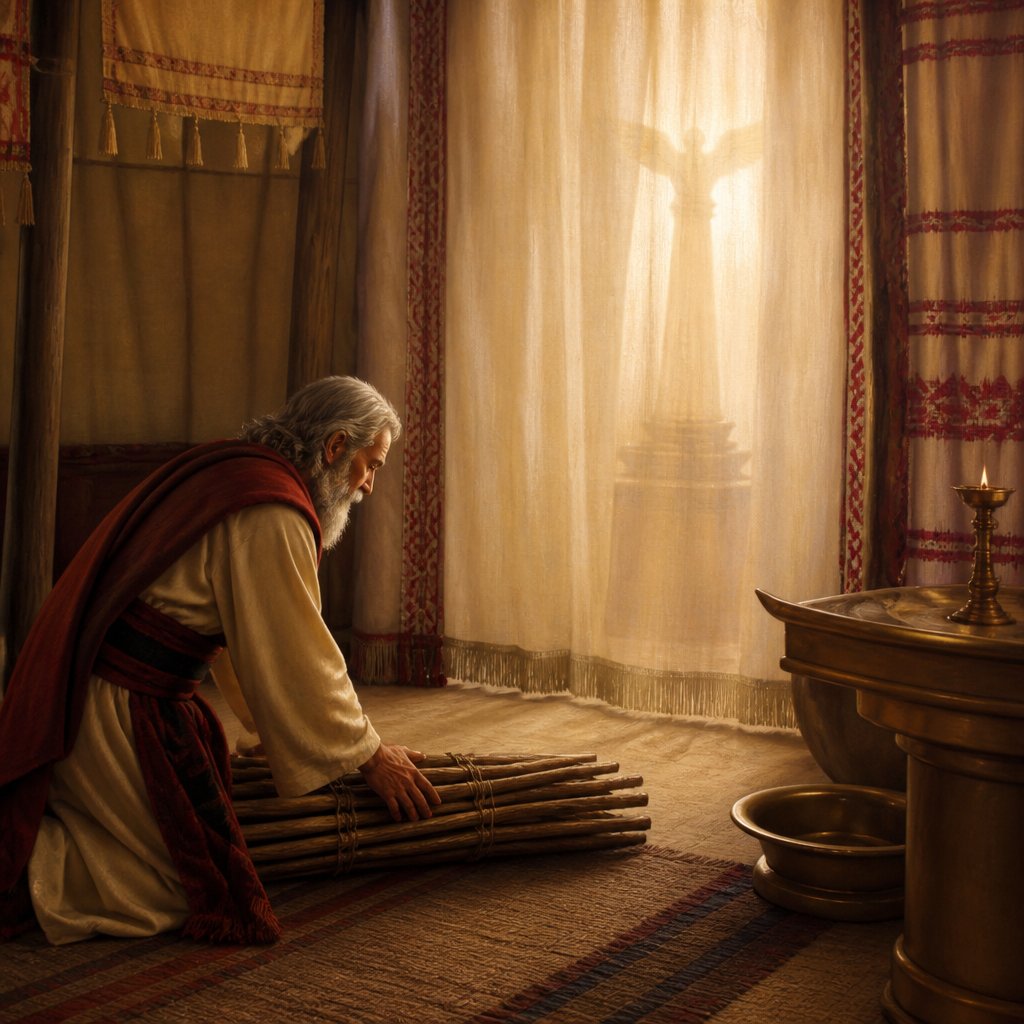
Numbers 17:7 in the King James Version of the Bible reads, "And Moses laid up the rods before the Lord in the tabernacle of witness." This verse comes from a passage in the book of Numbers that tells the story of the blossoming of Aaron's staff as a sign from God to confirm his priestly authority.
To fully understand the significance of Numbers 17:7, it is important to provide some context from the surrounding verses. In Numbers 17, the Lord commands Moses to gather staffs from the leaders of each of the twelve tribes of Israel. These staffs were to be placed in the tabernacle of witness, where the Lord would choose one to designate the rightful priesthood.
This event was significant because it was a response to a dispute among the Israelites regarding who had the right to serve as priests before the Lord. The tribe of Levi, from which Aaron and his descendants came, had been chosen by God for this role. However, the other tribes questioned their authority, leading to this test of the staffs.
When Aaron's staff blossomed and produced almonds, it served as a clear sign from God that he had chosen the tribe of Levi and specifically the family of Aaron as the rightful priesthood. This miraculous blossoming of Aaron's staff provided a definitive end to the dispute and affirmed the authority of Aaron and the Levites as God's chosen priests.
The imagery and symbolism in Numbers 17:7 are rich and profound. The rods themselves were symbols of authority and leadership within each tribe, as they were carried by the tribal leaders. By placing these staffs before the Lord, it was a symbolic act of submitting these symbols of authority to the ultimate authority of God. This act of submission and trust in God's divine guidance is a central theme in this passage.
The tabernacle of witness, where the staffs were placed, was a holy and sacred space, representing the presence of God among His people. This act of laying up the rods before the Lord in the tabernacle of witness underscored the sacred nature of the event and the importance of seeking God's guidance in matters of leadership and authority.
The miraculous blossoming of Aaron's staff also holds deep symbolic meaning. Almonds were a symbol of watchfulness and promise in ancient Hebrew culture, and the sudden and unexpected blossoming of a seemingly lifeless staff was a clear sign of God's power and authority. This miraculous sign served to confirm the legitimacy of Aaron's priesthood and the divine authority behind it.
Furthermore, this event foreshadowed the ultimate priesthood of Jesus Christ, who would come from the line of Aaron as the ultimate high priest. The author of the book of Hebrews makes reference to this event in Numbers 17 as a type and shadow of Christ's priesthood, emphasizing the superiority and authority of Jesus as the eternal high priest.
In conclusion, Numbers 17:7 and the surrounding passage hold deep spiritual and symbolic significance. The story of Aaron's staff serves as a powerful reminder of God's sovereignty and the importance of submitting to His authority. It also points to the ultimate priesthood of Jesus Christ and the fulfillment of God's promises through Him. This passage continues to serve as an important theological and spiritual lesson for believers today, emphasizing the importance of seeking God's guidance and trusting in His divine authority.
Have questions about Numbers 17:7?
Dive deeper into this scripture with Bible Chat — an AI-powered tool for exploring God's Word through conversation. Ask questions, get context, and grow in your understanding of the Bible.
Get Our Apps


Numbers 17:7 Artwork

Numbers 17:7 - "And Moses laid up the rods before the LORD in the tabernacle of witness."
"And Moses laid up the rods before the LORD in the tabernacle of witness." - Numbers 17:7

Numbers 7:17 - "And for a sacrifice of peace offerings, two oxen, five rams, five he goats, five lambs of the first year: this was the offering of Nahshon the son of Amminadab."

Numbers 11:17
"The children of Azgad, two thousand three hundred twenty and two." - Nehemiah 7:17

Numbers 25:17 - "Vex the Midianites, and smite them:"

Numbers 15:17 - "¶ And the LORD spake unto Moses, saying,"

Numbers 17:1 - "And the LORD spake unto Moses, saying,"

Numbers 33:17 - "And they departed from Kibroth-hattaavah, and encamped at Hazeroth."

Numbers 26:17 - "Of Arod, the family of the Arodites: of Areli, the family of the Arelites."

Numbers 29:7

Numbers 4:7

Numbers 4:17 - "¶ And the LORD spake unto Moses and unto Aaron, saying,"

Numbers 3:17 - "And these were the sons of Levi by their names; Gershon, and Kohath, and Merari."

Numbers 1:17 - "¶ And Moses and Aaron took these men which are expressed by their names:"

Numbers 7:1-9

John 7:17-18

John 7:17-18

Numbers 7:7 - "Two wagons and four oxen he gave unto the sons of Gershon, according to their service:"

Numbers 4:7-8

Numbers 1:7 - "Of Judah; Nahshon the son of Amminadab."

John 7:17-18

John 7:17-18
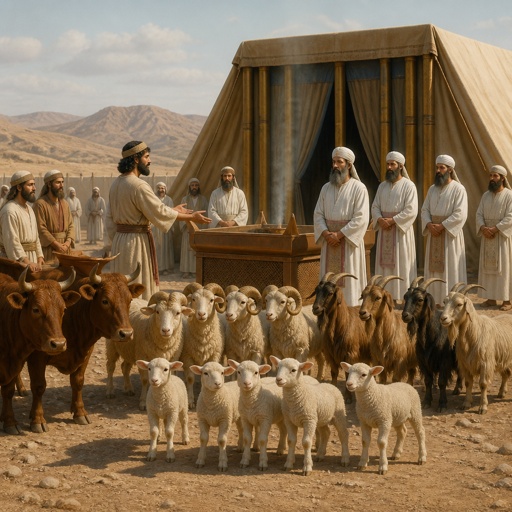
"And for a sacrifice of peace offerings, two oxen, five rams, five he goats, five lambs of the first year: this was the offering of Nahshon the son of Amminadab." - Numbers 7:17

"Vex the Midianites, and smite them:" - Numbers 25:17

Numbers 21:17 - "¶ Then Israel sang this song, Spring up, O well; sing ye unto it:"

Numbers 17:11 - "And Moses did so: as the LORD commanded him, so did he."

Numbers 7:76 - "One kid of the goats for a sin offering:"

Numbers 7:64 - "One kid of the goats for a sin offering:"

Numbers 7:34 - "One kid of the goats for a sin offering:"