What does Nehemiah 9:4 mean?
"¶ Then stood up upon the stairs, of the Levites, Jeshua, and Bani, Kadmiel, Shebaniah, Bunni, Sherebiah, Bani, and Chenani, and cried with a loud voice unto the LORD their God." - Nehemiah 9:4
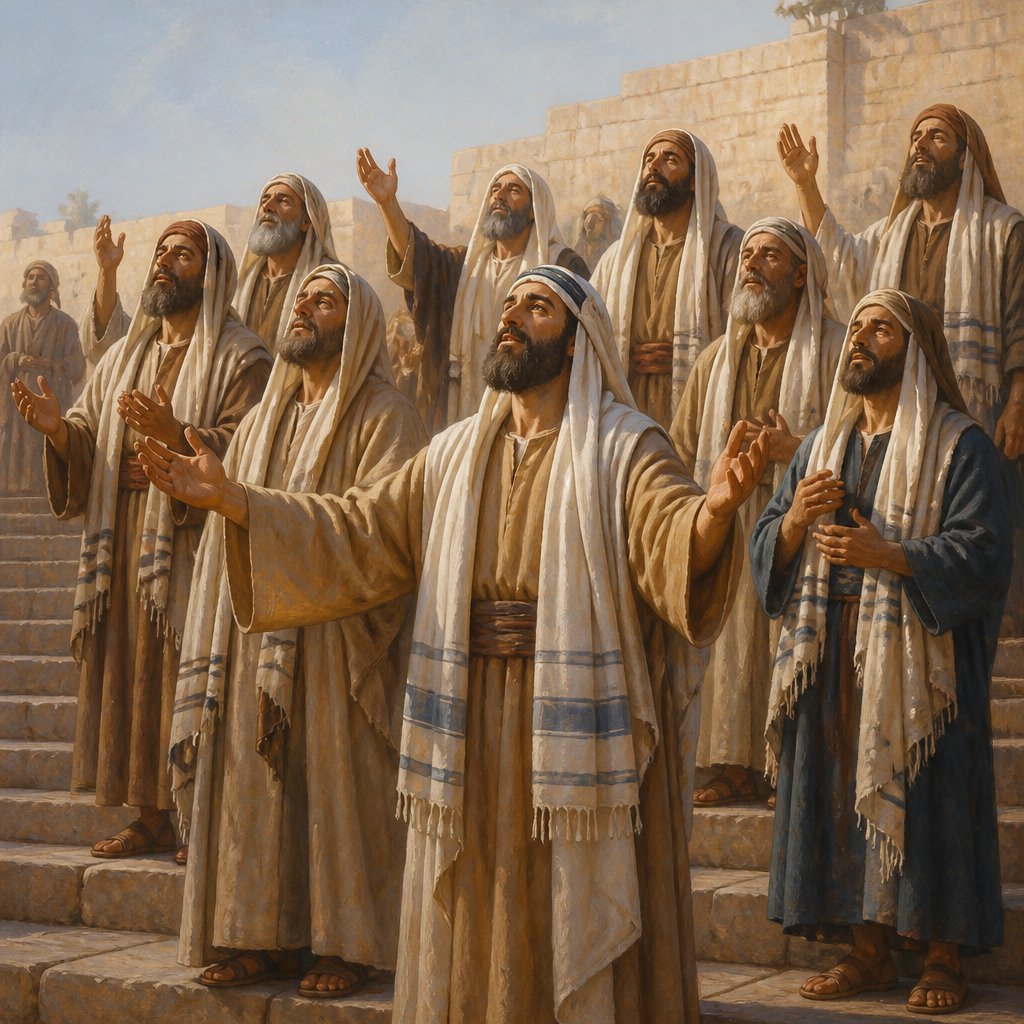
Nehemiah 9:4 (KJV) states, "Then stood up upon the stairs, of the Levites, Jeshua, and Bani, Kadmiel, Shebaniah, Bunni, Sherebiah, Bani, and Chenani, and cried with a loud voice unto the Lord their God."
The book of Nehemiah is a historical and spiritual account of the restoration of Jerusalem after the Babylonian exile. Nehemiah, a cupbearer to King Artaxerxes, is moved with compassion for the state of Jerusalem and its people, leading him to seek permission from the king to return to his homeland and oversee the rebuilding of the city's walls and gates. The verse in question occurs during the celebration of the Feast of Tabernacles, as the people of Jerusalem gather to confess their sins and seek forgiveness from God.
The context of Nehemiah 9:4 is pivotal in understanding the significance of the verse. The people of Israel had been through a period of great turmoil and uncertainty, having been exiled and taken captive by the Babylonians. The Feast of Tabernacles was a time of both remembrance and of looking forward with hope. The people were acknowledging their past failings and seeking God's mercy and grace as they looked toward the future.
The mention of the Levites standing upon the stairs and crying out to the Lord is an important symbolic moment in the narrative. The Levites were a group of priests and assistants responsible for the spiritual well-being of the people of Israel. Their position on the stairs signifies their elevated status as intermediaries between the people and God. Their crying out with a loud voice represents the raw emotion and earnestness of their plea to the Lord. This was a moment of deep spiritual significance, as the people sought to connect with God and seek his forgiveness and guidance.
The act of crying out unto the Lord also speaks to the theme of repentance and humility. The people were acknowledging their sins and shortcomings, and were genuinely seeking reconciliation with God. This act of humility and contrition is essential in the process of spiritual renewal and restoration. Through their cries to the Lord, the people were expressing their dependence on God and their desire for His mercy.
Furthermore, the list of names in the verse holds symbolic significance as well. In ancient Hebrew culture, names often held deep meaning and significance. Jeshua, for example, means "Yahweh is salvation," while Bani means "built." These names underscore the themes of salvation and restoration that are central to the narrative of Nehemiah. The inclusion of these names serves to emphasize the deeply personal and communal nature of the people's plea to God.
In conclusion, Nehemiah 9:4 captures a crucial moment in the spiritual journey of the people of Jerusalem as they seek forgiveness and renewal. The verse is rich in symbolism and speaks to themes of repentance, humility, and restoration. It serves as a powerful reminder of the importance of turning to God in times of struggle and seeking His mercy and grace. As such, it continues to offer spiritual and moral guidance for believers today.
Have questions about Nehemiah 9:4?
Dive deeper into this scripture with Bible Chat — an AI-powered tool for exploring God's Word through conversation. Ask questions, get context, and grow in your understanding of the Bible.
Get Our Apps


Nehemiah 9:4 Artwork

Nehemiah 9:4 - "¶ Then stood up upon the stairs, of the Levites, Jeshua, and Bani, Kadmiel, Shebaniah, Bunni, Sherebiah, Bani, and Chenani, and cried with a loud voice unto the LORD their God."
"¶ Then stood up upon the stairs, of the Levites, Jeshua, and Bani, Kadmiel, Shebaniah, Bunni, Sherebiah, Bani, and Chenani, and cried with a loud voice unto the LORD their God." - Nehemiah 9:4

Nehemiah 4:9 - "Nevertheless we made our prayer unto our God, and set a watch against them day and night, because of them."

Nehemiah 6:9

Nehemiah 4:6

Nehemiah 4:6

Nehemiah 4:6

Nehemiah 9:9 - "And didst see the affliction of our fathers in Egypt, and heardest their cry by the Red sea;"

Nehemiah 12:4 - "Iddo, Ginnetho, Abijah,"

Nehemiah 10:4 - "Hattush, Shebaniah, Malluch,"

Nehemiah 7:9 - "The children of Shephatiah, three hundred seventy and two."

Nehemiah 9:16 - "But they and our fathers dealt proudly, and hardened their necks, and hearkened not to thy commandments,"

Nehemiah 12:9 - "Also Bakbukiah and Unni, their brethren, were over against them in the watches."

Nehemiah 10:9 - "And the Levites: both Jeshua the son of Azaniah, Binnui of the sons of Henadad, Kadmiel;"
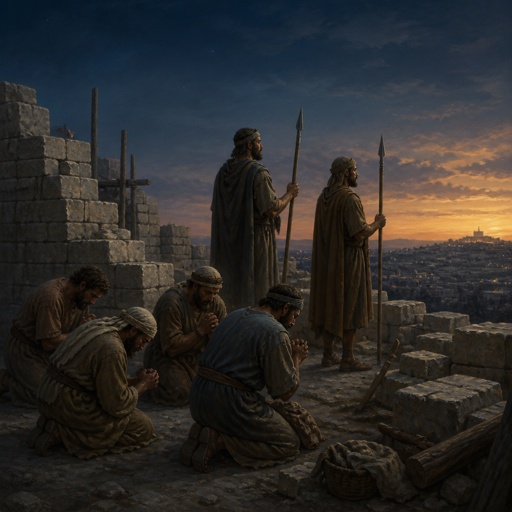
"Nevertheless we made our prayer unto our God, and set a watch against them day and night, because of them." - Nehemiah 4:9

Nehemiah 11:9 - "And Joel the son of Zichri was their overseer: and Judah the son of Senuah was second over the city."

"Iddo, Ginnetho, Abijah," - Nehemiah 12:4

"Hattush, Shebaniah, Malluch," - Nehemiah 10:4

Nehemiah 4:4 - "Hear, O our God; for we are despised: and turn their reproach upon their own head, and give them for a prey in the land of captivity:"

Nehemiah 3:9 - "And next unto them repaired Rephaiah the son of Hur, the ruler of the half part of Jerusalem."

Nehemiah 4:8 - "And conspired all of them together to come and to fight against Jerusalem, and to hinder it."

Nehemiah 9:2 - "And the seed of Israel separated themselves from all strangers, and stood and confessed their sins, and the iniquities of their fathers."

Nehemiah 8:9 - "¶ And Nehemiah, which is the Tirshatha, and Ezra the priest the scribe, and the Levites that taught the people, said unto all the people, This day is holy unto the LORD your God; mourn not, nor weep. For all the people wept, when they heard the words of the law."

Nehemiah 4:17 – "Those who carried materials did their work with one hand and held a weapon in the other."

Nehemiah 9:38 - "And because of all this we make a sure covenant, and write it; and our princes, Levites, and priests, seal unto it."

"And didst see the affliction of our fathers in Egypt, and heardest their cry by the Red sea;" - Nehemiah 9:9

Nehemiah 7:4 - "Now the city was large and great: but the people were few therein, and the houses were not builded."

Nehemiah 13:9 - "Then I commanded, and they cleansed the chambers: and thither brought I again the vessels of the house of God, with the meat offering and the frankincense."

Nehemiah 4:17 – "Those who carried materials did their work with one hand and held a weapon in the other."

"The children of Shephatiah, three hundred seventy and two." - Nehemiah 7:9