What does Nehemiah 9:1 mean?
"Now in the twenty and fourth day of this month the children of Israel were assembled with fasting, and with sackclothes, and earth upon them." - Nehemiah 9:1
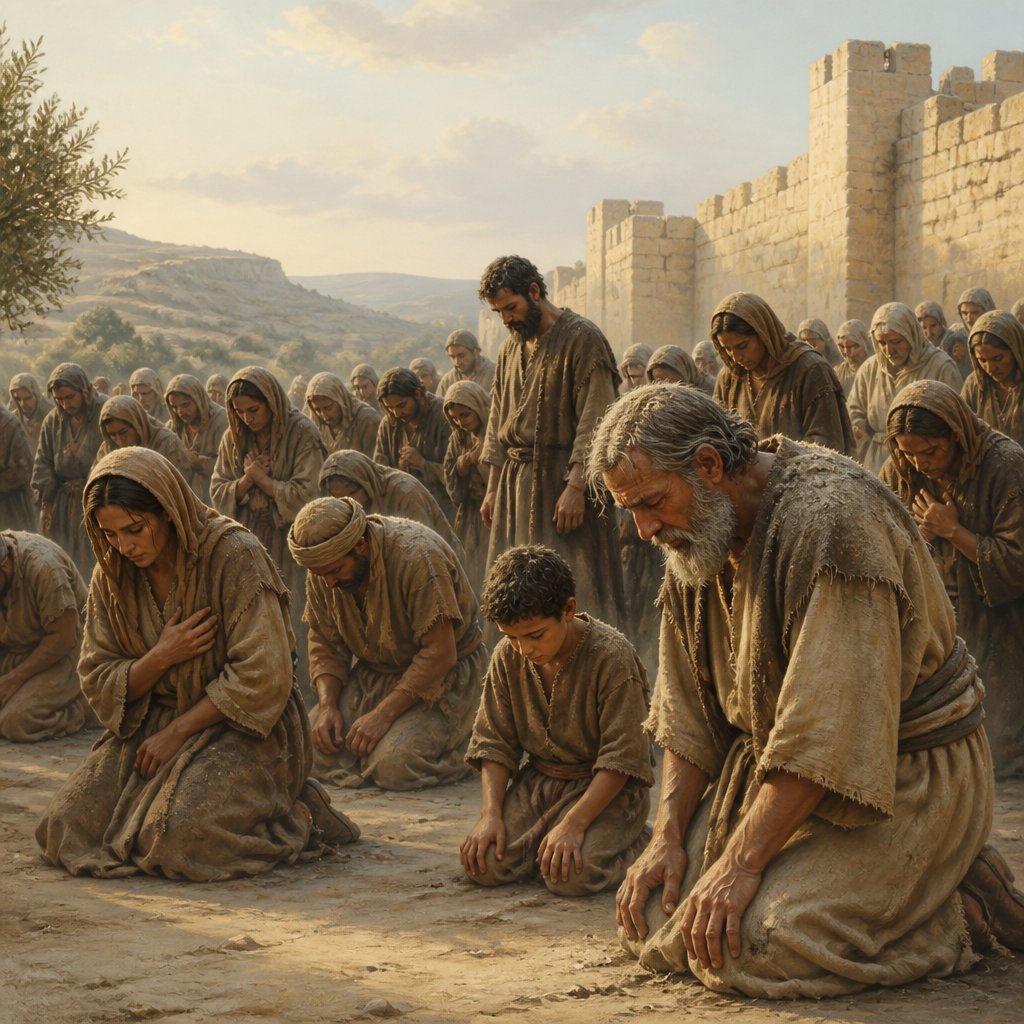
The Bible verse Nehemiah 9:1, from the King James Version, reads, "Now in the twenty and fourth day of this month the children of Israel were assembled with fasting, and with sackcloths, and earth upon them." This verse is found in the book of Nehemiah, which is a historical account of Nehemiah's leadership in rebuilding the walls of Jerusalem and the spiritual renewal of the Israelites.
This particular verse takes place during a significant moment in Israel's history. The twenty-fourth day of the month refers to the month of Tishri, which is the seventh month in the Jewish calendar and a time of great significance as it contains the Feast of Tabernacles, also known as the Feast of Booths. This feast was a time of celebration for the Israelites as they remembered and gave thanks for God's provision and protection during their time in the wilderness. However, in this particular instance, the Israelites were assembled not for celebration, but for fasting, and with sackcloths and earth upon them. This is a stark contrast to the usual joy and feasting associated with the Feast of Tabernacles, and it indicates a deep sense of repentance and mourning among the people.
The use of fasting, sackcloth, and earth in this verse is symbolic of the Israelites' deep sense of remorse and humility before God. Fasting was a common practice in the Bible as a way of demonstrating one's earnestness in seeking God and repenting of sin. Sackcloth, a coarse, uncomfortable material, was often worn as a sign of mourning and penitence, while the application of earth or dust on the body was a gesture of extreme humility and acknowledgment of one's mortality. Together, these physical expressions of sorrow and contrition reflect the Israelites' sincere desire to turn away from their sins and seek reconciliation with God.
The context of this verse can be found in the preceding chapters of Nehemiah, where the people of Israel are gathered to hear the Law of Moses read to them. This reading of the Law, likely from the book of Deuteronomy, reminded the people of God's covenant with them and the expectations He had for their obedience and faithfulness. As the people heard the words of the Law, they were deeply convicted of their unfaithfulness and disobedience, which led to their overwhelming emotional response of fasting, sackcloth, and earth.
Another key theme in this verse is that of communal repentance and confession. The fact that the entire community of Israelites was gathered together in this state of mourning and humility demonstrates their awareness that their collective disobedience had led them away from God and His blessings. This shared act of repentance underscores the importance of communal accountability and the recognition of the corporate nature of sin. The Israelites understood that they were in need of collective forgiveness and restoration, and they sought God together in a unified spirit of contrition and supplication.
Additionally, this verse points to the Israelites' deep understanding of the need for purging and cleansing. The use of sackcloth and earth as physical symbols of their repentance was coupled with a desire for spiritual renewal and restoration. The Israelites recognized that their external expressions of sorrow and repentance must be accompanied by a genuine internal transformation. This verse serves as a poignant reminder of the need for true inward and outward change in the face of sin and the importance of seeking God's forgiveness and mercy with genuine humility and brokenness.
Overall, Nehemiah 9:1 offers a powerful depiction of the Israelites' genuine repentance and desire for reconciliation with God. It serves as a reminder of the importance of acknowledging sin, seeking forgiveness, and renewing one's commitment to God. The verse also highlights the significance of communal repentance and the need for genuine heart change in response to God's holiness and the standards of His word. This passage continues to serve as a profound and timeless example of the transformative power of true repentance and the restoration that comes from seeking God with sincerity and humility.
Have questions about Nehemiah 9:1?
Dive deeper into this scripture with Bible Chat — an AI-powered tool for exploring God's Word through conversation. Ask questions, get context, and grow in your understanding of the Bible.
Get Our Apps


Nehemiah 9:1 Artwork

Nehemiah 9:1 - "Now in the twenty and fourth day of this month the children of Israel were assembled with fasting, and with sackclothes, and earth upon them."
"Now in the twenty and fourth day of this month the children of Israel were assembled with fasting, and with sackclothes, and earth upon them." - Nehemiah 9:1

Nehemiah 6:9

Nehemiah 9:9 - "And didst see the affliction of our fathers in Egypt, and heardest their cry by the Red sea;"

Nehemiah 7:9 - "The children of Shephatiah, three hundred seventy and two."

Nehemiah 1:1 - "The words of Nehemiah the son of Hachaliah. And it came to pass in the month Chisleu, in the twentieth year, as I was in Shushan the palace,"

Nehemiah 10:1 - "Now those that sealed were, Nehemiah, the Tirshatha, the son of Hachaliah, and Zidkijah,"

Nehemiah 9:16 - "But they and our fathers dealt proudly, and hardened their necks, and hearkened not to thy commandments,"

Nehemiah 12:9 - "Also Bakbukiah and Unni, their brethren, were over against them in the watches."

Nehemiah 10:9 - "And the Levites: both Jeshua the son of Azaniah, Binnui of the sons of Henadad, Kadmiel;"

Nehemiah 11:9 - "And Joel the son of Zichri was their overseer: and Judah the son of Senuah was second over the city."

Nehemiah 3:9 - "And next unto them repaired Rephaiah the son of Hur, the ruler of the half part of Jerusalem."

Nehemiah 11:1-19

Nehemiah 9:2 - "And the seed of Israel separated themselves from all strangers, and stood and confessed their sins, and the iniquities of their fathers."

Nehemiah 8:9 - "¶ And Nehemiah, which is the Tirshatha, and Ezra the priest the scribe, and the Levites that taught the people, said unto all the people, This day is holy unto the LORD your God; mourn not, nor weep. For all the people wept, when they heard the words of the law."

Nehemiah 11:13

Nehemiah 9:38 - "And because of all this we make a sure covenant, and write it; and our princes, Levites, and priests, seal unto it."

Nehemiah 8:10

"And didst see the affliction of our fathers in Egypt, and heardest their cry by the Red sea;" - Nehemiah 9:9

Nehemiah 13:9 - "Then I commanded, and they cleansed the chambers: and thither brought I again the vessels of the house of God, with the meat offering and the frankincense."

"The children of Shephatiah, three hundred seventy and two." - Nehemiah 7:9

Nehemiah 1:9 - "But if ye turn unto me, and keep my commandments, and do them; though there were of you cast out unto the uttermost part of the heaven, yet will I gather them from thence, and will bring them unto the place that I have chosen to set my name there."

Nehemiah 11:11-14

Nehemiah 9:33 - "Howbeit thou art just in all that is brought upon us; for thou hast done right, but we have done wickedly:"

Nehemiah 9:21 - "Yea, forty years didst thou sustain them in the wilderness, so that they lacked nothing; their clothes waxed not old, and their feet swelled not."

Nehemiah 9:14 - "And madest known unto them thy holy sabbath, and commandedst them precepts, statutes, and laws, by the hand of Moses thy servant:"

Nehemiah 4:9 - "Nevertheless we made our prayer unto our God, and set a watch against them day and night, because of them."

"The words of Nehemiah the son of Hachaliah. And it came to pass in the month Chisleu, in the twentieth year, as I was in Shushan the palace," - Nehemiah 1:1

Nehemiah 9:20 - "Thou gavest also thy good spirit to instruct them, and withheldest not thy manna from their mouth, and gavest them water for their thirst."

Nehemiah 2:9 - "¶ Then I came to the governors beyond the river, and gave them the king's letters. Now the king had sent captains of the army and horsemen with me."