What does Nehemiah 8:5 mean?
"And Ezra opened the book in the sight of all the people; (for he was above all the people;) and when he opened it, all the people stood up:" - Nehemiah 8:5
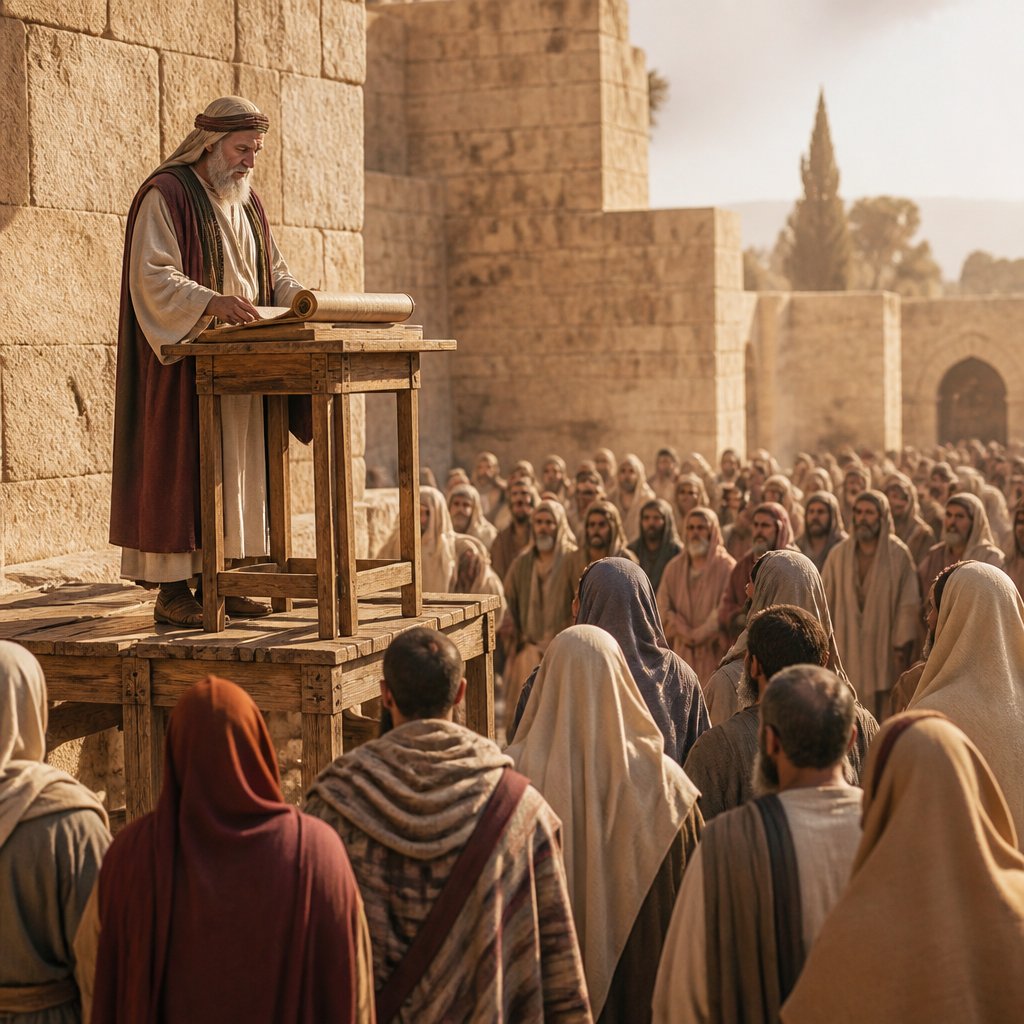
Nehemiah 8:5 (KJV) reads: "And Ezra opened the book in the sight of all the people; (for he was above all the people;) and when he opened it, all the people stood up."
This verse is part of the broader context of the book of Nehemiah, which describes the Israelites' return from exile in Babylon and their efforts to rebuild Jerusalem. The verse specifically focuses on a pivotal moment when the people gather to hear the reading of the Law by Ezra the scribe. This event takes place at the Water Gate, where Ezra reads the Law from morning until midday, causing the people to weep as they hear the words. This passage is significant in both its historical context and its broader theological implications.
To understand the meaning and significance of Nehemiah 8:5, it is important to consider its broader context within the book of Nehemiah. At this point in the story, the Israelites have just completed the reconstruction of the wall around Jerusalem, a monumental task that testifies to their faith and determination in the face of opposition and adversity. With the physical restoration of the city accomplished, the people now turn their attention to the spiritual restoration of their community.
The role of Ezra in this passage is crucial, as he is seen as a spiritual leader and a scholar of the Law. When he opens the book in the sight of all the people, it demonstrates his authority and his intention to share the word of God with the entire community. The fact that he is positioned above the people also symbolizes his role as a teacher and guide, leading them in their understanding and interpretation of the Law.
The reaction of the people is also significant, as they all stand up when Ezra opens the book. This act of reverence and respect reflects their recognition of the importance of the Law as a source of guidance and wisdom. It also underscores the unity and solidarity of the community as they come together to listen to the reading.
The theme of the reading and understanding of the Law is central to this passage. The Israelites, who had been exiled and disconnected from their spiritual heritage, are now reacquainting themselves with their sacred texts. The emotional response of the people, who weep as they hear the words of the Law, demonstrates the profound impact that this reading has on them. It serves as a reminder of the enduring power and relevance of the scriptures in shaping and inspiring the faith of the community.
The symbolism of the open book is also rich with meaning. It represents the accessibility and transparency of the Law, which is being shared with all the people. This act of opening the book also evokes the idea of revelation and enlightenment, as the words of the Law are being made known and understood by the community. It is a moment of spiritual awakening and renewal, as the people recommit themselves to their religious identity and purposes.
In a broader theological context, Nehemiah 8:5 can be seen as a precursor to the Christian tradition of the public reading of scripture. The act of standing when the scriptures are read is a practice that continues in many religious traditions to this day, and it symbolizes a posture of attentiveness and respect for the word of God. The impact of the reading of the Law on the Israelites also resonates with the enduring power of scripture to transform and inspire believers throughout history.
In conclusion, Nehemiah 8:5 captures a pivotal moment in the spiritual restoration of the Israelite community. It underscores the importance of the Law as a source of guidance and inspiration, and it highlights the role of Ezra as a spiritual leader and teacher. The passage also conveys the emotional and transformative power of scripture, as the people respond with reverence and weeping to the reading of the Law. Ultimately, this verse speaks to the enduring significance and relevance of scripture in shaping the faith and identity of believers.
Have questions about Nehemiah 8:5?
Dive deeper into this scripture with Bible Chat — an AI-powered tool for exploring God's Word through conversation. Ask questions, get context, and grow in your understanding of the Bible.
Get Our Apps


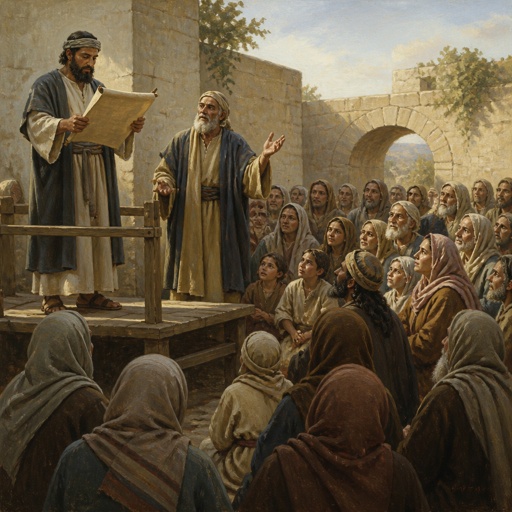
Nehemiah 8:5 Artwork

Nehemiah 8:5 - "And Ezra opened the book in the sight of all the people; (for he was above all the people;) and when he opened it, all the people stood up:"
"And Ezra opened the book in the sight of all the people; (for he was above all the people;) and when he opened it, all the people stood up:" - Nehemiah 8:5

Nehemiah 8:10

Nehemiah 8:10

Nehemiah 8:10

Nehemiah 10:5 - "Harim, Meremoth, Obadiah,"

Nehemiah 12:5 - "Miamin, Maadiah, Bilgah,"

Nehemiah 8:8 - "So they read in the book in the law of God distinctly, and gave the sense, and caused them to understand the reading."
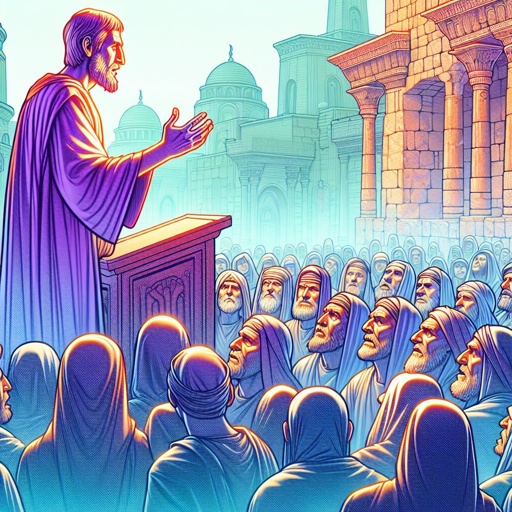
Nehemiah 5:8 - "And I said unto them, We after our ability have redeemed our brethren the Jews, which were sold unto the heathen; and will ye even sell your brethren? or shall they be sold unto us? Then held they their peace, and found nothing to answer."

Nehemiah 10:8 - "Maaziah, Bilgai, Shemaiah: these were the priests."

Nehemiah 7:8 - "The children of Parosh, two thousand an hundred seventy and two."

Nehemiah 5:1 - "And there was a great cry of the people and of their wives against their brethren the Jews."

"Harim, Meremoth, Obadiah," - Nehemiah 10:5

"Miamin, Maadiah, Bilgah," - Nehemiah 12:5

Nehemiah 11:8 - "And after him Gabbai, Sallai, nine hundred twenty and eight."

Nehemiah 5:6 - "¶ And I was very angry when I heard their cry and these words."

Nehemiah 4:8 - "And conspired all of them together to come and to fight against Jerusalem, and to hinder it."

Nehemiah 3:5 - "And next unto them the Tekoites repaired; but their nobles put not their necks to the work of their Lord."
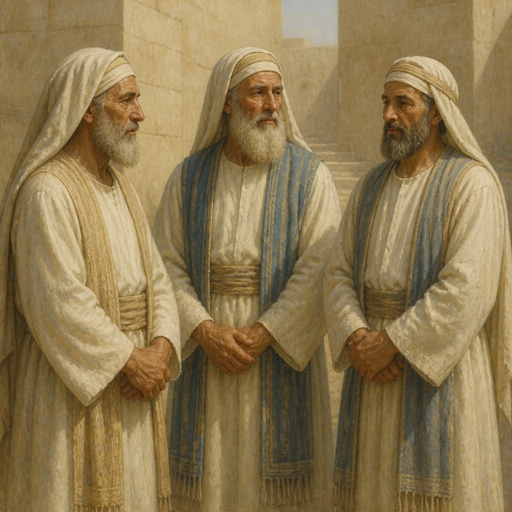
"Maaziah, Bilgai, Shemaiah: these were the priests." - Nehemiah 10:8

Nehemiah 8:9 - "¶ And Nehemiah, which is the Tirshatha, and Ezra the priest the scribe, and the Levites that taught the people, said unto all the people, This day is holy unto the LORD your God; mourn not, nor weep. For all the people wept, when they heard the words of the law."

Nehemiah 5:19 - "Think upon me, my God, for good, according to all that I have done for this people."

Nehemiah 13:8 - "And it grieved me sore: therefore I cast forth all the household stuff of Tobiah out of the chamber."

Nehemiah 5:4 - "There were also that said, We have borrowed money for the king's tribute, and that upon our lands and vineyards."

Nehemiah 12:8 - "Moreover the Levites: Jeshua, Binnui, Kadmiel, Sherebiah, Judah, and Mattaniah, which was over the thanksgiving, he and his brethren."

Nehemiah 8:11 - "So the Levites stilled all the people, saying, Hold your peace, for the day is holy; neither be ye grieved."

Nehemiah 6:5 - "Then sent Sanballat his servant unto me in like manner the fifth time with an open letter in his hand;"

Nehemiah 8:14 - "And they found written in the law which the LORD had commanded by Moses, that the children of Israel should dwell in booths in the feast of the seventh month:"

Nehemiah 4:5 - "And cover not their iniquity, and let not their sin be blotted out from before thee: for they have provoked thee to anger before the builders."
"So they read in the book in the law of God distinctly, and gave the sense, and caused them to understand the reading." - Nehemiah 8:8

Nehemiah 6:8 - "Then I sent unto him, saying, There are no such things done as thou sayest, but thou feignest them out of thine own heart."