What does Nehemiah 8:16 mean?
"¶ So the people went forth, and brought them, and made themselves booths, every one upon the roof of his house, and in their courts, and in the courts of the house of God, and in the street of the water gate, and in the street of the gate of Ephraim." - Nehemiah 8:16
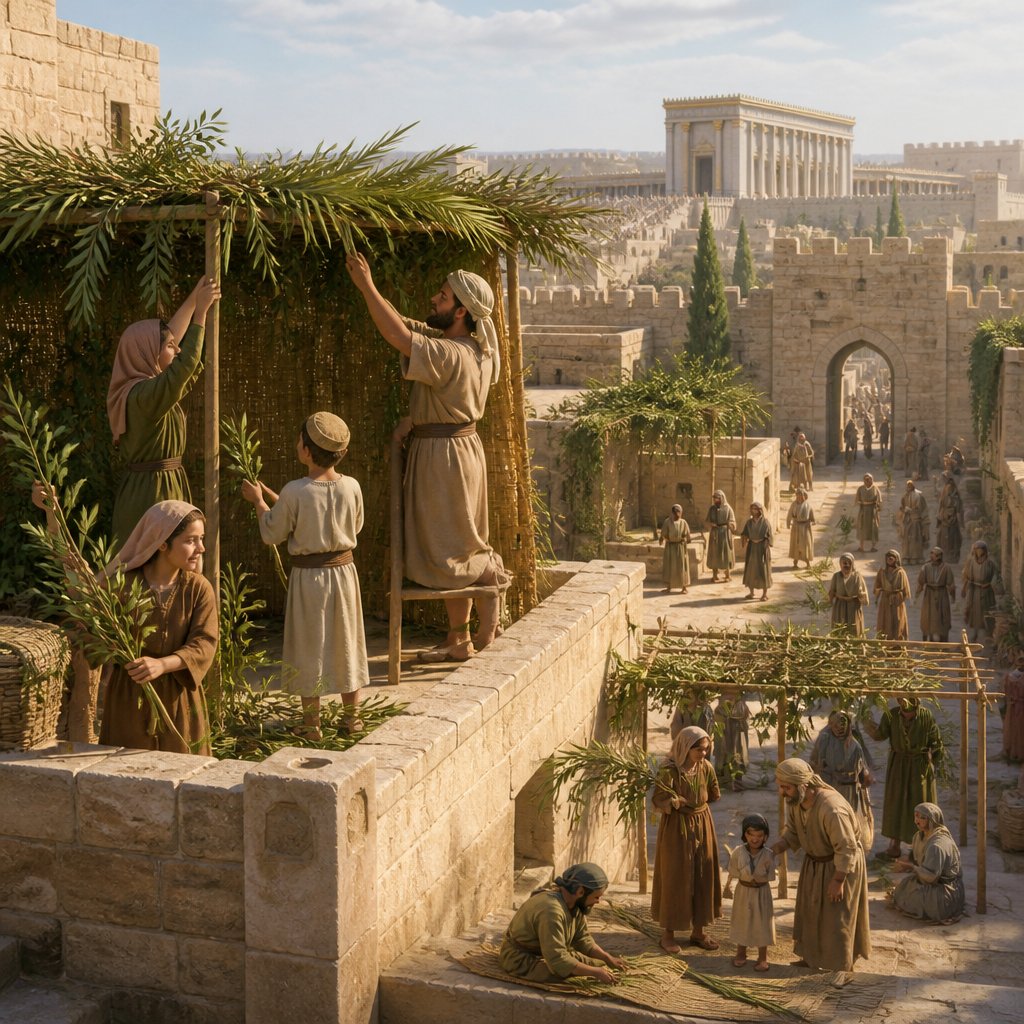
Nehemiah 8:16 in the King James Version (KJV) states, "So the people went forth, and brought them, and made themselves booths, every one upon the roof of his house, and in their courts, and in the courts of the house of God, and in the street of the water gate, and in the street of the gate of Ephraim."
In order to understand the meaning and context of this verse, it is important to consider the background and historical context of the book of Nehemiah. Nehemiah was a Jewish exile who served as the cupbearer to the Persian king, Artaxerxes I. Upon hearing news of the desperate state of Jerusalem and the destruction of its walls and gates, Nehemiah was burdened and sought permission from the king to return to Jerusalem to help rebuild the city. With the king's support, Nehemiah returned to Jerusalem and, with the help of the Jewish people, successfully oversaw the rebuilding of the walls and gates of the city.
The verse in question comes from a passage where the people, having heard the Law read to them, respond with repentance and renewal. They are instructed by Ezra the scribe to celebrate the Feast of Tabernacles, or Festival of Booths, which commemorates the Israelites' time in the wilderness and their dependence on God for provision and protection. During this festival, the people were to construct temporary shelters or booths and live in them for seven days, as a reminder of God's faithfulness.
The significance of the people making booths on the roof of their houses, in their courts, and in the courts of the house of God, as well as in the streets, lies in the communal and public nature of the celebration. By building these booths in various locations, the people were making a public declaration of their faith and commitment to following God's commandments. It was a tangible and visible expression of their repentance and desire to live in obedience to God.
Symbolically, the act of building these booths can be seen as a physical demonstration of the concept of dwelling in the presence of God. The booths served as a reminder that, just as the Israelites depended on God for their daily sustenance during their time in the wilderness, they were to continue relying on Him for their needs in their daily lives. In a similar way, the booths also symbolize the impermanence of life on earth and the ultimate reliance on God for eternal security.
The act of building the booths in public spaces such as the streets and in the courts of the house of God also highlights the importance of community and corporate worship. The Feast of Tabernacles was not just a personal observance, but a communal one, where the entire nation of Israel would come together to celebrate and worship God. It emphasized the unity of the people and their shared commitment to live in accordance with God's commands.
The themes of repentance, renewal, and obedience to God are central to the significance of Nehemiah 8:16. The people's response to the reading of the Law reflects a genuine desire to align their lives with God's will and to acknowledge His sovereignty over their lives. It serves as a powerful example of the transformative power of God's Word and the impact it can have on a community when received with open hearts and willing spirits.
In conclusion, Nehemiah 8:16 captures a pivotal moment in the spiritual renewal of the Jewish people as they respond to the reading of the Law with repentance and obedience. The construction of the booths during the Feast of Tabernacles symbolizes their public commitment to dwell in God's presence and rely on Him for their daily needs. It also underscores the importance of communal worship and unity among God's people. This verse serves as a powerful reminder of the transformative power of God's Word and the enduring relevance of its teachings in the lives of believers.
Have questions about Nehemiah 8:16?
Dive deeper into this scripture with Bible Chat — an AI-powered tool for exploring God's Word through conversation. Ask questions, get context, and grow in your understanding of the Bible.
Get Our Apps


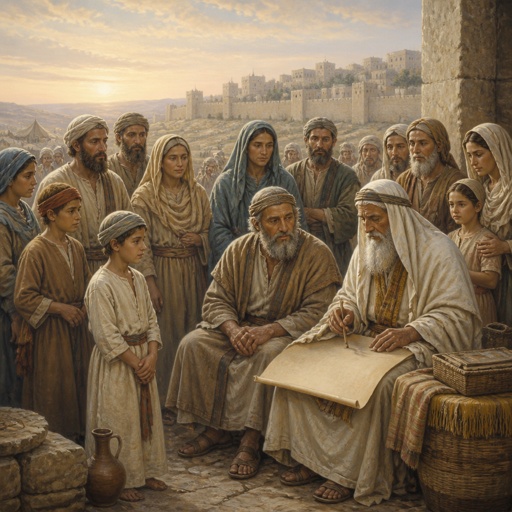
Nehemiah 8:16 Artwork

Nehemiah 8:16 - "¶ So the people went forth, and brought them, and made themselves booths, every one upon the roof of his house, and in their courts, and in the courts of the house of God, and in the street of the water gate, and in the street of the gate of Ephraim."
"¶ So the people went forth, and brought them, and made themselves booths, every one upon the roof of his house, and in their courts, and in the courts of the house of God, and in the street of the water gate, and in the street of the gate of Ephraim." - Nehemiah 8:16

Nehemiah 10:16 - "Adonijah, Bigvai, Adin,"

Nehemiah 8:10

Nehemiah 8:10

Nehemiah 8:10

Nehemiah 12:16 - "Of Iddo, Zechariah; of Ginnethon, Meshullam;"

Nehemiah 7:16 - "The children of Bebai, six hundred twenty and eight."

Nehemiah 8:8 - "So they read in the book in the law of God distinctly, and gave the sense, and caused them to understand the reading."

"Adonijah, Bigvai, Adin," - Nehemiah 10:16

Nehemiah 10:8 - "Maaziah, Bilgai, Shemaiah: these were the priests."

Nehemiah 3:16 - "After him repaired Nehemiah the son of Azbuk, the ruler of the half part of Beth-zur, unto the place over against the sepulchres of David, and to the pool that was made, and unto the house of the mighty."

Nehemiah 9:16 - "But they and our fathers dealt proudly, and hardened their necks, and hearkened not to thy commandments,"

Nehemiah 7:8 - "The children of Parosh, two thousand an hundred seventy and two."

"Of Iddo, Zechariah; of Ginnethon, Meshullam;" - Nehemiah 12:16

Nehemiah 11:16 - "And Shabbethai and Jozabad, of the chief of the Levites, had the oversight of the outward business of the house of God."

Nehemiah 11:8 - "And after him Gabbai, Sallai, nine hundred twenty and eight."

Nehemiah 4:8 - "And conspired all of them together to come and to fight against Jerusalem, and to hinder it."

"The children of Bebai, six hundred twenty and eight." - Nehemiah 7:16
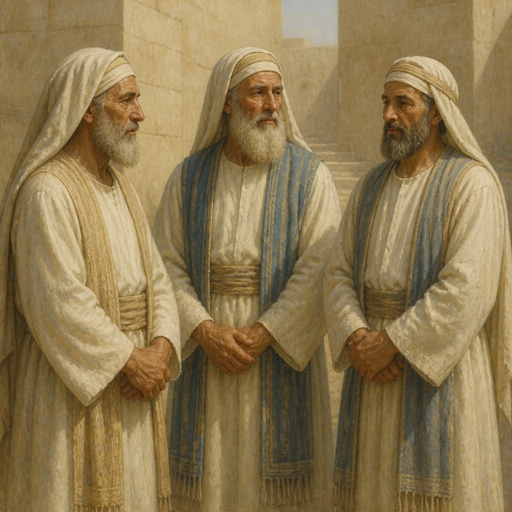
"Maaziah, Bilgai, Shemaiah: these were the priests." - Nehemiah 10:8

Nehemiah 8:9 - "¶ And Nehemiah, which is the Tirshatha, and Ezra the priest the scribe, and the Levites that taught the people, said unto all the people, This day is holy unto the LORD your God; mourn not, nor weep. For all the people wept, when they heard the words of the law."

Nehemiah 13:8 - "And it grieved me sore: therefore I cast forth all the household stuff of Tobiah out of the chamber."

Nehemiah 12:8 - "Moreover the Levites: Jeshua, Binnui, Kadmiel, Sherebiah, Judah, and Mattaniah, which was over the thanksgiving, he and his brethren."

Nehemiah 8:11 - "So the Levites stilled all the people, saying, Hold your peace, for the day is holy; neither be ye grieved."

Nehemiah 13:16 - "There dwelt men of Tyre also therein, which brought fish, and all manner of ware, and sold on the sabbath unto the children of Judah, and in Jerusalem."

Nehemiah 8:14 - "And they found written in the law which the LORD had commanded by Moses, that the children of Israel should dwell in booths in the feast of the seventh month:"
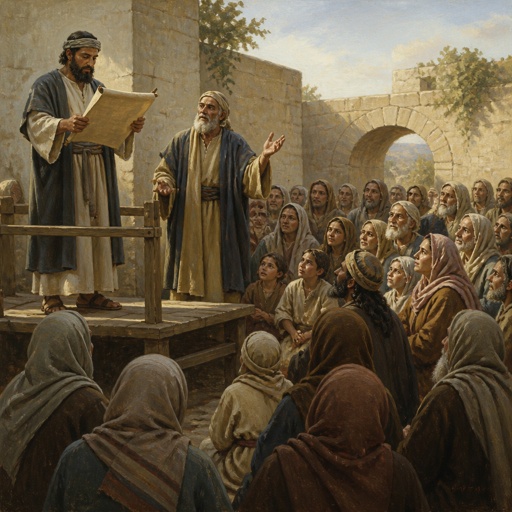
"So they read in the book in the law of God distinctly, and gave the sense, and caused them to understand the reading." - Nehemiah 8:8

Nehemiah 6:8 - "Then I sent unto him, saying, There are no such things done as thou sayest, but thou feignest them out of thine own heart."
"The children of Parosh, two thousand an hundred seventy and two." - Nehemiah 7:8

Nehemiah 5:16 - "Yea, also I continued in the work of this wall, neither bought we any land: and all my servants were gathered thither unto the work."