What does Nehemiah 8:10 mean?
"Then he said unto them, Go your way, eat the fat, and drink the sweet, and send portions unto them for whom nothing is prepared: for this day is holy unto our Lord: neither be ye sorry; for the joy of the LORD is your strength." - Nehemiah 8:10
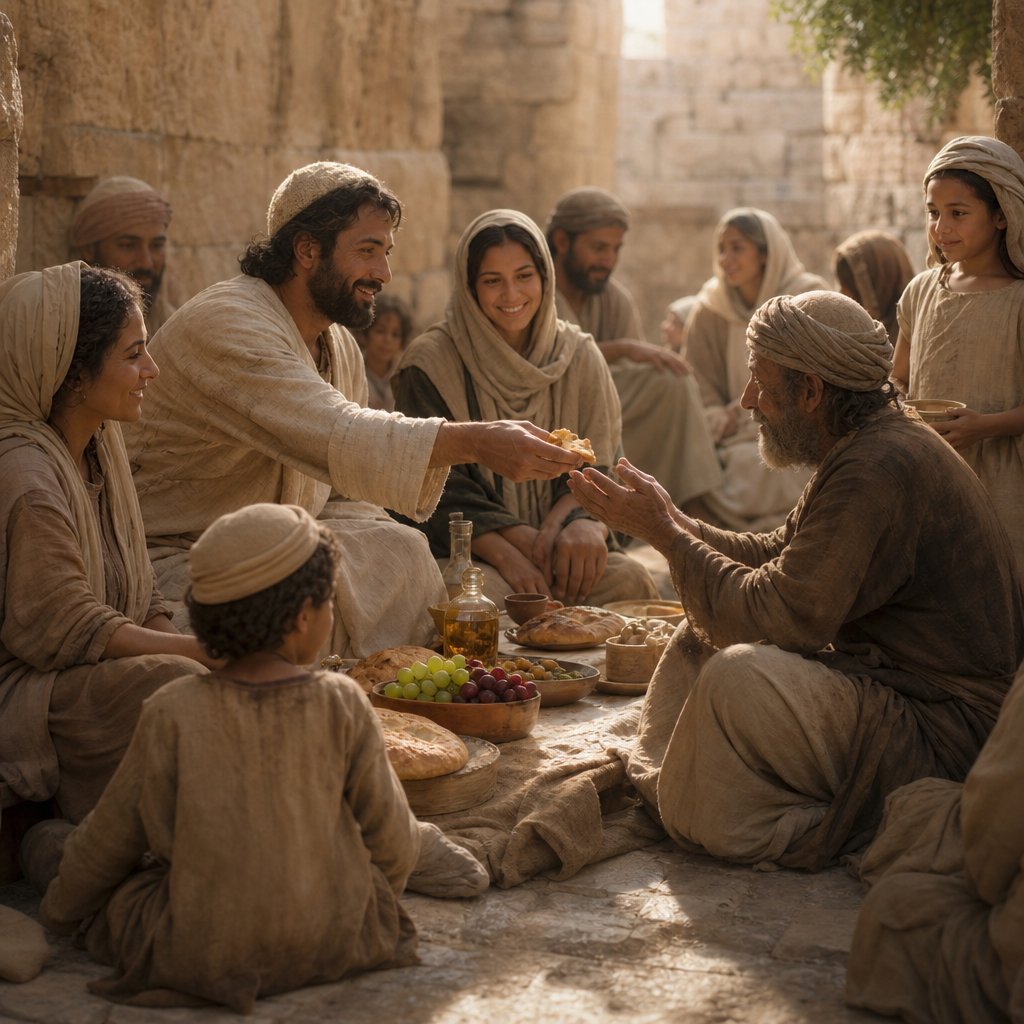
Nehemiah 8:10 in the King James Version sits at a turning point in Israel’s restoration after the exile, when God’s people, newly resettled in Jerusalem, are being rebuilt from the inside out by the hearing of God’s word. The verse reads: “Then he said unto them, Go your way, eat the fat, and drink the sweet, and send portions unto them for whom nothing is prepared: for this day is holy unto our Lord: neither be ye sorry; for the joy of the LORD is your strength.”
The immediate context is a public reading of “the book of the law of Moses” before the congregation. Ezra reads, and the Levites help the people understand. The word of God pierces them; they weep, not because the word is unclear, but because it is clear enough to expose how far they have fallen short and how much has been lost through sin and judgment. In that moment, Nehemiah the governor, Ezra the priest-scribe, and the Levites do something that can seem surprising: they do not allow the assembly to remain in grief. They insist that this particular day is “holy,” set apart, and therefore it must be marked not by despair but by reverent gladness.
“Go your way, eat the fat, and drink the sweet” is not a call to careless indulgence but to covenant celebration. In Scripture, fat and sweetness are images of abundance and good provision, the best of what one may enjoy. After hearing the law, the people are not instructed to punish themselves as though sorrow could pay for sin; they are instructed to receive, with gratitude, the goodness of God. The holiness of the day does not demand a grim mood; it demands that God be honored as God—true, just, and also merciful and faithful to restore. Their feasting becomes a confession that the Lord has not abandoned them. They have a city, an assembly, a word, and a God who still speaks to them and gathers them as his people.
The command to “send portions unto them for whom nothing is prepared” gives the celebration its ethical shape. Joy in God is never meant to be private self-comfort; it becomes communal care. The word “portions” echoes the language of festival sharing, where those with abundance ensure that those without are not excluded. In a scene where the law has just been opened and explained, the fruit of understanding is not merely emotion but obedience expressed as mercy. The holiness of the day is guarded by compassion, so that the poor do not stand at the edges of the congregation watching others rejoice. This also symbolizes what restoration looks like: a rebuilt people is recognizable by shared worship and shared provision.
“For this day is holy unto our Lord” explains why mourning is not the final word here. Holiness in this setting is not merely separation from sin; it is consecration to God’s purposes. A holy day is one claimed by God, and therefore it carries God’s intended meaning. In Nehemiah 8, that meaning is that the hearing of Scripture is meant to lead to life. The law does produce conviction, but conviction is meant to bring the people back to God, not to trap them in hopelessness. The leaders are not denying the seriousness of sin; they are directing the people to respond rightly at the right time. There is a time to weep, and Scripture knows that time well, but here the people must learn that grief is not the only faithful response to truth. God’s word also calls for rejoicing because God is present to restore.
“Neither be ye sorry” is therefore pastoral as much as it is instructional. The sorrow of the people is understandable, but if it continues unchecked, it can become a kind of unbelief, as though sin has the last word and as though God’s covenant mercy is too small to overcome their history. The leaders steer them away from a grief that collapses into paralysis and toward a joy that becomes obedience. In other words, the verse teaches that repentance is not completed when one only feels broken; repentance matures when one rises from the ground and walks forward in the grace of God.
The climactic phrase, “for the joy of the LORD is your strength,” gathers the whole moment into a single spiritual principle. In KJV wording, “the joy of the LORD” can be heard as the joy that comes from the Lord and centers on him—joy rooted in who he is, what he has said, and what he is doing among his people. That joy becomes “your strength,” not merely an emotion but a sustaining power. The people are facing the hard work of rebuilding a community, learning obedience, repairing worship, and resisting opposition. Mere willpower will not hold them. Nehemiah 8:10 teaches that endurance for covenant life flows from gladness in God. Strength arises when God is treasured, when his word is welcomed not only as a mirror exposing sin but as a light guiding their future and a promise securing their hope.
There is also symbolism in how the verse moves from hearing to eating, from instruction to fellowship, from individual tears to shared portions. The word is read publicly because the covenant is not private; then the people are sent “your way,” back into ordinary life, but carrying holy joy into everyday practice. The fat and the sweet symbolize the goodness of God received; the portions symbolize justice and charity extended; the holy day symbolizes time claimed by God; the joy symbolizes faith awake and active. Together they show that God’s restoration does not end at the temple steps or the city wall. It reaches the table, the neighbor, the poor, and the heart.
So Nehemiah 8:10 is significant because it places the response to Scripture within the full character of God. The law produces tears, but God intends those tears to give way to consecrated rejoicing and generous community life. The verse declares that holiness and happiness are not enemies when happiness is rooted in the Lord. It teaches that the people of God are strengthened not by denial of sin, but by joy that arises after the word has been understood—a joy that feeds gratitude, fuels obedience, and overflows in care for those “for whom nothing is prepared.”
Have questions about Nehemiah 8:10?
Dive deeper into this scripture with Bible Chat — an AI-powered tool for exploring God's Word through conversation. Ask questions, get context, and grow in your understanding of the Bible.
Get Our Apps


Nehemiah 8:10 Artwork

Nehemiah 8:10

Nehemiah 8:10

Nehemiah 8:10

Nehemiah 8:10 - "Then he said unto them, Go your way, eat the fat, and drink the sweet, and send portions unto them for whom nothing is prepared: for this day is holy unto our Lord: neither be ye sorry; for the joy of the LORD is your strength."
"Then he said unto them, Go your way, eat the fat, and drink the sweet, and send portions unto them for whom nothing is prepared: for this day is holy unto our Lord: neither be ye sorry; for the joy of the LORD is your strength." - Nehemiah 8:10

Nehemiah 10:8 - "Maaziah, Bilgai, Shemaiah: these were the priests."
"Maaziah, Bilgai, Shemaiah: these were the priests." - Nehemiah 10:8

Nehemiah 10:1 - "Now those that sealed were, Nehemiah, the Tirshatha, the son of Hachaliah, and Zidkijah,"

Nehemiah 10:10 - "And their brethren, Shebaniah, Hodijah, Kelita, Pelaiah, Hanan,"

Nehemiah 10:24 - "Hallohesh, Pileha, Shobek,"

Nehemiah 10:22 - "Pelatiah, Hanan, Anaiah,"

Nehemiah 10:5 - "Harim, Meremoth, Obadiah,"

Nehemiah 10:23 - "Hoshea, Hananiah, Hashub,"

Nehemiah 10:21 - "Meshezabeel, Zadok, Jaddua,"

Nehemiah 10:7 - "Meshullam, Abijah, Mijamin,"

Nehemiah 10:11 - "Micha, Rehob, Hashabiah,"

Nehemiah 10:27 - "Malluch, Harim, Baanah."

Nehemiah 10:25 - "Rehum, Hashabnah, Maaseiah,"

Nehemiah 10:19 - "Hariph, Anathoth, Nebai,"

Nehemiah 10:6 - "Daniel, Ginnethon, Baruch,"

Nehemiah 10:26 - "And Ahijah, Hanan, Anan,"

Nehemiah 10:16 - "Adonijah, Bigvai, Adin,"

Nehemiah 10:18 - "Hodijah, Hashum, Bezai,"

Nehemiah 10:20 - "Magpiash, Meshullam, Hezir,"

Nehemiah 10:3 - "Pashur, Amariah, Malchijah,"

Nehemiah 10:17 - "Ater, Hizkijah, Azzur,"

Nehemiah 10:4 - "Hattush, Shebaniah, Malluch,"

Nehemiah 10:2 - "Seraiah, Azariah, Jeremiah,"

Nehemiah 10:12 - "Zaccur, Sherebiah, Shebaniah,"

Nehemiah 10:15 - "Bunni, Azgad, Bebai,"