What does Nehemiah 7:65 mean?
"And the Tirshatha said unto them, that they should not eat of the most holy things, till there stood up a priest with Urim and Thummim." - Nehemiah 7:65
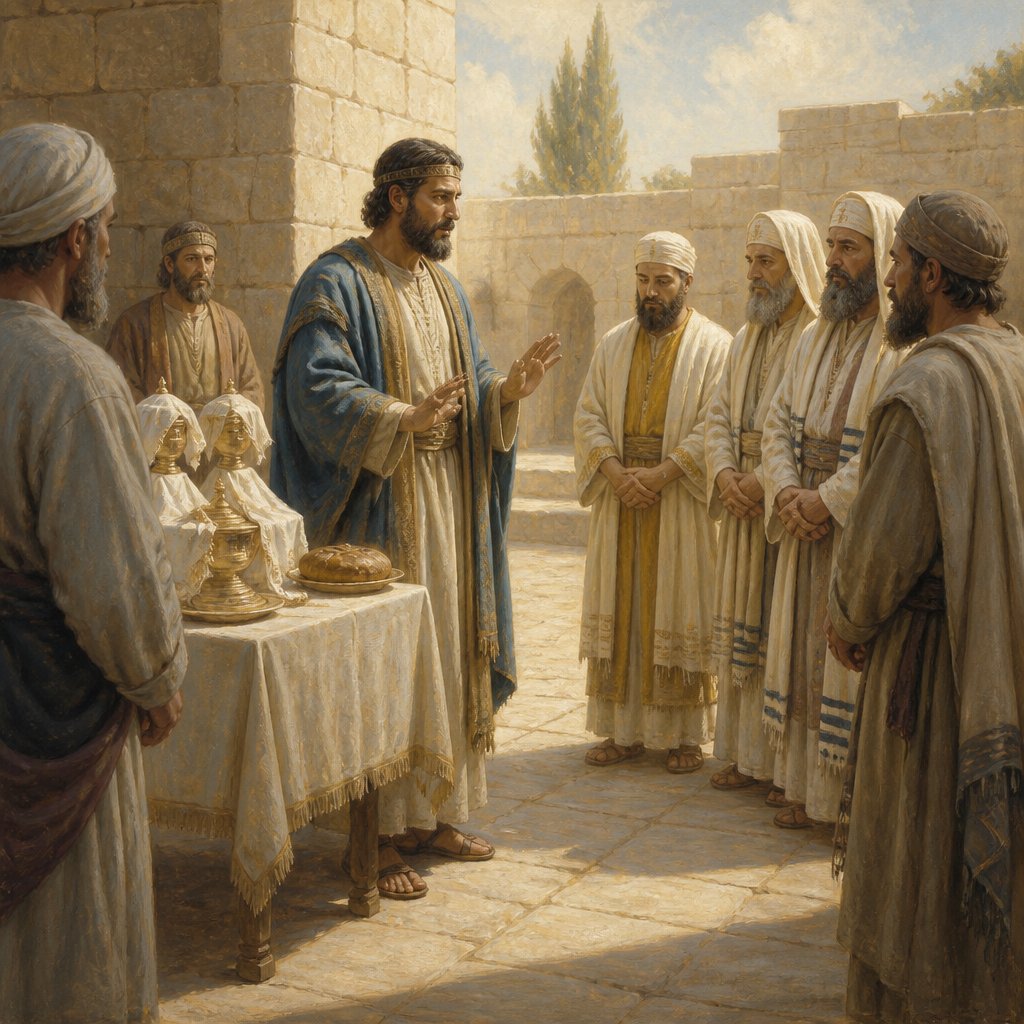
The Bible verse Nehemiah 7:65 from the King James Version (KJV) reads, "And the Tirshatha said unto them, that they should not eat of the most holy things, till there stood up a priest with Urim and Thummim."
This verse comes from the book of Nehemiah, which is a historical account of the Jews' return to Jerusalem from exile in Babylon and the rebuilding of the walls of the city. The Tirshatha, also known as Nehemiah, is addressing the issue of who is eligible to eat the most holy things, which would have been food offered as sacrifices in the temple. The Urim and Thummim were sacred objects used by the high priest to discern God's will in matters of national importance.
The context of this verse is important for understanding its significance. The Jewish people had returned to Jerusalem after a period of exile, and they were working to rebuild their city and reestablish their religious practices. The issue of who could partake in the most holy things was a matter of great importance to them, as it pertained to their relationship with God and the proper observance of their religious rites.
The Tirshatha's command that they should not eat of the most holy things until a priest with Urim and Thummim was present was a way of ensuring that the proper protocols and procedures were followed in accordance with the law. The Urim and Thummim were used by the high priest to seek guidance from God, and their presence was a sign of God's approval and authority.
Symbolically, this verse speaks to the importance of following God's will and seeking his guidance in all matters. The Urim and Thummim represent the means by which the Jewish people sought divine direction and approval, and their absence meant that the people were not to partake in the most holy things until this approval was obtained. This demonstrates the reverence and respect the Jewish people had for their religious practices and the symbolic weight of their observance.
Thematically, this verse touches on the themes of obedience, reverence, and the proper observance of religious rituals. It underscores the importance of following the laws and regulations set forth by God and the need for seeking divine approval in all matters. The Jewish people's adherence to these principles was central to their identity and relationship with God, and this verse reflects their commitment to upholding their religious traditions in a way that honored and pleased God.
In conclusion, Nehemiah 7:65 from the King James Version of the Bible is a thought-provoking and spiritually significant verse that speaks to the importance of seeking God's guidance and approval in all matters. It underscores the reverence and respect the Jewish people had for their religious practices and the symbolic weight of their observance. This verse offers valuable insights into the themes of obedience, reverence, and the proper observance of religious rituals, and it serves as a reminder of the importance of seeking God's will in our lives.
Have questions about Nehemiah 7:65?
Dive deeper into this scripture with Bible Chat — an AI-powered tool for exploring God's Word through conversation. Ask questions, get context, and grow in your understanding of the Bible.
Get Our Apps


Nehemiah 7:65 Artwork
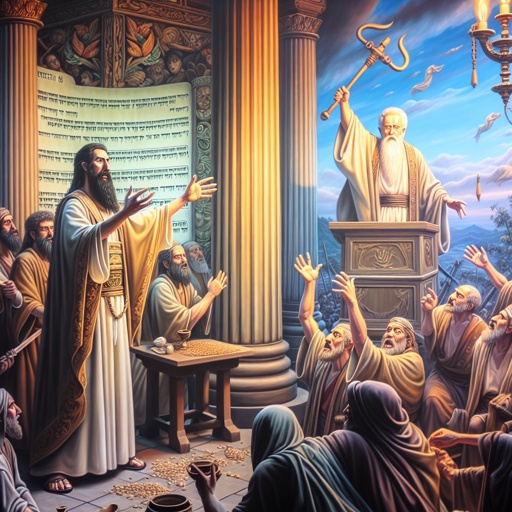
Nehemiah 7:65 - "And the Tirshatha said unto them, that they should not eat of the most holy things, till there stood up a priest with Urim and Thummim."
"And the Tirshatha said unto them, that they should not eat of the most holy things, till there stood up a priest with Urim and Thummim." - Nehemiah 7:65

Psalms 65:7 - "Which stilleth the noise of the seas, the noise of their waves, and the tumult of the people."

Nehemiah 7:7 - "Who came with Zerubbabel, Jeshua, Nehemiah, Azariah, Raamiah, Nahamani, Mordecai, Bilshan, Mispereth, Bigvai, Nehum, Baanah. The number, I say, of the men of the people of Israel was this;"
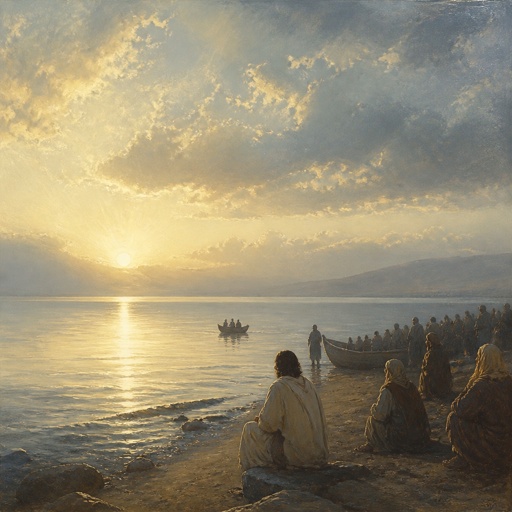
"Which stilleth the noise of the seas, the noise of their waves, and the tumult of the people." - Psalms 65:7

Numbers 7:65 - "And for a sacrifice of peace offerings, two oxen, five rams, five he goats, five lambs of the first year: this was the offering of Abidan the son of Gideoni."

Nehemiah 10:7 - "Meshullam, Abijah, Mijamin,"

Nehemiah 7:42 - "The children of Harim, a thousand and seventeen."

Nehemiah 7:24 - "The children of Hariph, an hundred and twelve."

Nehemiah 7:56 - "The children of Neziah, the children of Hatipha."

Nehemiah 7:25 - "The children of Gibeon, ninety and five."

Isaiah 65:7 - "Your iniquities, and the iniquities of your fathers together, saith the LORD, which have burned incense upon the mountains, and blasphemed me upon the hills: therefore will I measure their former work into their bosom."

Nehemiah 7:40 - "The children of Immer, a thousand fifty and two."

Nehemiah 7:31 - "The men of Michmas, an hundred and twenty and two."

Nehemiah 7:33 - "The men of the other Nebo, fifty and two."

Nehemiah 7:21 - "The children of Ater of Hezekiah, ninety and eight."

Nehemiah 7:28 - "The men of Beth-azmaveth, forty and two."

Nehemiah 7:14 - "The children of Zaccai, seven hundred and threescore."

Nehemiah 7:27 - "The men of Anathoth, an hundred twenty and eight."

Nehemiah 7:35 - "The children of Harim, three hundred and twenty."

Nehemiah 7:16 - "The children of Bebai, six hundred twenty and eight."

Nehemiah 7:58 - "The children of Jaala, the children of Darkon, the children of Giddel,"

Nehemiah 7:9 - "The children of Shephatiah, three hundred seventy and two."

Nehemiah 7:48 - "The children of Lebana, the children of Hagaba, the children of Shalmai,"

Nehemiah 7:19 - "The children of Bigvai, two thousand threescore and seven."

Nehemiah 7:15 - "The children of Binnui, six hundred forty and eight."

Nehemiah 7:44 - "¶ The singers: the children of Asaph, an hundred forty and eight."

Nehemiah 7:18 - "The children of Adonikam, six hundred threescore and seven."

Nehemiah 7:13 - "The children of Zattu, eight hundred forty and five."

Nehemiah 7:49 - "The children of Hanan, the children of Giddel, the children of Gahar,"