What does Nehemiah 7:51 mean?
"The children of Gazzam, the children of Uzza, the children of Phaseah," - Nehemiah 7:51
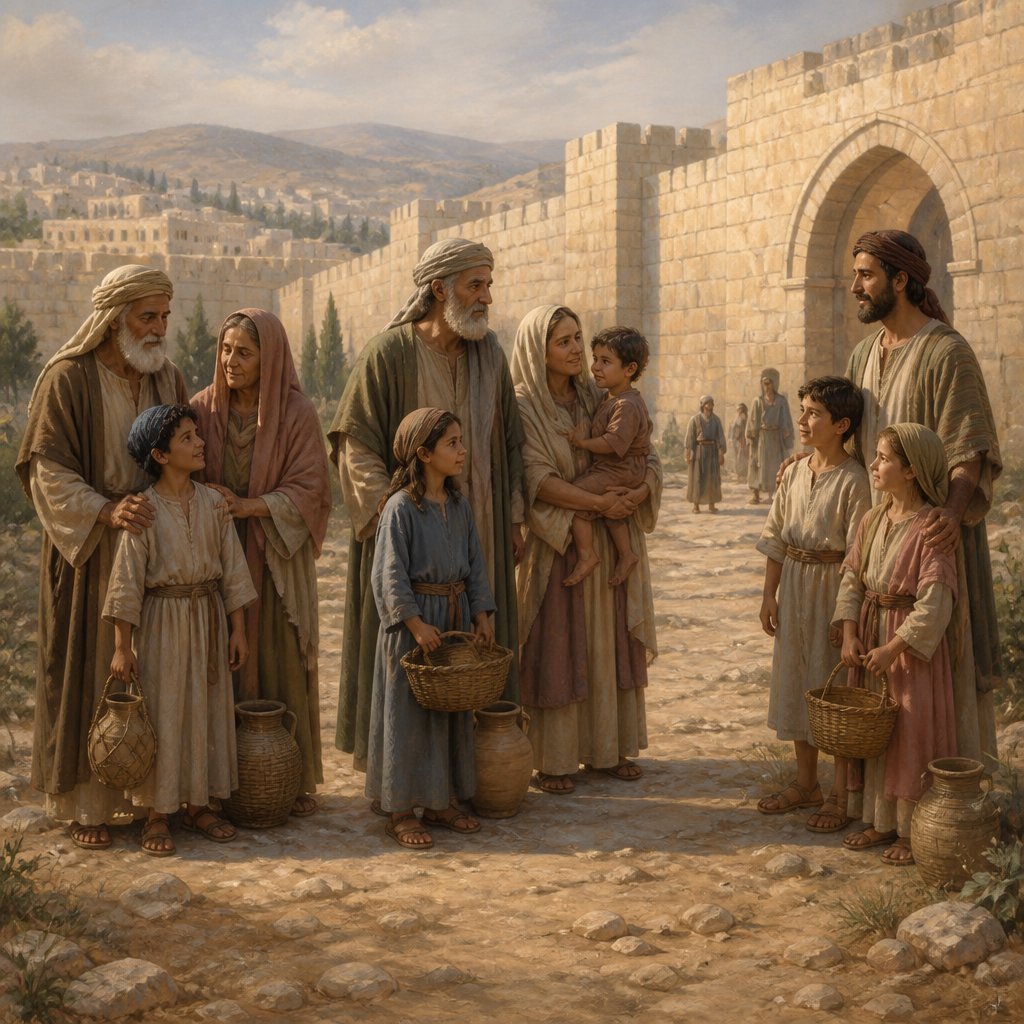
Nehemiah 7:51 (KJV) reads, "The children of Besai, the children of Meunim, the children of Nephishesim,"
Nehemiah 7:51 is part of a list of the families and tribes of Israel who returned to Jerusalem from Babylon under the leadership of Zerubbabel, Ezra, and Nehemiah. In this verse, the names "Besai," "Meunim," and "Nephishesim" are mentioned as part of the families who returned to Jerusalem. While this verse may seem obscure, it holds significant meaning within the larger context of the book of Nehemiah and the Bible as a whole.
To understand the deeper meaning of this verse, it is important to provide some background information. The book of Nehemiah is set in the 5th century BC and tells the story of Nehemiah, a Jewish cupbearer to the Persian king Artaxerxes. Nehemiah receives news about the dire state of Jerusalem, which has been left in ruins after the Babylonian exile. He is burdened by the condition of his people and obtains permission from King Artaxerxes to return to Jerusalem and rebuild its walls.
Upon arriving in Jerusalem, Nehemiah faces opposition and challenges from the surrounding nations, but he remains steadfast in his mission. He organizes the people to rebuild the city walls, restore the gates, and reinstate proper worship and social order. Throughout this process, various families and tribes are mentioned, including the "children of Besai, the children of Meunim, the children of Nephishesim" in Nehemiah 7:51.
One of the key themes present in this verse is the restoration and reunification of the people of Israel. The mention of these specific families highlights the diverse and inclusive nature of the Israelite community returning to Jerusalem. The book of Nehemiah emphasizes the importance of unity and solidarity among the people, regardless of their specific lineage or background.
Furthermore, this verse reflects the faithfulness of God in restoring his people. The return to Jerusalem from Babylon symbolizes not only a physical return to their homeland but also a spiritual restoration. The families mentioned in Nehemiah 7:51 represent the larger narrative of God's faithfulness to his people, fulfilling his promises of redemption and renewal.
In addition, the names "Besai," "Meunim," and "Nephishesim" may hold symbolic significance. In biblical times, names often carried deep meaning and were reflective of one's character or destiny. While little is known about these specific families, their inclusion in the list serves as a testament to the value and significance of each individual within the broader community.
Nehemiah 7:51 also serves as a reminder of the importance of historical record-keeping within the Bible. The detailed lists of families and tribes demonstrate the meticulous preservation of Israel's heritage and lineage. This attention to detail underscores the importance of remembering and honoring the past, while also looking towards the future with hope and purpose.
Overall, Nehemiah 7:51 may appear to be a simple list of names, but it carries profound meaning within the larger context of the book of Nehemiah. It highlights themes of restoration, unity, faithfulness, and the significance of individual identity within the community. This verse serves as a testament to God's faithfulness in restoring his people and preserving their heritage. It also underscores the importance of remembering and honoring the past while building towards a hopeful future.
Have questions about Nehemiah 7:51?
Dive deeper into this scripture with Bible Chat — an AI-powered tool for exploring God's Word through conversation. Ask questions, get context, and grow in your understanding of the Bible.
Get Our Apps


Nehemiah 7:51 Artwork

Nehemiah 7:51 - "The children of Gazzam, the children of Uzza, the children of Phaseah,"
"The children of Gazzam, the children of Uzza, the children of Phaseah," - Nehemiah 7:51

Nehemiah 7:7 - "Who came with Zerubbabel, Jeshua, Nehemiah, Azariah, Raamiah, Nahamani, Mordecai, Bilshan, Mispereth, Bigvai, Nehum, Baanah. The number, I say, of the men of the people of Israel was this;"

Nehemiah 10:7 - "Meshullam, Abijah, Mijamin,"
Numbers 7:51 - "One young bullock, one ram, one lamb of the first year, for a burnt offering:"

Nehemiah 7:42 - "The children of Harim, a thousand and seventeen."

Nehemiah 7:24 - "The children of Hariph, an hundred and twelve."

Nehemiah 7:56 - "The children of Neziah, the children of Hatipha."

Nehemiah 7:25 - "The children of Gibeon, ninety and five."

Nehemiah 7:40 - "The children of Immer, a thousand fifty and two."

Nehemiah 7:31 - "The men of Michmas, an hundred and twenty and two."

John 7:51 - "Doth our law judge any man, before it hear him, and know what he doeth?"

Nehemiah 7:33 - "The men of the other Nebo, fifty and two."

Nehemiah 7:28 - "The men of Beth-azmaveth, forty and two."

Nehemiah 7:21 - "The children of Ater of Hezekiah, ninety and eight."

Nehemiah 7:14 - "The children of Zaccai, seven hundred and threescore."

Nehemiah 7:27 - "The men of Anathoth, an hundred twenty and eight."

Nehemiah 7:35 - "The children of Harim, three hundred and twenty."

Nehemiah 7:16 - "The children of Bebai, six hundred twenty and eight."

Nehemiah 7:58 - "The children of Jaala, the children of Darkon, the children of Giddel,"

Nehemiah 7:9 - "The children of Shephatiah, three hundred seventy and two."

Nehemiah 7:48 - "The children of Lebana, the children of Hagaba, the children of Shalmai,"

Nehemiah 7:15 - "The children of Binnui, six hundred forty and eight."

Nehemiah 7:19 - "The children of Bigvai, two thousand threescore and seven."

Nehemiah 7:44 - "¶ The singers: the children of Asaph, an hundred forty and eight."

Nehemiah 7:13 - "The children of Zattu, eight hundred forty and five."

Nehemiah 7:18 - "The children of Adonikam, six hundred threescore and seven."

Nehemiah 7:49 - "The children of Hanan, the children of Giddel, the children of Gahar,"

Nehemiah 7:55 - "The children of Barkos, the children of Sisera, the children of Tamah,"

Nehemiah 7:20 - "The children of Adin, six hundred fifty and five."