What does Nehemiah 7:29 mean?
"The men of Kirjath-jearim, Chephirah, and Beeroth, seven hundred forty and three." - Nehemiah 7:29
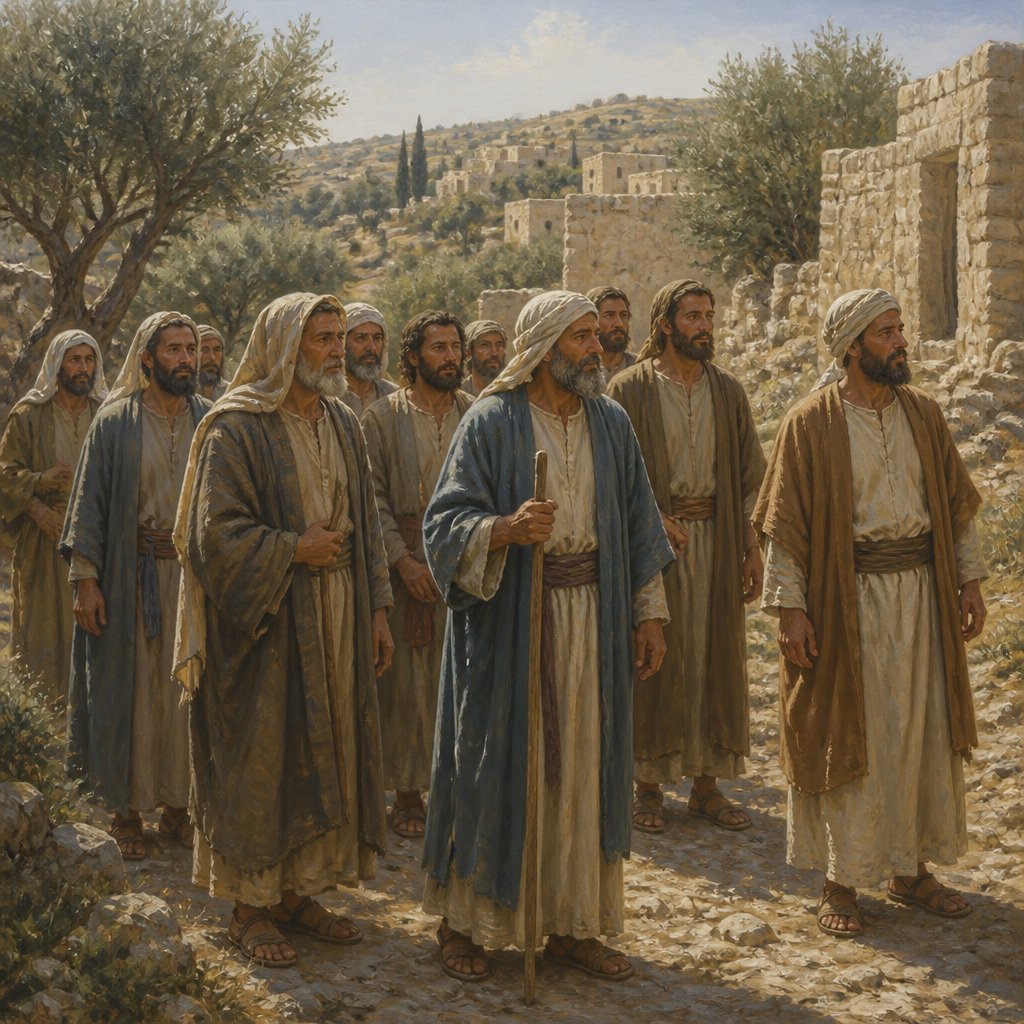
Sure! Here is the Bible verse Nehemiah 7:29 from the King James Version:
"The men of Kirjathjearim, Chephirah, and Beeroth, seven hundred forty and three."
Nehemiah 7:29 is a verse from the book of Nehemiah in the Old Testament. The book of Nehemiah tells the story of Nehemiah, a cupbearer to the king of Persia, who is granted permission to return to Jerusalem to rebuild its walls, following the Babylonian exile. The verse specifically lists the number of men from three different towns who returned to Jerusalem to help in the rebuilding efforts.
One of the key themes in the book of Nehemiah is the restoration of Jerusalem. The city had been destroyed, and its people scattered and exiled. Nehemiah's mission is to gather the Israelites and lead them in rebuilding their city and their lives. This verse is part of the larger narrative of the gathering of the exiles and the reestablishment of the community in Jerusalem. It highlights the participation of these specific towns in the rebuilding efforts, showing the unity and cooperation among the people in this monumental task.
The verse also reflects the theme of faithfulness and obedience to God. The men from Kirjathjearim, Chephirah, and Beeroth demonstrated their commitment to the Lord and their people by returning to Jerusalem to help in the rebuilding process. Their willingness to participate in the restoration of Jerusalem emphasizes the importance of community and the shared responsibility to work towards the common good.
Symbolically, the number "seven hundred forty and three" can be interpreted as representing completeness and abundance. In the Bible, numbers often carry symbolic significance, and the number seven is frequently associated with wholeness and perfection. The fact that there were seven hundred forty-three men from these three towns implies a sense of fullness and completeness in the participation of the people in the restoration efforts.
Furthermore, the specific mention of these three towns holds symbolic meaning as well. Kirjathjearim is associated with the Ark of the Covenant in the Old Testament, which is a powerful symbol of God's presence among his people. Chephirah means "village" in Hebrew, highlighting the importance of even the smallest communities in the restoration process. Beeroth means "wells," which symbolizes a source of life and sustenance. The inclusion of these towns in the verse suggests that all aspects of the community, from the spiritual to the practical, are essential in the rebuilding of Jerusalem.
In a broader context, Nehemiah 7:29 serves as a reminder of the importance of working together in unity for a common purpose. The verse emphasizes the value of each individual's contribution to the larger community and the significance of communal efforts in achieving a common goal.
In conclusion, Nehemiah 7:29 from the King James Version embodies themes of restoration, faithfulness, and community. It symbolizes the completeness and abundance of the people's participation in the rebuilding of Jerusalem and highlights the significance of the unity and cooperation among the Israelites. The verse serves as a powerful reminder of the importance of shared responsibility and commitment to the common good.
Have questions about Nehemiah 7:29?
Dive deeper into this scripture with Bible Chat — an AI-powered tool for exploring God's Word through conversation. Ask questions, get context, and grow in your understanding of the Bible.
Get Our Apps


Nehemiah 7:29 Artwork

Nehemiah 7:29 - "The men of Kirjath-jearim, Chephirah, and Beeroth, seven hundred forty and three."

"The men of Kirjath-jearim, Chephirah, and Beeroth, seven hundred forty and three." - Nehemiah 7:29

Nehemiah 11:29 - "And at En-rimmon, and at Zareah, and at Jarmuth,"

"And at En-rimmon, and at Zareah, and at Jarmuth," - Nehemiah 11:29

Nehemiah 7:7 - "Who came with Zerubbabel, Jeshua, Nehemiah, Azariah, Raamiah, Nahamani, Mordecai, Bilshan, Mispereth, Bigvai, Nehum, Baanah. The number, I say, of the men of the people of Israel was this;"

Nehemiah 13:29 - "Remember them, O my God, because they have defiled the priesthood, and the covenant of the priesthood, and of the Levites."

Nehemiah 10:7 - "Meshullam, Abijah, Mijamin,"

Nehemiah 7:42 - "The children of Harim, a thousand and seventeen."

Nehemiah 7:24 - "The children of Hariph, an hundred and twelve."

Nehemiah 7:56 - "The children of Neziah, the children of Hatipha."

Nehemiah 7:25 - "The children of Gibeon, ninety and five."

Nehemiah 7:40 - "The children of Immer, a thousand fifty and two."

Nehemiah 7:31 - "The men of Michmas, an hundred and twenty and two."

Nehemiah 7:33 - "The men of the other Nebo, fifty and two."

Nehemiah 7:21 - "The children of Ater of Hezekiah, ninety and eight."

Nehemiah 7:28 - "The men of Beth-azmaveth, forty and two."

Nehemiah 7:14 - "The children of Zaccai, seven hundred and threescore."

Nehemiah 7:27 - "The men of Anathoth, an hundred twenty and eight."

Nehemiah 7:35 - "The children of Harim, three hundred and twenty."

Nehemiah 12:29 - "Also from the house of Gilgal, and out of the fields of Geba and Azmaveth: for the singers had builded them villages round about Jerusalem."

Nehemiah 7:16 - "The children of Bebai, six hundred twenty and eight."

Nehemiah 7:58 - "The children of Jaala, the children of Darkon, the children of Giddel,"

Nehemiah 7:9 - "The children of Shephatiah, three hundred seventy and two."

Nehemiah 7:48 - "The children of Lebana, the children of Hagaba, the children of Shalmai,"

Nehemiah 7:19 - "The children of Bigvai, two thousand threescore and seven."

Nehemiah 7:15 - "The children of Binnui, six hundred forty and eight."

Nehemiah 7:44 - "¶ The singers: the children of Asaph, an hundred forty and eight."

Nehemiah 7:18 - "The children of Adonikam, six hundred threescore and seven."

Nehemiah 7:13 - "The children of Zattu, eight hundred forty and five."

Nehemiah 7:49 - "The children of Hanan, the children of Giddel, the children of Gahar,"