What does Nehemiah 7:1 mean?
"Now it came to pass, when the wall was built, and I had set up the doors, and the porters and the singers and the Levites were appointed," - Nehemiah 7:1
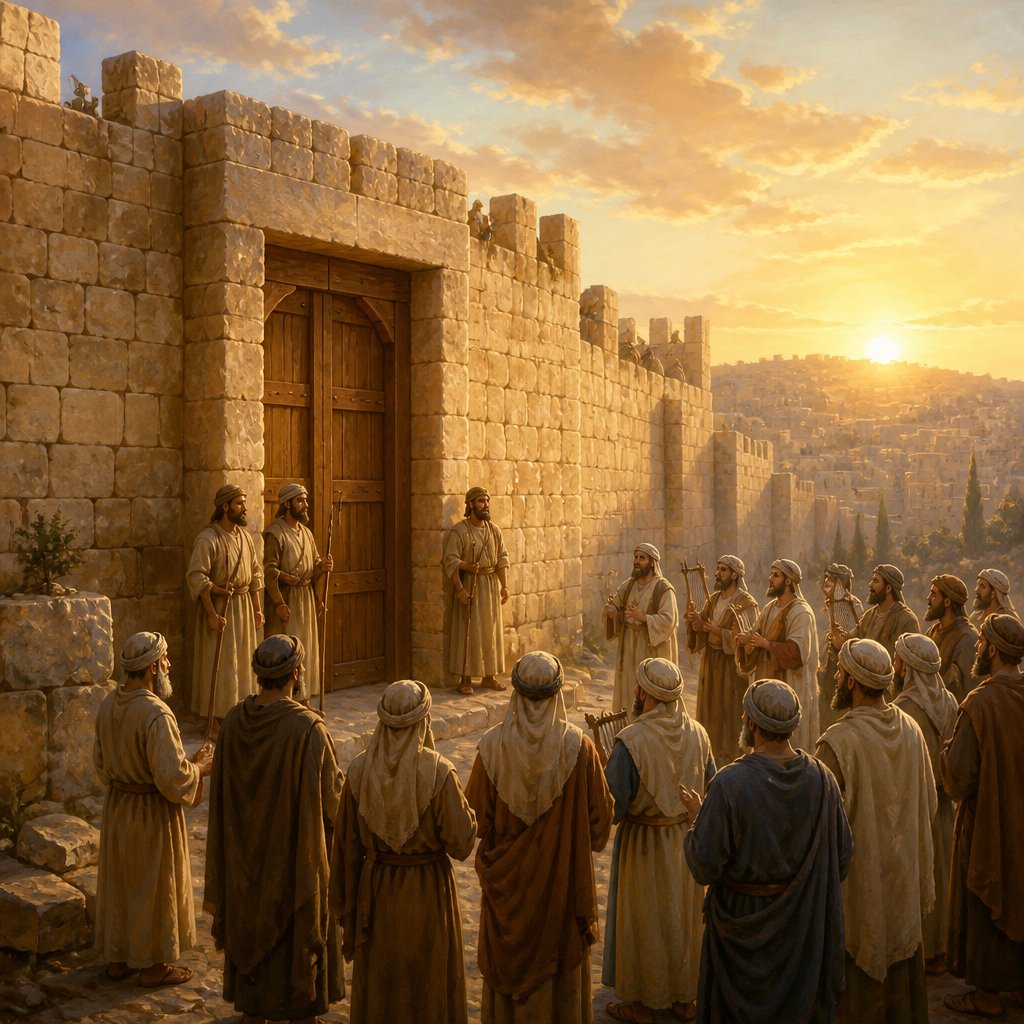
The book of Nehemiah is a historical account of the restoration of the walls of Jerusalem and the spiritual revival of the Jewish people. Nehemiah was a cupbearer to King Artaxerxes of Persia, but he had a deep burden for the welfare of the Jewish people and the city of Jerusalem. He asked the king for permission to return to Jerusalem, and he was granted leave to go there and oversee the rebuilding of the city walls.
In Nehemiah 7:1, the King James Version reads, "Now it came to pass, when the wall was built, and I had set up the doors, the porters, and the singers, and the Levites were appointed." This verse comes after the completion of the wall, and it marks a significant milestone in the process of rebuilding Jerusalem.
The completion of the wall symbolizes the restoration of the city's security and stability. Throughout the book of Nehemiah, the building of the wall is a central theme, serving as a physical representation of the spiritual restoration and protection that God provides for His people. Nehemiah's dedication to the rebuilding of the wall is a powerful example of leadership, vision, and perseverance in the face of opposition and adversity.
The mention of setting up the doors, appointing the porters, singers, and Levites highlights the organization and order that Nehemiah established within the city. The doors and porters represent the security and defense of the city, while the singers and Levites signify the religious and cultural life of the community. Nehemiah's attention to detail in ensuring the city's physical and spiritual well-being reflects his commitment to creating a thriving and sustainable community for the Jewish people.
The appointment of the Levites is particularly significant, as they were responsible for the spiritual leadership and worship in the community. Nehemiah understood the importance of restoring the religious life of the Jewish people, and he made sure that the Levites were given a prominent role in the governance of the city. This symbolic act of reinstating the religious leaders signifies the reestablishment of the community's faith and commitment to God.
In a broader context, Nehemiah 7:1 also serves as a reminder of the faithfulness and sovereignty of God. The successful completion of the wall and the establishment of order within the city are evidence of God's provision and protection. Throughout the book of Nehemiah, we see how God empowered and equipped Nehemiah and the people to overcome obstacles and opposition. The verse is a testimony to God's faithfulness in fulfilling His promises and restoring the fortunes of His people.
The themes of restoration, leadership, organization, and spiritual renewal are central to the message of Nehemiah 7:1. The verse serves as a powerful reminder of the importance of perseverance, faith, and God's faithfulness in the face of adversity. It also encourages us to be diligent and intentional in our efforts to build and strengthen our communities, both physically and spiritually.
In conclusion, Nehemiah 7:1 is a significant verse that encapsulates the themes of restoration, leadership, and spiritual renewal found throughout the book of Nehemiah. It symbolizes the completion of the wall as well as the establishment of order and organization within the city of Jerusalem. Nehemiah's dedication to rebuilding the city and restoring its spiritual life serves as a powerful example of faith and perseverance. The verse also highlights God's faithfulness in fulfilling His promises and restoring His people. It challenges us to be diligent and intentional in our efforts to build and strengthen our communities, both physically and spiritually, trusting in God's sovereignty and provision.
Have questions about Nehemiah 7:1?
Dive deeper into this scripture with Bible Chat — an AI-powered tool for exploring God's Word through conversation. Ask questions, get context, and grow in your understanding of the Bible.
Get Our Apps


Nehemiah 7:1 Artwork

Nehemiah 7:1 - "Now it came to pass, when the wall was built, and I had set up the doors, and the porters and the singers and the Levites were appointed,"
"Now it came to pass, when the wall was built, and I had set up the doors, and the porters and the singers and the Levites were appointed," - Nehemiah 7:1

Nehemiah 7:7 - "Who came with Zerubbabel, Jeshua, Nehemiah, Azariah, Raamiah, Nahamani, Mordecai, Bilshan, Mispereth, Bigvai, Nehum, Baanah. The number, I say, of the men of the people of Israel was this;"

Nehemiah 10:7 - "Meshullam, Abijah, Mijamin,"

Nehemiah 1:7 - "We have dealt very corruptly against thee, and have not kept the commandments, nor the statutes, nor the judgments, which thou commandedst thy servant Moses."

Nehemiah 7:42 - "The children of Harim, a thousand and seventeen."

Nehemiah 7:24 - "The children of Hariph, an hundred and twelve."

Nehemiah 7:56 - "The children of Neziah, the children of Hatipha."

Nehemiah 7:25 - "The children of Gibeon, ninety and five."

Nehemiah 7:40 - "The children of Immer, a thousand fifty and two."

Nehemiah 7:31 - "The men of Michmas, an hundred and twenty and two."

Nehemiah 7:33 - "The men of the other Nebo, fifty and two."

Nehemiah 7:21 - "The children of Ater of Hezekiah, ninety and eight."

Nehemiah 7:28 - "The men of Beth-azmaveth, forty and two."

Nehemiah 7:14 - "The children of Zaccai, seven hundred and threescore."

Nehemiah 7:27 - "The men of Anathoth, an hundred twenty and eight."

Nehemiah 7:35 - "The children of Harim, three hundred and twenty."

Nehemiah 7:16 - "The children of Bebai, six hundred twenty and eight."

Nehemiah 7:58 - "The children of Jaala, the children of Darkon, the children of Giddel,"

Nehemiah 7:9 - "The children of Shephatiah, three hundred seventy and two."

Nehemiah 7:48 - "The children of Lebana, the children of Hagaba, the children of Shalmai,"

Nehemiah 7:19 - "The children of Bigvai, two thousand threescore and seven."

Nehemiah 7:15 - "The children of Binnui, six hundred forty and eight."

Nehemiah 7:44 - "¶ The singers: the children of Asaph, an hundred forty and eight."

Nehemiah 7:18 - "The children of Adonikam, six hundred threescore and seven."

Nehemiah 7:13 - "The children of Zattu, eight hundred forty and five."

Nehemiah 7:49 - "The children of Hanan, the children of Giddel, the children of Gahar,"

Nehemiah 7:55 - "The children of Barkos, the children of Sisera, the children of Tamah,"

Nehemiah 7:20 - "The children of Adin, six hundred fifty and five."

Nehemiah 1:1 - "The words of Nehemiah the son of Hachaliah. And it came to pass in the month Chisleu, in the twentieth year, as I was in Shushan the palace,"