What does Nehemiah 6:5 mean?
"Then sent Sanballat his servant unto me in like manner the fifth time with an open letter in his hand;" - Nehemiah 6:5
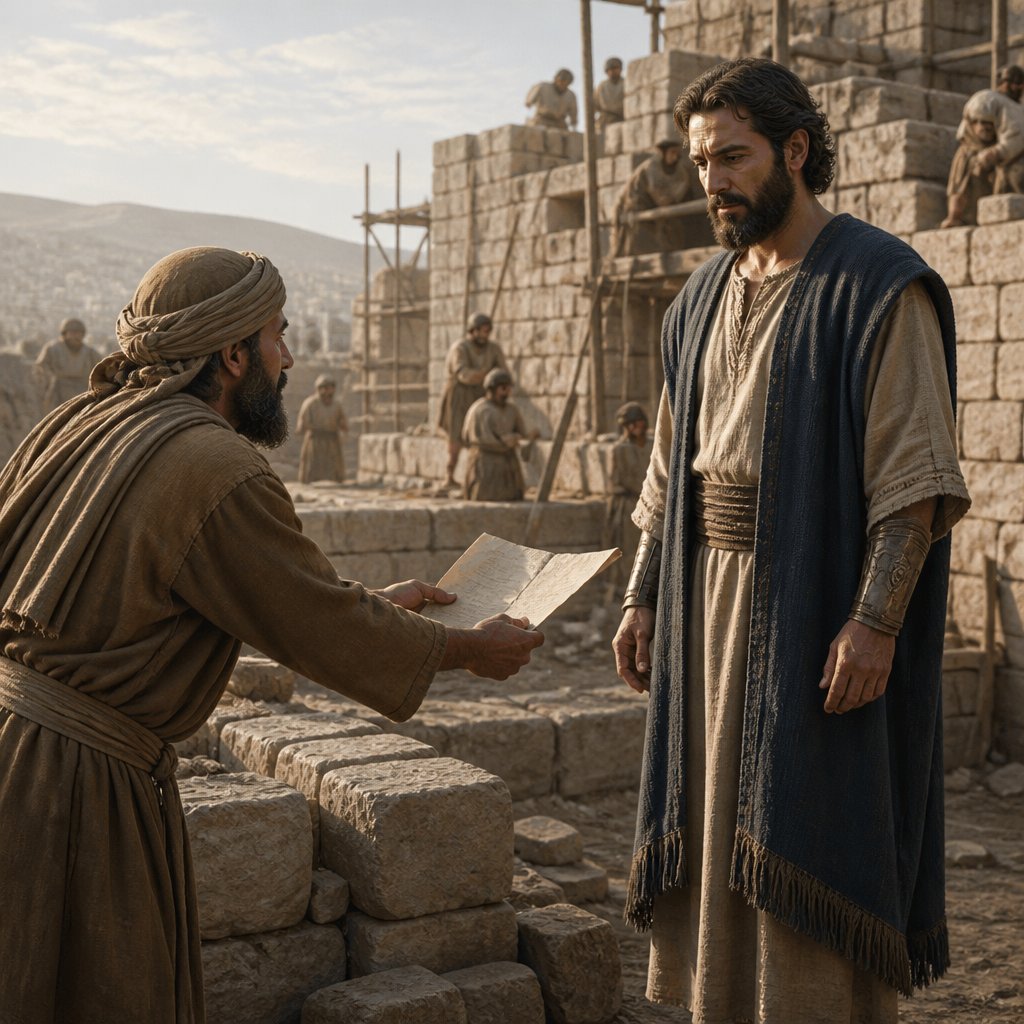
The verse Nehemiah 6:5 in the King James Version of the Bible reads, "Then sent Sanballat his servant unto me in like manner the fifth time with an open letter in his hand."
This verse comes from the book of Nehemiah, which is set during the time of the Jews' return from exile in Babylon and focuses on their efforts to rebuild the walls of Jerusalem. The author, traditionally believed to be the historical figure Nehemiah himself, chronicles the struggles and opposition faced by the Jews as they sought to complete this monumental task.
Contextually, the verse comes at a critical point in the narrative. Sanballat, a prominent figure in Samaria, is mentioned as one of the primary adversaries to the Jews' rebuilding efforts. He and other detractors consistently sought to undermine and thwart Nehemiah's leadership and the rebuilding project. Here, Sanballat sends his servant to Nehemiah with an open letter, likely as a means of intimidation or propaganda.
The themes present in this verse are resistance, perseverance, and opposition. The repeated attempts by Sanballat to hinder the rebuilding of the walls of Jerusalem reflect the opposition and obstacles that often arise when one seeks to do the work of God. Nehemiah's steadfastness in the face of these challenges demonstrates the importance of resolve and faith when confronted with adversity.
The symbolism in this verse lies in the open letter sent by Sanballat's servant. In ancient times, an open letter was a public declaration that could be read by anyone, and its contents were intended to be a form of humiliation or disgrace for the recipient. By sending an open letter, Sanballat sought to discredit and embarrass Nehemiah in the eyes of others. The open letter represents the tactics of the enemy to spread doubt, fear, and discord among the people of God.
Furthermore, the verse highlights the importance of discernment and wisdom in dealing with opposition. Nehemiah's response to Sanballat's servant and the open letter is not recorded in this specific verse, but his handling of previous attempts to distract and deter him from the work at hand reflects his discernment and commitment to the task assigned to him.
The verse also serves as a reminder of the spiritual warfare that believers may face in their lives. The open letter could symbolize the attacks of the enemy, seeking to undermine and hinder the work of God. Nehemiah's example encourages believers to stand firm and trust in the Lord's guidance and protection in the face of resistance and opposition.
In conclusion, Nehemiah 6:5 from the King James Version of the Bible captures a pivotal moment in the narrative of Nehemiah's rebuilding efforts and the opposition he faced from adversaries like Sanballat. This verse conveys themes of perseverance, discernment, and the spiritual warfare that believers may encounter. The symbolism of the open letter serves as a powerful reminder of the tactics of the enemy and the need for unwavering faith and reliance on God in the face of opposition.
Have questions about Nehemiah 6:5?
Dive deeper into this scripture with Bible Chat — an AI-powered tool for exploring God's Word through conversation. Ask questions, get context, and grow in your understanding of the Bible.
Get Our Apps


Nehemiah 6:5 Artwork

Nehemiah 6:5 - "Then sent Sanballat his servant unto me in like manner the fifth time with an open letter in his hand;"
"Then sent Sanballat his servant unto me in like manner the fifth time with an open letter in his hand;" - Nehemiah 6:5

Nehemiah 5:6 - "¶ And I was very angry when I heard their cry and these words."
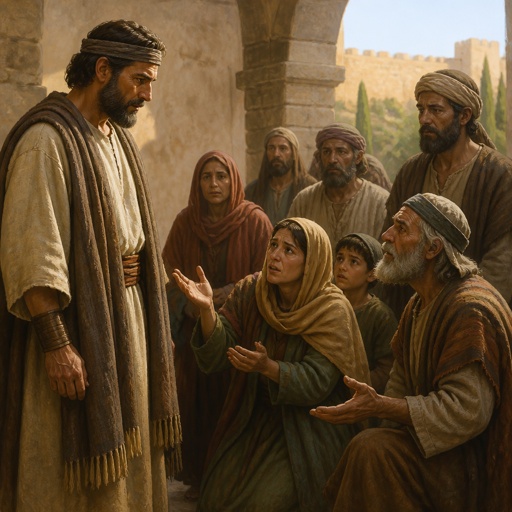
"¶ And I was very angry when I heard their cry and these words." - Nehemiah 5:6

Nehemiah 4:6

Nehemiah 4:6

Nehemiah 4:6

Nehemiah 6:9

Nehemiah 10:6 - "Daniel, Ginnethon, Baruch,"

Nehemiah 10:5 - "Harim, Meremoth, Obadiah,"

Nehemiah 12:5 - "Miamin, Maadiah, Bilgah,"

Nehemiah 12:6 - "Shemaiah, and Joiarib, Jedaiah,"

Nehemiah 5:1 - "And there was a great cry of the people and of their wives against their brethren the Jews."

"Harim, Meremoth, Obadiah," - Nehemiah 10:5

"Shemaiah, and Joiarib, Jedaiah," - Nehemiah 12:6

"Miamin, Maadiah, Bilgah," - Nehemiah 12:5

"Daniel, Ginnethon, Baruch," - Nehemiah 10:6

Nehemiah 6:15 – "So the wall was completed on the twenty-fifth of Elul, in fifty-two days."
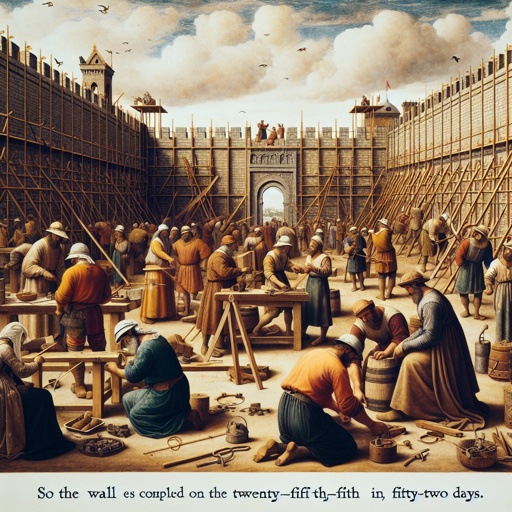
Nehemiah 6:15 – "So the wall was completed on the twenty-fifth of Elul, in fifty-two days."

Nehemiah 3:5 - "And next unto them the Tekoites repaired; but their nobles put not their necks to the work of their Lord."

Nehemiah 6:15 - "¶ So the wall was finished in the twenty and fifth day of the month Elul, in fifty and two days."

Nehemiah 11:6 - "All the sons of Perez that dwelt at Jerusalem were four hundred threescore and eight valiant men."

Nehemiah 5:19 - "Think upon me, my God, for good, according to all that I have done for this people."

Nehemiah 6:6 - "Wherein was written, It is reported among the heathen, and Gashmu saith it, that thou and the Jews think to rebel: for which cause thou buildest the wall, that thou mayest be their king, according to these words."

Nehemiah 5:4 - "There were also that said, We have borrowed money for the king's tribute, and that upon our lands and vineyards."

Nehemiah 6:4 - "Yet they sent unto me four times after this sort; and I answered them after the same manner."

Nehemiah 4:5 - "And cover not their iniquity, and let not their sin be blotted out from before thee: for they have provoked thee to anger before the builders."

Nehemiah 6:17 - "¶ Moreover in those days the nobles of Judah sent many letters unto Tobiah, and the letters of Tobiah came unto them."

Nehemiah 4:6 - "So built we the wall; and all the wall was joined together unto the half thereof: for the people had a mind to work."

Nehemiah 11:5 - "And Maaseiah the son of Baruch, the son of Col-hozeh, the son of Hazaiah, the son of Adaiah, the son of Joiarib, the son of Zechariah, the son of Shiloni."