What does Nehemiah 6:11 mean?
"And I said, Should such a man as I flee? and who is there, that, being as I am, would go into the temple to save his life? I will not go in." - Nehemiah 6:11
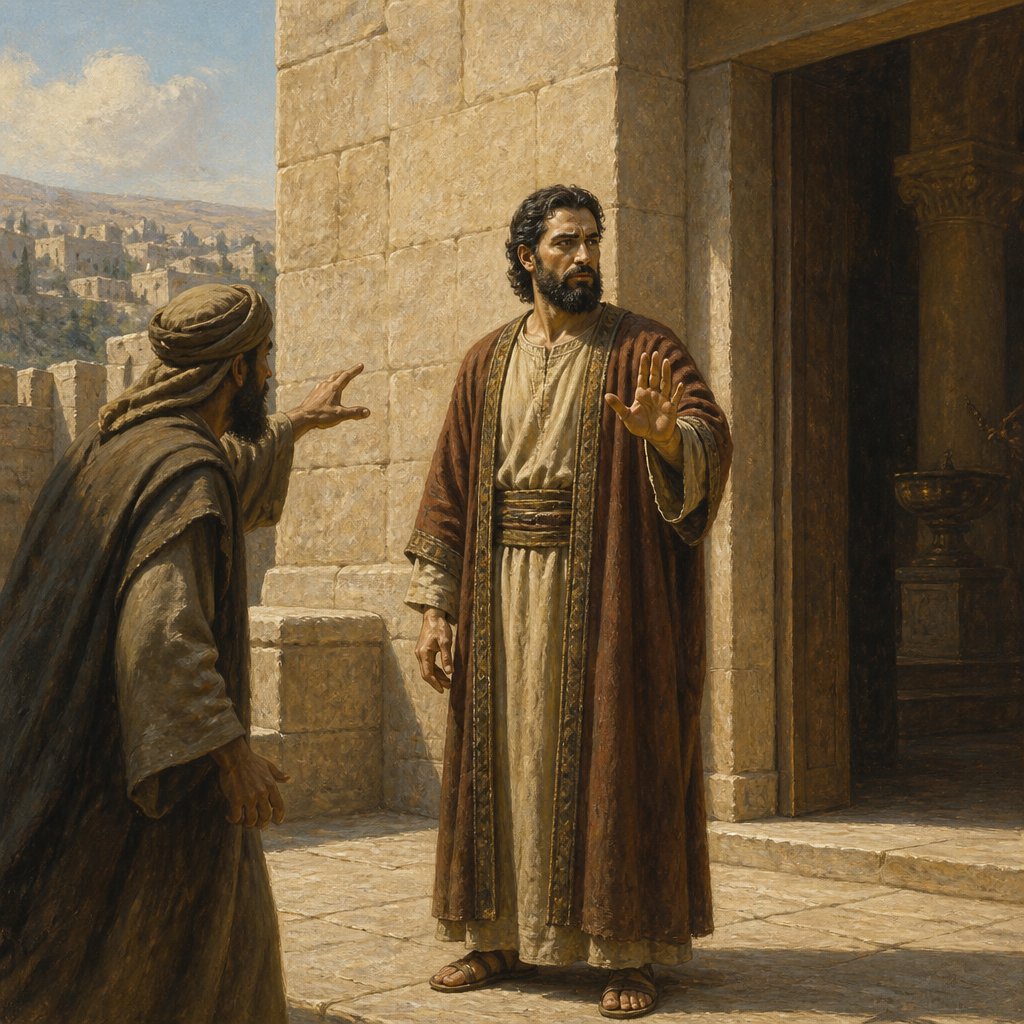
The verse Nehemiah 6:11 from the King James Version of the Bible reads, "And I said, Should such a man as I flee? and who is there, that, being as I am, would go into the temple to save his life? I will not go in." This verse is spoken by Nehemiah, a revered figure in the Old Testament, known for his role in the rebuilding of the walls of Jerusalem.
In this verse, Nehemiah expresses his resolve and determination in the face of danger and opposition. He is being urged to take refuge in the temple to ensure his safety, but he refuses to do so. The temple was considered a sacred and holy place, and Nehemiah's refusal to seek refuge there demonstrates his unwavering commitment to his responsibilities and his trust in God's protection.
The context of this verse is essential for understanding its significance. Nehemiah had been appointed as the governor of Judah by the Persian king Artaxerxes, and he was tasked with overseeing the rebuilding of Jerusalem's walls, which had been destroyed. However, Nehemiah faced intense opposition from his enemies, who sought to disrupt and sabotage his efforts. Despite the threats to his life and the challenges he faced, Nehemiah remained steadfast in his commitment to the task at hand.
This verse highlights several important themes that are relevant not only in Nehemiah's time but also in our lives today. One of the key themes is courage and steadfastness in the face of adversity. Nehemiah's refusal to flee to the temple demonstrates his courage and determination to carry out his mission, regardless of the risks involved. This serves as an important reminder for us to stand firm in our faith and convictions, even when faced with opposition or danger.
Another theme in this verse is trust in God's protection and provision. Nehemiah's decision to rely on God for his safety instead of seeking refuge in the temple shows his unwavering faith in God's faithfulness and sovereignty. This serves as a powerful example for believers to place their trust in God, even in the most challenging and precarious situations.
The symbolism in this verse is also worth noting. The temple, as a sacred and holy place, represents a sanctuary and a place of refuge. However, Nehemiah's refusal to seek refuge in the temple signifies his commitment to fulfilling his duties and responsibilities, even at great personal risk. This can be seen as a symbolic rejection of the idea of seeking safety in earthly institutions or structures, and instead relying on God's protection.
In conclusion, Nehemiah 6:11 from the King James Version of the Bible conveys a powerful message of courage, trust, and unwavering commitment to one's calling. The verse serves as a timeless reminder for believers to stand firm in their faith, trust in God's protection, and remain steadfast in the face of adversity. It also highlights the importance of prioritizing our responsibilities and duties, even when faced with danger or opposition. This verse continues to inspire and encourage believers to this day, serving as a source of strength and encouragement in the midst of life's challenges.
Have questions about Nehemiah 6:11?
Dive deeper into this scripture with Bible Chat — an AI-powered tool for exploring God's Word through conversation. Ask questions, get context, and grow in your understanding of the Bible.
Get Our Apps


Nehemiah 6:11 Artwork
Nehemiah 6:11 - "And I said, Should such a man as I flee? and who is there, that, being as I am, would go into the temple to save his life? I will not go in."
"And I said, Should such a man as I flee? and who is there, that, being as I am, would go into the temple to save his life? I will not go in." - Nehemiah 6:11

Nehemiah 11:6 - "All the sons of Perez that dwelt at Jerusalem were four hundred threescore and eight valiant men."

Nehemiah 11:11-14

Nehemiah 11:13
"All the sons of Perez that dwelt at Jerusalem were four hundred threescore and eight valiant men." - Nehemiah 11:6

Nehemiah 4:6

Nehemiah 4:6

Nehemiah 4:6

Nehemiah 6:9

Nehemiah 11:34 - "Hadid, Zeboim, Neballat,"

Nehemiah 10:11 - "Micha, Rehob, Hashabiah,"

Nehemiah 11:33 - "Hazor, Ramah, Gittaim,"

Nehemiah 11:32 - "And at Anathoth, Nob, Ananiah,"

Nehemiah 11:1-19

Nehemiah 11:26 - "And at Jeshua, and at Moladah, and at Beth-phelet,"

Nehemiah 11:29 - "And at En-rimmon, and at Zareah, and at Jarmuth,"

Nehemiah 10:6 - "Daniel, Ginnethon, Baruch,"

Nehemiah 11:35 - "Lod, and Ono, the valley of craftsmen."

Nehemiah 11:28 - "And at Ziklag, and at Mekonah, and in the villages thereof,"

Nehemiah 12:6 - "Shemaiah, and Joiarib, Jedaiah,"

Nehemiah 11:36 - "And of the Levites were divisions in Judah, and in Benjamin."

Nehemiah 11:10 - "Of the priests: Jedaiah the son of Joiarib, Jachin."

Nehemiah 12:11 - "And Joiada begat Jonathan, and Jonathan begat Jaddua."

Nehemiah 11:27 - "And at Hazar-shual, and at Beer-sheba, and in the villages thereof,"

Nehemiah 2:11 - "So I came to Jerusalem, and was there three days."

Nehemiah 11:11 - "Seraiah the son of Hilkiah, the son of Meshullam, the son of Zadok, the son of Meraioth, the son of Ahitub, was the ruler of the house of God."

"And at Anathoth, Nob, Ananiah," - Nehemiah 11:32

"Hadid, Zeboim, Neballat," - Nehemiah 11:34

"Hazor, Ramah, Gittaim," - Nehemiah 11:33