What does Nehemiah 5:14 mean?
"¶ Moreover from the time that I was appointed to be their governor in the land of Judah, from the twentieth year even unto the two and thirtieth year of Artaxerxes the king, that is, twelve years, I and my brethren have not eaten the bread of the governor." - Nehemiah 5:14
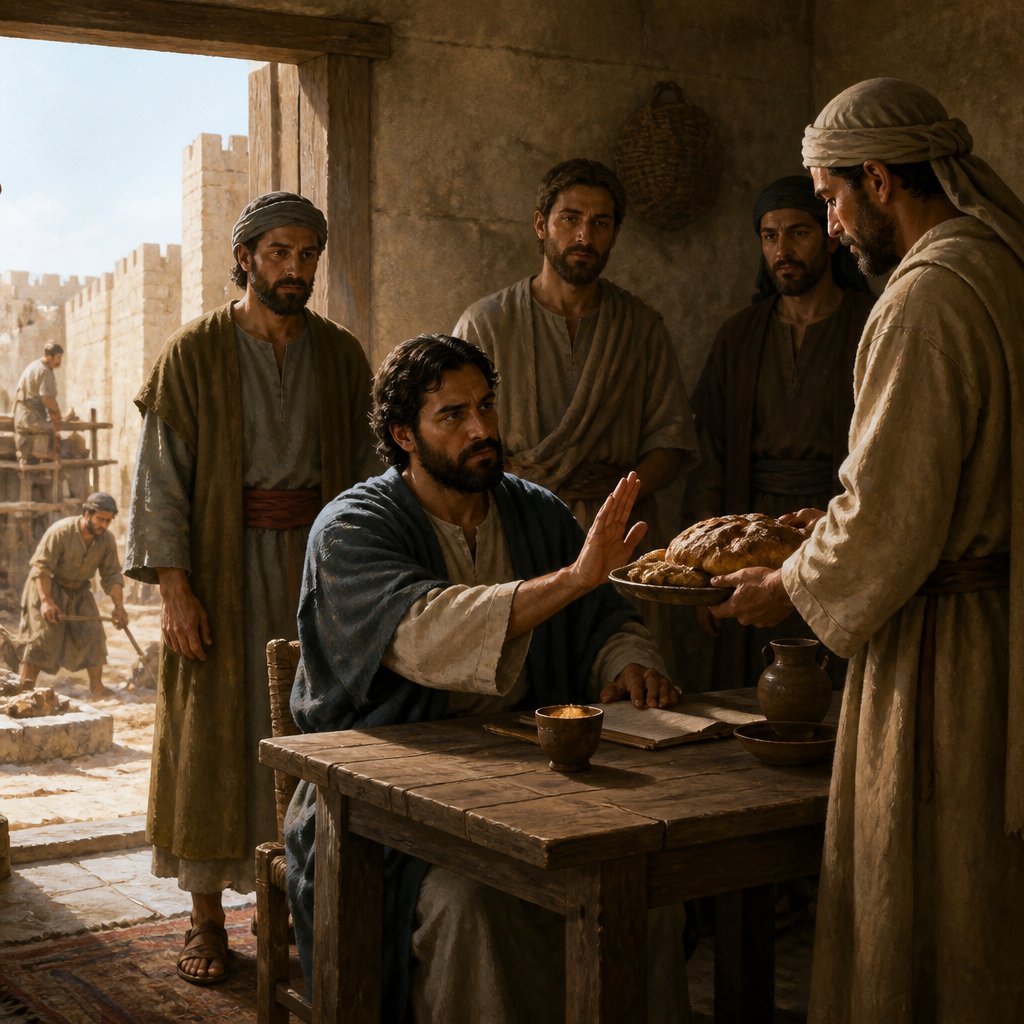
Nehemiah 5:14 (KJV) reads, "Moreover from the time that I was appointed to be their governor in the land of Judah, from the twentieth year even unto the two and thirtieth year of Artaxerxes the king, that is, twelve years, I and my brethren have not eaten the bread of the governor."
This verse is part of the Old Testament book of Nehemiah, which tells the story of the rebuilding of the walls of Jerusalem and the restoration of the Jewish community in the land following their exile in Babylon. Nehemiah, a high-ranking official in the Persian court, takes on the task of leading the Jews in this effort, and this verse reflects his commitment to serving the people selflessly.
One of the key themes in this verse is that of leadership and selflessness. Nehemiah, as the governor of Judah, could have used his position for personal gain and comfort. However, he chooses to forgo the privileges that came with his position, such as being able to enjoy the "bread of the governor," in order to identify with and serve the people he has been appointed to lead. This act of self-denial and sacrifice sets a powerful example for leaders in any context, demonstrating that true leadership involves putting the needs of others before one's own.
The context of this verse is important for understanding its significance. Nehemiah's leadership comes at a time when the Jewish community is facing significant challenges and opposition. The walls of Jerusalem lie in ruins, leaving the people vulnerable to attack, and there is internal strife and economic hardship among the Jewish population. Nehemiah's efforts to rebuild the walls and address these issues are met with resistance and hostility from various quarters. In this context, Nehemiah's decision to not partake of the privileges of his position serves as a powerful statement of solidarity with the people he leads, as well as a repudiation of the corrupt practices that had contributed to the community's difficulties.
The symbolism in this verse is also worth exploring. The "bread of the governor" can be seen as a symbol of power, position, and privilege. By refusing to partake of this bread, Nehemiah is rejecting the trappings of authority and choosing instead to align himself with the common people. This act of humility and self-denial is in keeping with the broader biblical theme of God's preferential option for the poor and the marginalized. It also echoes the model of servant leadership embodied in the life and teachings of Jesus, who famously declared that "the Son of Man came not to be served but to serve" (Matthew 20:28).
In a broader theological sense, Nehemiah's actions in this verse can be seen as a reflection of God's concern for justice and righteousness. Throughout the Bible, God is depicted as a champion of the oppressed and a critic of unjust social structures. Nehemiah's refusal to indulge in the benefits of his position as governor can be understood as an expression of his commitment to the values of justice and fairness. It also serves as a challenge to the prevailing systems of power and privilege, calling for a more equitable and just society.
In conclusion, Nehemiah 5:14 is a powerful verse with profound implications for leadership, social justice, and the nature of true service. Nehemiah's example of selflessness, humility, and solidarity with the people he leads serves as a timeless model for leaders in every age. It also reminds us of the biblical call to work for justice and righteousness, and to align ourselves with the concerns of the poor and the marginalized. This verse challenges us to consider the nature of true leadership and the ways in which we might use our positions and privileges to serve others and work for a more just and equitable society.
Have questions about Nehemiah 5:14?
Dive deeper into this scripture with Bible Chat — an AI-powered tool for exploring God's Word through conversation. Ask questions, get context, and grow in your understanding of the Bible.
Get Our Apps


Nehemiah 5:14 Artwork

Nehemiah 5:14 - "¶ Moreover from the time that I was appointed to be their governor in the land of Judah, from the twentieth year even unto the two and thirtieth year of Artaxerxes the king, that is, twelve years, I and my brethren have not eaten the bread of the governor."
"¶ Moreover from the time that I was appointed to be their governor in the land of Judah, from the twentieth year even unto the two and thirtieth year of Artaxerxes the king, that is, twelve years, I and my brethren have not eaten the bread of the governor." - Nehemiah 5:14

Nehemiah 11:11-14

Nehemiah 12:14 - "Of Melicu, Jonathan; of Shebaniah, Joseph;"

Nehemiah 10:5 - "Harim, Meremoth, Obadiah,"

Nehemiah 12:5 - "Miamin, Maadiah, Bilgah,"

Nehemiah 7:14 - "The children of Zaccai, seven hundred and threescore."

Nehemiah 10:14 - "The chief of the people; Parosh, Pahath-moab, Elam, Zatthu, Bani,"

Nehemiah 5:1 - "And there was a great cry of the people and of their wives against their brethren the Jews."
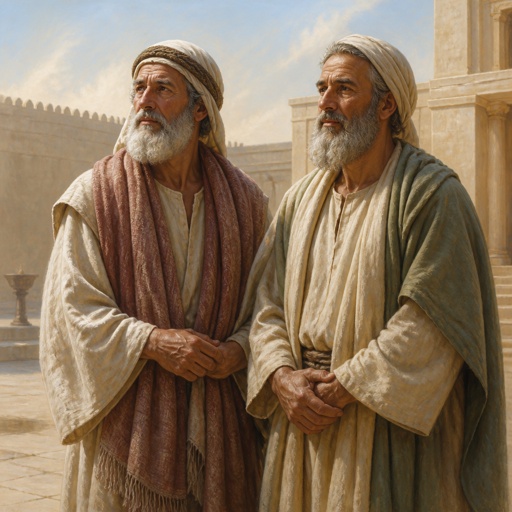
"Of Melicu, Jonathan; of Shebaniah, Joseph;" - Nehemiah 12:14

"Harim, Meremoth, Obadiah," - Nehemiah 10:5

"Miamin, Maadiah, Bilgah," - Nehemiah 12:5

Nehemiah 5:6 - "¶ And I was very angry when I heard their cry and these words."

Nehemiah 2:14 - "Then I went on to the gate of the fountain, and to the king's pool: but there was no place for the beast that was under me to pass."
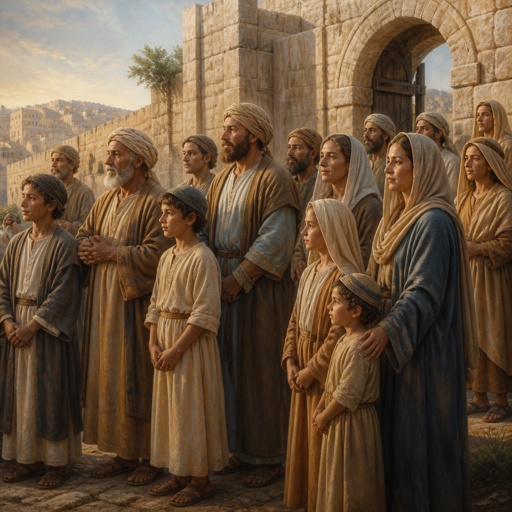
"The children of Zaccai, seven hundred and threescore." - Nehemiah 7:14

Nehemiah 3:5 - "And next unto them the Tekoites repaired; but their nobles put not their necks to the work of their Lord."

Nehemiah 11:14 - "And their brethren, mighty men of valour, an hundred twenty and eight: and their overseer was Zabdiel, the son of one of the great men."

Nehemiah 5:19 - "Think upon me, my God, for good, according to all that I have done for this people."

Nehemiah 5:4 - "There were also that said, We have borrowed money for the king's tribute, and that upon our lands and vineyards."

Nehemiah 8:14 - "And they found written in the law which the LORD had commanded by Moses, that the children of Israel should dwell in booths in the feast of the seventh month:"

Nehemiah 9:14 - "And madest known unto them thy holy sabbath, and commandedst them precepts, statutes, and laws, by the hand of Moses thy servant:"

Nehemiah 6:5 - "Then sent Sanballat his servant unto me in like manner the fifth time with an open letter in his hand;"

Nehemiah 4:5 - "And cover not their iniquity, and let not their sin be blotted out from before thee: for they have provoked thee to anger before the builders."

Nehemiah 6:14 - "My God, think thou upon Tobiah and Sanballat according to these their works, and on the prophetess Noadiah, and the rest of the prophets, that would have put me in fear."

Nehemiah 11:5 - "And Maaseiah the son of Baruch, the son of Col-hozeh, the son of Hazaiah, the son of Adaiah, the son of Joiarib, the son of Zechariah, the son of Shiloni."
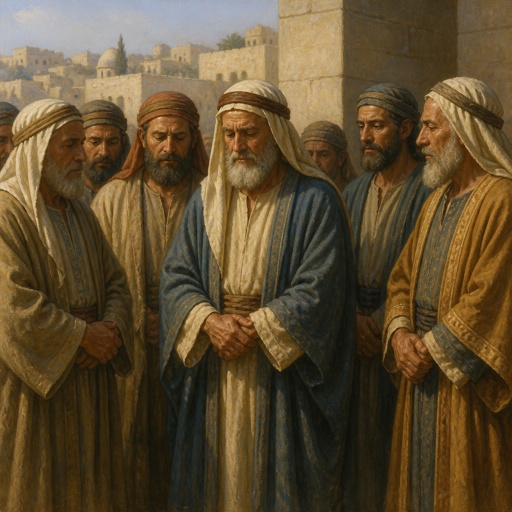
"The chief of the people; Parosh, Pahath-moab, Elam, Zatthu, Bani," - Nehemiah 10:14

"And there was a great cry of the people and of their wives against their brethren the Jews." - Nehemiah 5:1

Nehemiah 13:14 - "Remember me, O my God, concerning this, and wipe not out my good deeds that I have done for the house of my God, and for the offices thereof."

A biblical scene from Nehemiah 1:5-11 - Nehemiah, a Caucasian male in middle-eastern garb, is depicted respectfully requesting time from the king, a Middle-Eastern male seated at the dinner table while Nehemiah is serving his drink. He is asking for the opportunity to return to Judah and help his people build a wall. The setting is a grand royal court marked by golden hues, opulent textiles, and architecturally rich columns.

Nehemiah 5:3 - "Some also there were that said, We have mortgaged our lands, vineyards, and houses, that we might buy corn, because of the dearth."