What does Nehemiah 4:10 mean?
"And Judah said, The strength of the bearers of burdens is decayed, and there is much rubbish; so that we are not able to build the wall." - Nehemiah 4:10
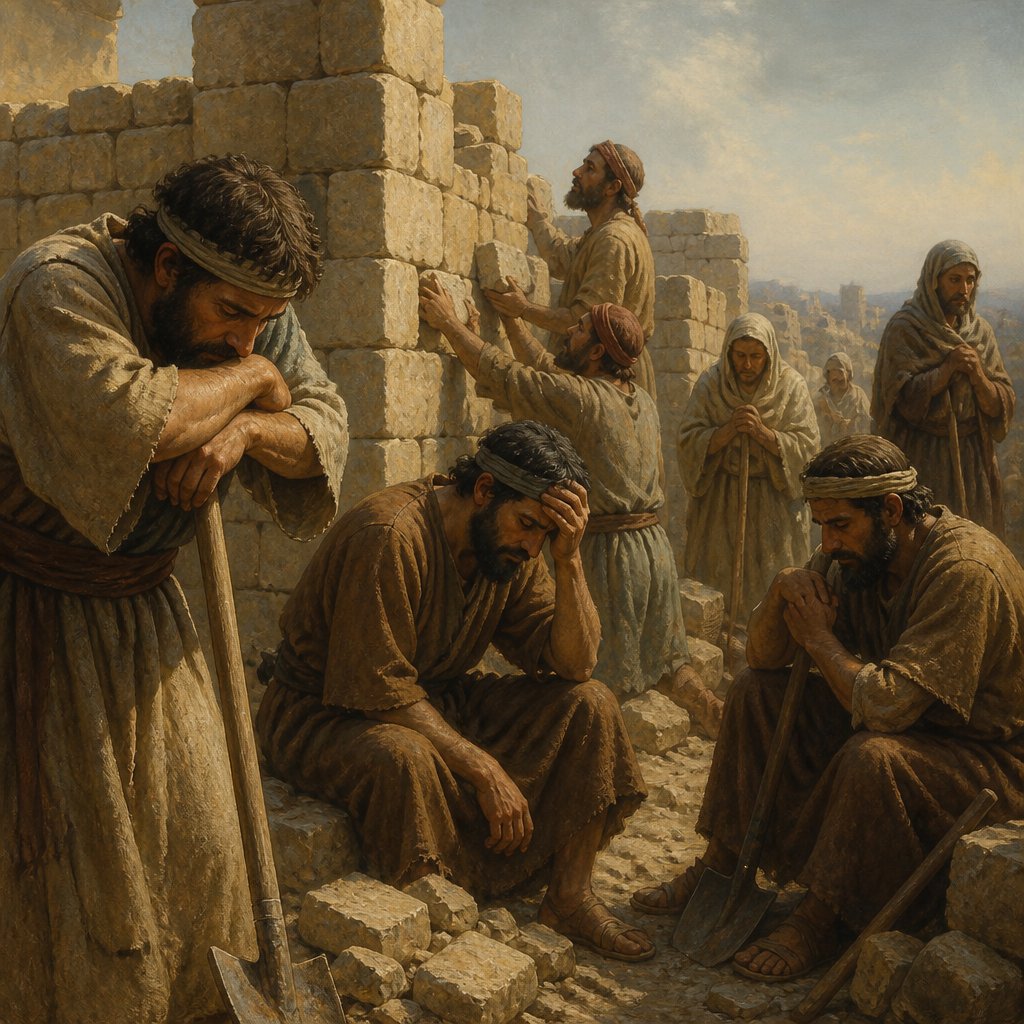
The Bible verse Nehemiah 4:10 in the King James Version (KJV) reads, "And Judah said, The strength of the bearers of burdens is decayed, and there is much rubbish; so that we are not able to build the wall."
Nehemiah was a prominent figure in the Old Testament, and he played a crucial role in the rebuilding of the walls of Jerusalem following the Babylonian captivity. In this particular verse, we see Judah, one of the leaders involved in the reconstruction, expressing concern about the state of the workers and the amount of debris that was hindering their progress.
The context of this verse is significant in understanding its meaning. Nehemiah had been given permission by King Artaxerxes to return to Jerusalem and oversee the reconstruction of the city walls. The inhabitants of Jerusalem had faced numerous challenges and opposition from their enemies, including Sanballat and Tobiah, who were opposed to the reconstruction efforts. Despite facing opposition, the Israelites continued to work diligently on the walls, but they encountered various difficulties and challenges along the way.
When Judah said, "The strength of the bearers of burdens is decayed," he was acknowledging the fatigue and weariness of the workers. The physical demands of carrying heavy burdens and the emotional strain of facing opposition had taken a toll on the workers, causing their strength to decline. This is a relatable concept. Just as the Israelite workers faced physical fatigue, we also experience weariness and weakness in our own lives, whether it be physical, emotional, or spiritual. The verse provides a reminder that it is natural to experience periods of weakness, but it is important to find strength in times of difficulty.
The mention of "much rubbish" symbolizes the obstacles and challenges that the Israelites faced in their efforts to rebuild the wall. The piles of debris and rubble hindered their progress, making it difficult for them to carry out the task at hand. This symbolizes the obstacles and distractions that may impede our own progress as we strive to achieve our goals and fulfill our purposes. The "rubbish" may represent sin, negativity, doubt, or any other forces that prevent us from moving forward. In a broader sense, it reminds us that we must address, remove, and overcome the obstacles in our path in order to accomplish our goals and fulfill our mission in life.
Despite the challenges and weariness that the Israelites experienced, they did not lose hope or give up. Instead, they turned to Nehemiah for leadership and guidance, and they continued to work diligently to rebuild the walls. This can be seen as a testament to the power of perseverance and resilience in the face of adversity. It serves as a reminder that, despite the difficulties we encounter, we must not lose heart, but continue to press on with determination and faith.
In summary, Nehemiah 4:10 in the King James Version holds a significant and enduring message for believers. It provides an insight into the challenges faced by the Israelites as they worked to rebuild the walls of Jerusalem, and it offers valuable lessons about perseverance, resilience, and the need to address obstacles that hinder our progress. It serves as a reminder that, despite weariness and hindrances, we must continue to press on with determination and faith, trusting in God's strength and guidance to help us overcome the challenges we face.
Have questions about Nehemiah 4:10?
Dive deeper into this scripture with Bible Chat — an AI-powered tool for exploring God's Word through conversation. Ask questions, get context, and grow in your understanding of the Bible.
Get Our Apps


Nehemiah 4:10 Artwork

Nehemiah 4:10 - "And Judah said, The strength of the bearers of burdens is decayed, and there is much rubbish; so that we are not able to build the wall."
"And Judah said, The strength of the bearers of burdens is decayed, and there is much rubbish; so that we are not able to build the wall." - Nehemiah 4:10

Nehemiah 10:4 - "Hattush, Shebaniah, Malluch,"

"Hattush, Shebaniah, Malluch," - Nehemiah 10:4

Nehemiah 10:1 - "Now those that sealed were, Nehemiah, the Tirshatha, the son of Hachaliah, and Zidkijah,"

Nehemiah 10:10 - "And their brethren, Shebaniah, Hodijah, Kelita, Pelaiah, Hanan,"

Nehemiah 8:10

Nehemiah 8:10

Nehemiah 8:10

Nehemiah 10:24 - "Hallohesh, Pileha, Shobek,"

Nehemiah 10:22 - "Pelatiah, Hanan, Anaiah,"

Nehemiah 10:5 - "Harim, Meremoth, Obadiah,"

Nehemiah 10:23 - "Hoshea, Hananiah, Hashub,"

Nehemiah 10:21 - "Meshezabeel, Zadok, Jaddua,"

Nehemiah 10:7 - "Meshullam, Abijah, Mijamin,"

Nehemiah 10:11 - "Micha, Rehob, Hashabiah,"

Nehemiah 10:27 - "Malluch, Harim, Baanah."

Nehemiah 10:25 - "Rehum, Hashabnah, Maaseiah,"

Nehemiah 10:19 - "Hariph, Anathoth, Nebai,"

Nehemiah 10:6 - "Daniel, Ginnethon, Baruch,"

Nehemiah 4:6

Nehemiah 10:26 - "And Ahijah, Hanan, Anan,"

Nehemiah 10:16 - "Adonijah, Bigvai, Adin,"

Nehemiah 10:18 - "Hodijah, Hashum, Bezai,"

Nehemiah 10:20 - "Magpiash, Meshullam, Hezir,"

Nehemiah 10:3 - "Pashur, Amariah, Malchijah,"

Nehemiah 10:17 - "Ater, Hizkijah, Azzur,"

Nehemiah 10:2 - "Seraiah, Azariah, Jeremiah,"

Nehemiah 10:12 - "Zaccur, Sherebiah, Shebaniah,"

Nehemiah 10:15 - "Bunni, Azgad, Bebai,"