What does Nehemiah 2:14 mean?
"Then I went on to the gate of the fountain, and to the king's pool: but there was no place for the beast that was under me to pass." - Nehemiah 2:14
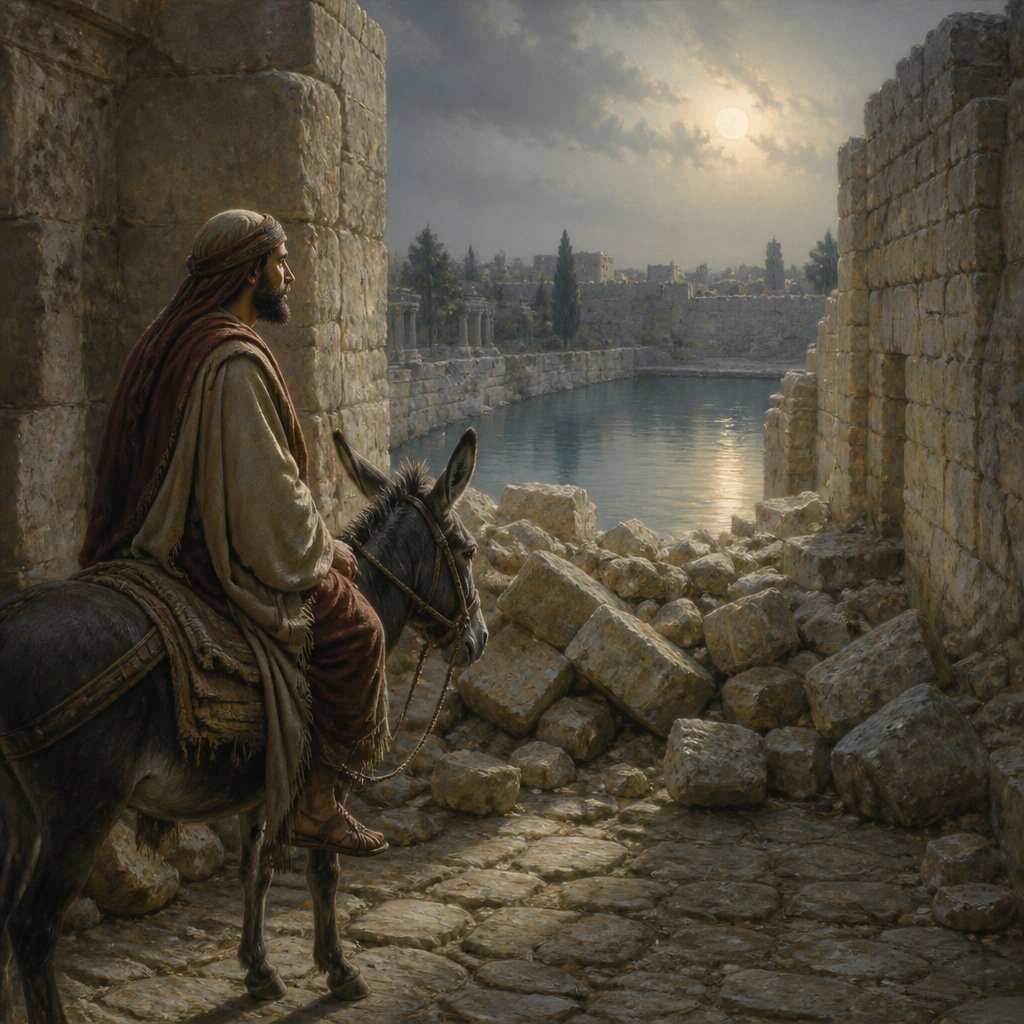
The verse Nehemiah 2:14, in the King James Version (KJV) of the Bible reads:
"Then I went on to the gate of the fountain, and to the king's pool: but there was no place for the beast that was under me to pass."
This verse comes from the book of Nehemiah, which is set in the time of the Persian Empire, and tells the story of Nehemiah, a cupbearer to the king of Persia, who is given permission to travel to Jerusalem to rebuild its walls. This verse specifically describes Nehemiah's initial exploration of the city and the challenges he faced as he surveyed the damaged walls and gates.
In this verse, Nehemiah is documenting his journey as he inspects the walls and gates of Jerusalem, after being granted permission by the Persian king Artaxerxes to go and help rebuild the city. The gate of the fountain and the king's pool are specific locations in the city, and Nehemiah is noting that as he traveled to these areas, he encountered obstacles that made it difficult for his beast (likely a horse or a mule) to pass through. These physical obstructions were likely the result of the city's walls and gates being in a state of disrepair, making it challenging for Nehemiah to traverse the city.
Beyond the literal meaning of the verse, there are several themes, contexts, and symbols that can be explored within Nehemiah 2:14.
Firstly, a significant theme of this verse is the idea of obstacles and challenges. Nehemiah's difficulty in maneuvering through the city serves as a physical representation of the larger challenges he and the people of Jerusalem will face as they work to rebuild the city's defenses. This theme underscores the idea that the task at hand is not going to be easy and will require perseverance and determination.
Moreover, the verse also speaks to the idea of restoration and renewal. Nehemiah's journey to Jerusalem and his inspection of the city's damaged walls and gates lay the groundwork for the work of rebuilding and restoring the city. This theme of restoration is a central aspect of the book of Nehemiah, as it symbolizes the spiritual and physical renewal of the city and its people.
Additionally, the symbolism of the gates and walls themselves is significant in this verse. In biblical times, city gates and walls were essential for protection and security. The condition of Jerusalem's gates and walls serves as a reflection of the city's vulnerability and the need for a restoration of its defenses. These structures also hold symbolic significance in terms of spiritual protection and the need for boundaries and fortification in one's life.
In a broader context, Nehemiah 2:14 also speaks to the broader biblical theme of divine providence. Nehemiah's journey to Jerusalem and his subsequent efforts to rebuild the city are depicted as part of God's plan for the restoration of His people and the fulfillment of His purposes. This verse demonstrates the ways in which God works through individuals to bring about His plans, even in the face of significant challenges and obstacles.
Overall, Nehemiah 2:14 captures the initial challenges and obstacles that Nehemiah encounters as he begins his mission to rebuild the city of Jerusalem. Through its themes of perseverance, restoration, and divine providence, this verse sets the stage for the larger narrative of Nehemiah's leadership and the eventual successful rebuilding of the city's walls and gates. It serves as a reminder of the resilience and determination required to overcome obstacles and the importance of seeking divine guidance and strength in the face of daunting tasks.
Have questions about Nehemiah 2:14?
Dive deeper into this scripture with Bible Chat — an AI-powered tool for exploring God's Word through conversation. Ask questions, get context, and grow in your understanding of the Bible.
Get Our Apps


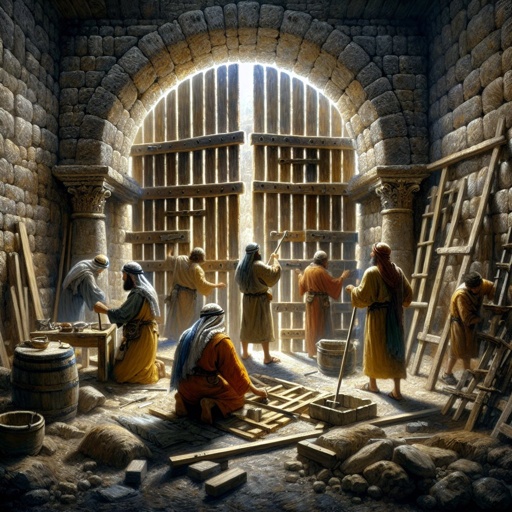
Nehemiah 2:14 Artwork

Nehemiah 2:14 - "Then I went on to the gate of the fountain, and to the king's pool: but there was no place for the beast that was under me to pass."
"Then I went on to the gate of the fountain, and to the king's pool: but there was no place for the beast that was under me to pass." - Nehemiah 2:14

Nehemiah 11:11-14

Nehemiah 12:14 - "Of Melicu, Jonathan; of Shebaniah, Joseph;"

Nehemiah 7:14 - "The children of Zaccai, seven hundred and threescore."

Nehemiah 10:14 - "The chief of the people; Parosh, Pahath-moab, Elam, Zatthu, Bani,"
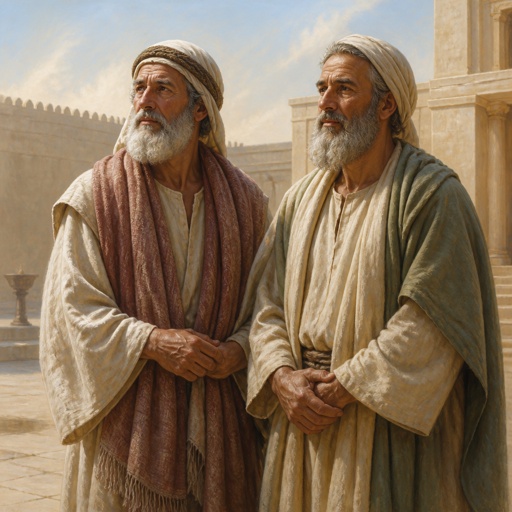
"Of Melicu, Jonathan; of Shebaniah, Joseph;" - Nehemiah 12:14
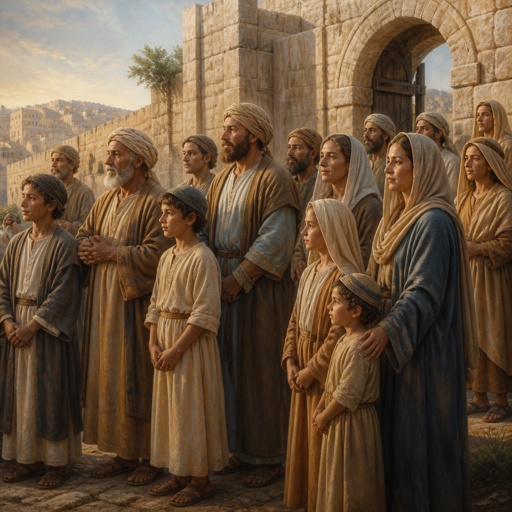
"The children of Zaccai, seven hundred and threescore." - Nehemiah 7:14
Nehemiah 11:14 - "And their brethren, mighty men of valour, an hundred twenty and eight: and their overseer was Zabdiel, the son of one of the great men."

Nehemiah 12:2 - "Amariah, Malluch, Hattush,"

Nehemiah 10:2 - "Seraiah, Azariah, Jeremiah,"

Nehemiah 8:14 - "And they found written in the law which the LORD had commanded by Moses, that the children of Israel should dwell in booths in the feast of the seventh month:"

Nehemiah 9:14 - "And madest known unto them thy holy sabbath, and commandedst them precepts, statutes, and laws, by the hand of Moses thy servant:"

Nehemiah 2:11 - "So I came to Jerusalem, and was there three days."

Nehemiah 6:14 - "My God, think thou upon Tobiah and Sanballat according to these their works, and on the prophetess Noadiah, and the rest of the prophets, that would have put me in fear."
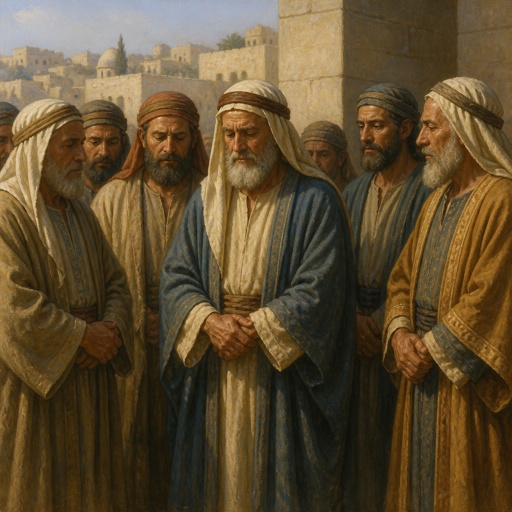
"The chief of the people; Parosh, Pahath-moab, Elam, Zatthu, Bani," - Nehemiah 10:14

Nehemiah 13:14 - "Remember me, O my God, concerning this, and wipe not out my good deeds that I have done for the house of my God, and for the offices thereof."
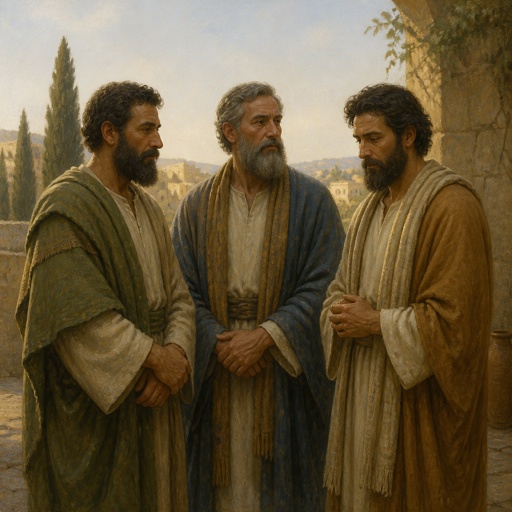
"Seraiah, Azariah, Jeremiah," - Nehemiah 10:2
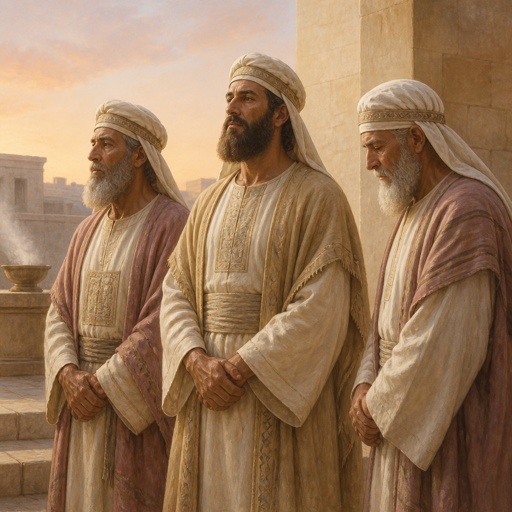
"Amariah, Malluch, Hattush," - Nehemiah 12:2
Nehemiah 3:14 - "But the dung gate repaired Malchiah the son of Rechab, the ruler of part of Beth-haccerem; he built it, and set up the doors thereof, the locks thereof, and the bars thereof."

Nehemiah 11:2 - "And the people blessed all the men, that willingly offered themselves to dwell at Jerusalem."

Ezra 2:2 - "Which came with Zerubbabel: Jeshua, Nehemiah, Seraiah, Reelaiah, Mordecai, Bilshan, Mispar, Bigvai, Rehum, Baanah. The number of the men of the people of Israel:"

Nehemiah 3:2 - "And next unto him builded the men of Jericho. And next to them builded Zaccur the son of Imri."

Nehemiah 9:2 - "And the seed of Israel separated themselves from all strangers, and stood and confessed their sins, and the iniquities of their fathers."

Nehemiah 2:15 - "Then went I up in the night by the brook, and viewed the wall, and turned back, and entered by the gate of the valley, and so returned."

Nehemiah 2:4 - "Then the king said unto me, For what dost thou make request? So I prayed to the God of heaven."

Nehemiah 2:2 - "Wherefore the king said unto me, Why is thy countenance sad, seeing thou art not sick? this is nothing else but sorrow of heart. Then I was very sore afraid,"

"So I came to Jerusalem, and was there three days." - Nehemiah 2:11

Nehemiah 5:14 - "¶ Moreover from the time that I was appointed to be their governor in the land of Judah, from the twentieth year even unto the two and thirtieth year of Artaxerxes the king, that is, twelve years, I and my brethren have not eaten the bread of the governor."

Nehemiah 2:10 - "When Sanballat the Horonite, and Tobiah the servant, the Ammonite, heard of it, it grieved them exceedingly that there was come a man to seek the welfare of the children of Israel."