What does Nehemiah 2:11 mean?
"So I came to Jerusalem, and was there three days." - Nehemiah 2:11
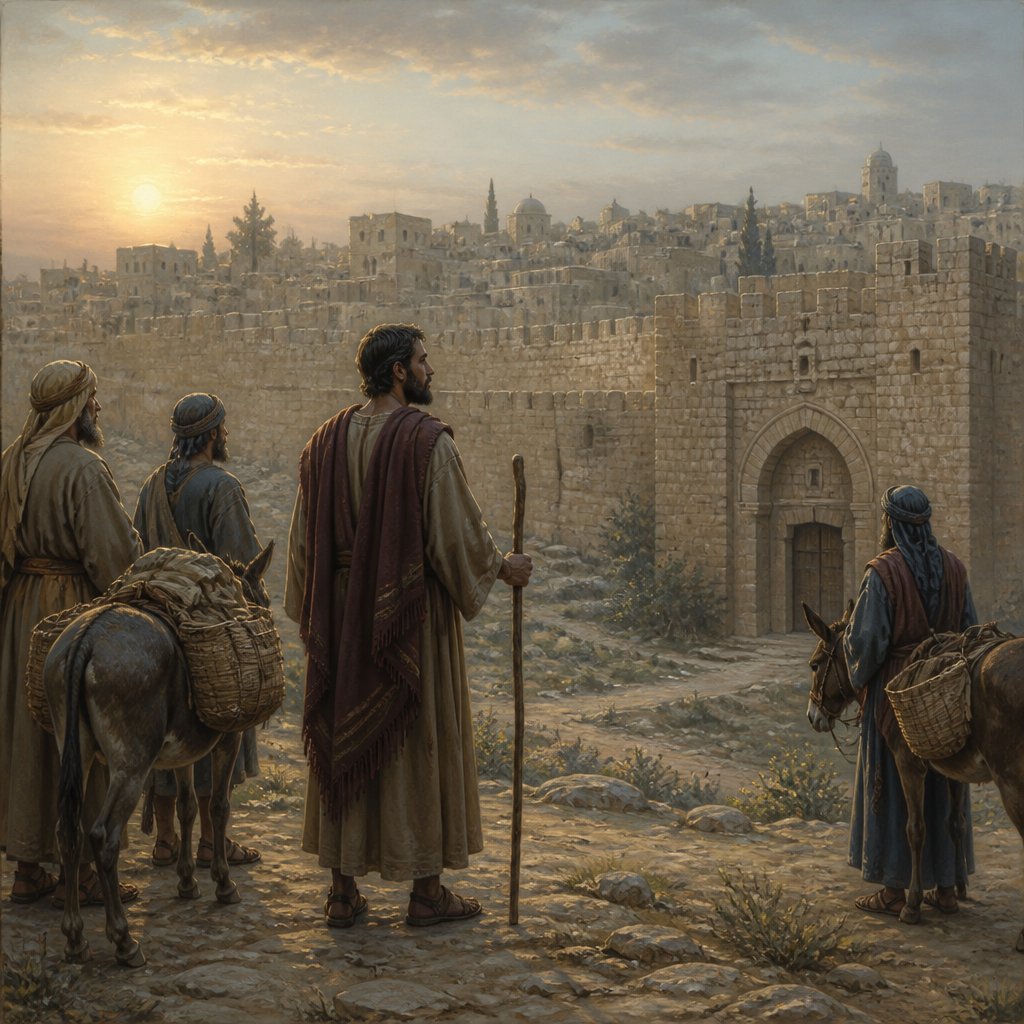
Nehemiah 2:11 in the King James Version reads, "So I came to Jerusalem, and was there three days." This verse occurs in the context of Nehemiah's journey to Jerusalem to oversee the rebuilding of the city's walls, which had been destroyed.
The book of Nehemiah is set in the fifth century BCE, during the time when the nation of Israel was in exile in Babylon. Nehemiah, who was a cupbearer to the Persian king Artaxerxes, received news about the state of Jerusalem and the misery of the people who had returned to the land after the Babylonian exile. This news deeply moved Nehemiah, and he prayed passionately to God for favor and success when he eventually approached King Artaxerxes to request to go to Jerusalem (Nehemiah 1:11). After receiving the king's permission, Nehemiah set out for Jerusalem with the king's blessing and support.
The verse "So I came to Jerusalem, and was there three days" marks a critical point in Nehemiah's journey. This seemingly simple statement holds great significance in the broader narrative of the book. The three days that Nehemiah spends in Jerusalem serve as a period of observation, reflection, and planning before he begins the daunting task of rebuilding the city walls. It is during these three days that Nehemiah assesses the situation and familiarizes himself with the extent of the damage to the city's defenses.
One of the underlying themes of this verse is the importance of careful preparation and assessment before embarking on a significant undertaking. Nehemiah's willingness to take the time to understand the challenges he is about to face demonstrates wisdom and prudence. This principle can be applied to various aspects of life, emphasizing the value of being deliberate and thoughtful in our approach to important decisions and tasks.
Furthermore, the three days that Nehemiah spends in Jerusalem can also be seen symbolically. In biblical symbolism, the number three often represents completeness or the divine trinity, emphasizing the sense of wholeness and fulfillment. This could suggest that the three days in Jerusalem serve as a period of spiritual and emotional preparation for the task ahead. Nehemiah sought guidance and wisdom from God during this time, preparing himself to lead the people and face the challenges that lay ahead.
The verse also highlights the significance of Jerusalem as a city of great spiritual and historical importance. Jerusalem held deep religious and cultural significance for the Israelites, and its restoration was a symbol of the restoration of their faith and national identity. Nehemiah's arrival in Jerusalem marks the beginning of a journey of renewal and restoration, both physically and spiritually. This theme of rebuilding and restoration runs throughout the book of Nehemiah, reflecting the broader theme of God's faithfulness and his ability to bring new life out of destruction and despair.
In conclusion, Nehemiah 2:11 serves as a pivotal moment in the narrative, as it marks Nehemiah's arrival in Jerusalem and the beginning of his mission to rebuild the city's walls. The verse emphasizes the importance of careful preparation, reflection, and spiritual readiness before undertaking significant tasks. It also symbolizes the broader themes of renewal, restoration, and the faithfulness of God. This verse reminds readers of the value of taking the time to assess and prepare before embarking on new endeavors, and it underscores the power of faith and perseverance in the face of daunting challenges.
Have questions about Nehemiah 2:11?
Dive deeper into this scripture with Bible Chat — an AI-powered tool for exploring God's Word through conversation. Ask questions, get context, and grow in your understanding of the Bible.
Get Our Apps


Nehemiah 2:11 Artwork

Nehemiah 2:11 - "So I came to Jerusalem, and was there three days."

"So I came to Jerusalem, and was there three days." - Nehemiah 2:11

Nehemiah 11:2 - "And the people blessed all the men, that willingly offered themselves to dwell at Jerusalem."

Nehemiah 11:11-14

Nehemiah 11:13

"And the people blessed all the men, that willingly offered themselves to dwell at Jerusalem." - Nehemiah 11:2

Nehemiah 11:34 - "Hadid, Zeboim, Neballat,"

Nehemiah 10:11 - "Micha, Rehob, Hashabiah,"

Nehemiah 11:33 - "Hazor, Ramah, Gittaim,"

Nehemiah 11:32 - "And at Anathoth, Nob, Ananiah,"

Nehemiah 11:1-19

Nehemiah 11:26 - "And at Jeshua, and at Moladah, and at Beth-phelet,"

Nehemiah 11:29 - "And at En-rimmon, and at Zareah, and at Jarmuth,"

Nehemiah 11:35 - "Lod, and Ono, the valley of craftsmen."

Nehemiah 11:28 - "And at Ziklag, and at Mekonah, and in the villages thereof,"

Nehemiah 11:36 - "And of the Levites were divisions in Judah, and in Benjamin."

Nehemiah 11:10 - "Of the priests: Jedaiah the son of Joiarib, Jachin."

Nehemiah 12:11 - "And Joiada begat Jonathan, and Jonathan begat Jaddua."

Nehemiah 11:27 - "And at Hazar-shual, and at Beer-sheba, and in the villages thereof,"

Nehemiah 11:11 - "Seraiah the son of Hilkiah, the son of Meshullam, the son of Zadok, the son of Meraioth, the son of Ahitub, was the ruler of the house of God."

"And at Anathoth, Nob, Ananiah," - Nehemiah 11:32

"Hadid, Zeboim, Neballat," - Nehemiah 11:34

"Hazor, Ramah, Gittaim," - Nehemiah 11:33

"Micha, Rehob, Hashabiah," - Nehemiah 10:11

Nehemiah 11:21 - "But the Nethinims dwelt in Ophel: and Ziha and Gispa were over the Nethinims."

Nehemiah 11:8 - "And after him Gabbai, Sallai, nine hundred twenty and eight."

"And at Ziklag, and at Mekonah, and in the villages thereof," - Nehemiah 11:28

"And at En-rimmon, and at Zareah, and at Jarmuth," - Nehemiah 11:29

Nehemiah 11:9 - "And Joel the son of Zichri was their overseer: and Judah the son of Senuah was second over the city."

Nehemiah 11:16 - "And Shabbethai and Jozabad, of the chief of the Levites, had the oversight of the outward business of the house of God."