What does Nehemiah 13:23 mean?
"¶ In those days also saw I Jews that had married wives of Ashdod, of Ammon, and of Moab:" - Nehemiah 13:23
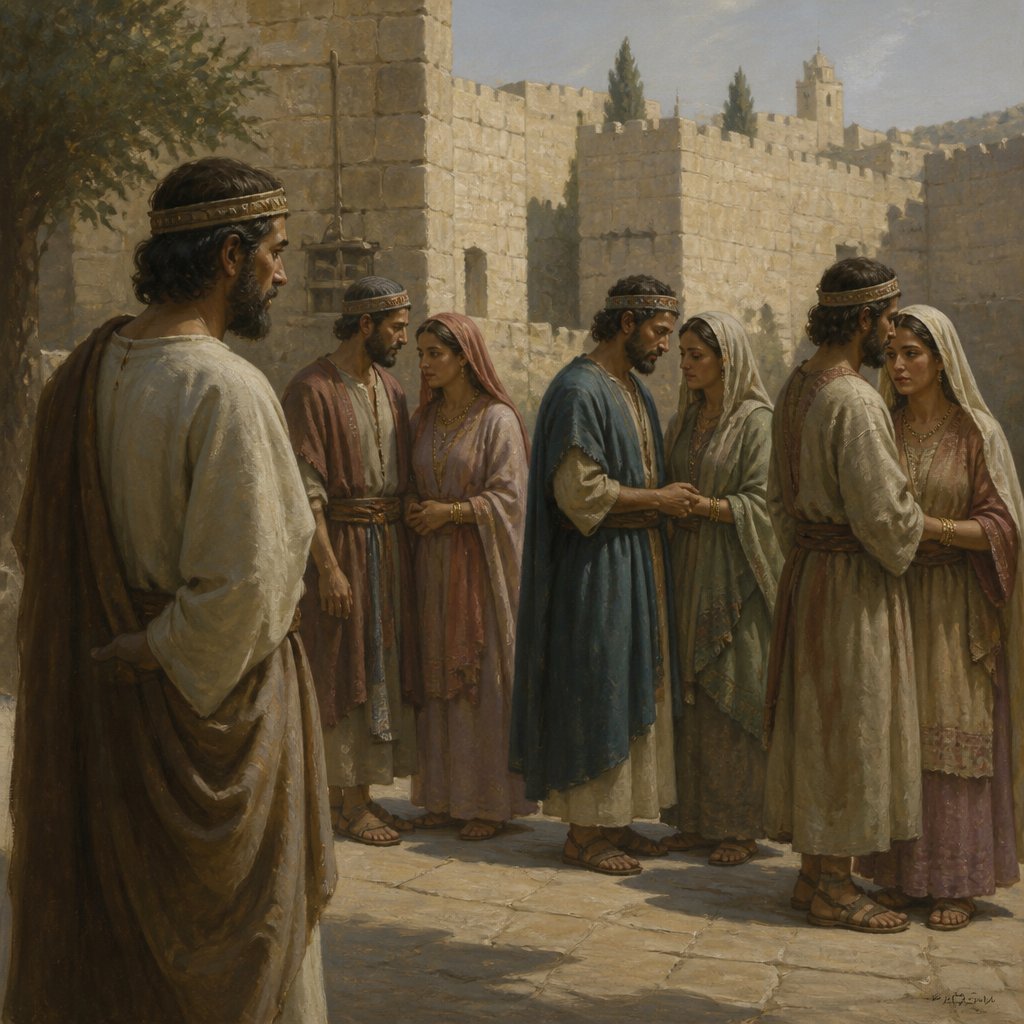
Nehemiah 13:23 (KJV) - "In those days also saw I Jews that had married wives of Ashdod, of Ammon, and of Moab."
This verse is found in the book of Nehemiah, which is a book in the Old Testament that tells the story of Nehemiah, a Jewish leader, and his efforts to rebuild the walls of Jerusalem and restore the religious practices of the Jewish people after their return from exile in Babylon. This particular verse is part of a section in the book where Nehemiah is addressing various issues of unfaithfulness and disobedience among the Jewish people.
The context of this verse is important for understanding its significance. Nehemiah had been appointed as governor of Judah by the Persian king Artaxerxes, and he had returned to Jerusalem to help rebuild the city and reestablish the Jewish community. However, when he arrived, he found that the people had fallen into disobedience and were not following the laws and commandments that had been given to them by God. One of the issues he discovered was that some of the Jewish men had married non-Jewish women from Ashdod, Ammon, and Moab.
The theme of this verse is the importance of maintaining the purity and distinctiveness of the Jewish people. Throughout the Old Testament, the Israelites are repeatedly warned against intermarrying with the surrounding nations, as this could lead to the worship of foreign gods and a departure from the laws and customs of their own faith. The concern about intermarriage was not simply about ethnic identity, but also about spiritual fidelity and preserving the unique relationship between Israel and God.
The marriages to women from Ashdod, Ammon, and Moab were problematic for several reasons. First, these nations were known for their hostility towards the Israelites and their opposition to God's people. Marrying women from these nations could lead to conflict and compromise the unity and coherence of the Jewish community. Second, the women from these nations likely had different religious beliefs and cultural practices, which could have led the Jewish men astray from the worship of Yahweh.
Nehemiah's response to these marriages is a reflection of his commitment to upholding the purity and faithfulness of the Jewish people. In the following verses, he takes decisive action to confront and rebuke those who had entered into these forbidden marriages. He reminds them of the examples of Solomon and other kings who had been led astray by foreign wives and warns them of the consequences of their disobedience.
The symbolism of this verse lies in the idea of spiritual fidelity and the importance of remaining true to one's faith and heritage. In the broader context of the Old Testament, the idea of maintaining the purity of the Israelites is closely connected to their relationship with God. The Israelites were called to be a holy people, set apart for God's purposes, and any compromise with foreign nations and gods was seen as a betrayal of that calling.
From a Christian perspective, this verse can also be understood as a warning against compromising one's faith and values. The New Testament emphasizes the importance of believers being "unequally yoked" with unbelievers and warns against forming partnerships that could lead to spiritual compromise.
In conclusion, Nehemiah 13:23 underscores the theme of spiritual fidelity and the importance of maintaining the distinctiveness and purity of the Jewish people. It serves as a reminder of the ongoing struggle to remain faithful to God and to resist the influences of the surrounding culture. It also highlights the consequences of disobedience and the need for vigilant commitment to the principles of one's faith.
Have questions about Nehemiah 13:23?
Dive deeper into this scripture with Bible Chat — an AI-powered tool for exploring God's Word through conversation. Ask questions, get context, and grow in your understanding of the Bible.
Get Our Apps


Nehemiah 13:23 Artwork

Nehemiah 13:23 - "¶ In those days also saw I Jews that had married wives of Ashdod, of Ammon, and of Moab:"
"¶ In those days also saw I Jews that had married wives of Ashdod, of Ammon, and of Moab:" - Nehemiah 13:23

Nehemiah 10:23 - "Hoshea, Hananiah, Hashub,"

Nehemiah 11:13

Nehemiah 7:23 - "The children of Bezai, three hundred twenty and four."

Nehemiah 10:13 - "Hodijah, Bani, Beninu."

"Hoshea, Hananiah, Hashub," - Nehemiah 10:23

Nehemiah 12:13 - "Of Ezra, Meshullam; of Amariah, Jehohanan;"

Nehemiah 7:13 - "The children of Zattu, eight hundred forty and five."

Nehemiah 11:23 - "For it was the king's commandment concerning them, that a certain portion should be for the singers, due for every day."

"Hodijah, Bani, Beninu." - Nehemiah 10:13

"Of Ezra, Meshullam; of Amariah, Jehohanan;" - Nehemiah 12:13

Nehemiah 12:23 - "The sons of Levi, the chief of the fathers, were written in the book of the chronicles, even until the days of Johanan the son of Eliashib."
"The children of Bezai, three hundred twenty and four." - Nehemiah 7:23

Nehemiah 13:12 - "Then brought all Judah the tithe of the corn and the new wine and the oil unto the treasuries."

Nehemiah 13:31 - "And for the wood offering, at times appointed, and for the firstfruits. Remember me, O my God, for good."

Nehemiah 13:20 - "So the merchants and sellers of all kind of ware lodged without Jerusalem once or twice."

Nehemiah 13:4 - "¶ And before this, Eliashib the priest, having the oversight of the chamber of the house of our God, was allied unto Tobiah:"

Nehemiah 13:29 - "Remember them, O my God, because they have defiled the priesthood, and the covenant of the priesthood, and of the Levites."

Nehemiah 13:24 - "And their children spake half in the speech of Ashdod, and could not speak in the Jews' language, but according to the language of each people."

Nehemiah 13:8 - "And it grieved me sore: therefore I cast forth all the household stuff of Tobiah out of the chamber."

Nehemiah 13:3 - "Now it came to pass, when they had heard the law, that they separated from Israel all the mixed multitude."

Nehemiah 9:23 - "Their children also multipliedst thou as the stars of heaven, and broughtest them into the land, concerning which thou hadst promised to their fathers, that they should go in to possess it."

Nehemiah 3:23 - "After him repaired Benjamin and Hashub over against their house. After him repaired Azariah the son of Maaseiah the son of Ananiah by his house."

"The children of Zattu, eight hundred forty and five." - Nehemiah 7:13

Nehemiah 13:9 - "Then I commanded, and they cleansed the chambers: and thither brought I again the vessels of the house of God, with the meat offering and the frankincense."

Nehemiah 13:7 - "And I came to Jerusalem, and understood of the evil that Eliashib did for Tobiah, in preparing him a chamber in the courts of the house of God."

Genesis 23-13

Jeremiah 13:23

Nehemiah 13:13 - "And I made treasurers over the treasuries, Shelemiah the priest, and Zadok the scribe, and of the Levites, Pedaiah: and next to them was Hanan the son of Zaccur, the son of Mattaniah: for they were counted faithful, and their office was to distribute unto their brethren."