What does Nehemiah 12:39 mean?
"And from above the gate of Ephraim, and above the old gate, and above the fish gate, and the tower of Hananeel, and the tower of Meah, even unto the sheep gate: and they stood still in the prison gate." - Nehemiah 12:39
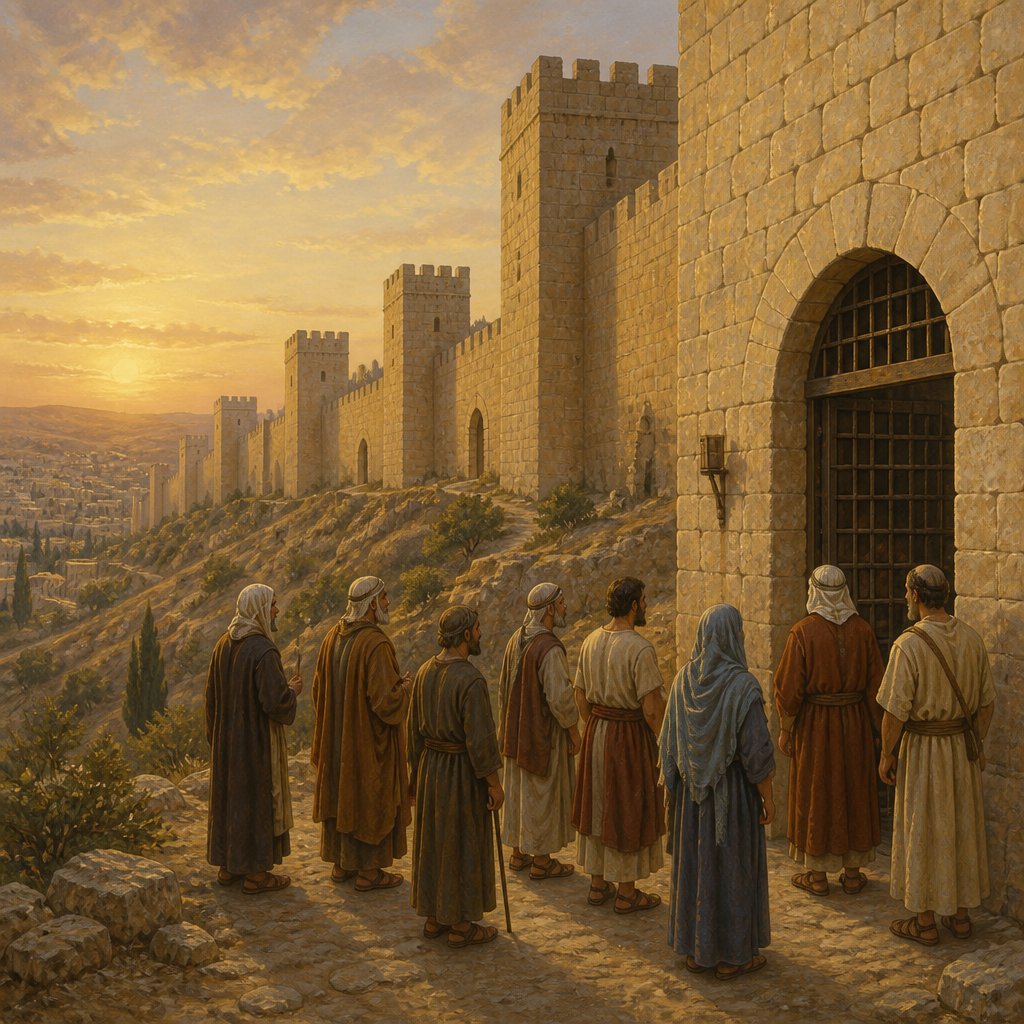
Nehemiah 12:39 in the King James Version (KJV) of the Bible reads, "And from above the gate of Ephraim, and above the old gate, and above the fish gate, and the tower of Hananeel, and the tower of Meah, even unto the sheep gate: and they stood still in the prison gate."
This verse is part of the account of the dedication of the wall of Jerusalem, as recorded in the book of Nehemiah. The dedication is a significant event in the history of Israel, as it marked the completion of the reconstruction of the wall, which had been destroyed by the Babylonians when they conquered Jerusalem.
In this particular verse, the focus is on the various gates of the city, as well as the towers and other points of interest along the wall. These gates and towers are not just physical structures, but also carry symbolic significance and spiritual meaning.
One of the themes that can be drawn from this verse is the theme of restoration and renewal. The rebuilding of the wall of Jerusalem was a physical manifestation of the restoration of the city and the renewal of its strength and security. This restoration was not just about the physical structure of the wall, but also about the spiritual and emotional rebuilding of the people of Jerusalem. It was a sign of hope and a promise of a better future for the city and its inhabitants.
The mention of the various gates and towers also symbolizes the idea of protection and security. In ancient times, city gates were the primary means of controlling who could enter and leave the city, as well as providing a line of defense against potential invaders. The towers along the wall provided a vantage point for guards to watch for approaching enemies. In a spiritual sense, these gates and towers can be seen as symbols of God's protection and watchful care over His people. They remind us that God is our ultimate defense and refuge, and that we can trust in His protection and security.
Another theme that can be found in this verse is the theme of unity and collaboration. The dedication of the wall was not the work of one person or one group, but rather the result of the combined efforts of many individuals working together. The mention of the various gates and towers serves as a reminder that each part of the wall had to be built and maintained by different groups of people, all working towards a common goal. This is a powerful symbol of the importance of unity and cooperation in achieving great things, and it speaks to the value of teamwork and collaboration in our own lives and communities.
In terms of the historical and cultural context, the dedication of the wall of Jerusalem was a significant event for the Israelites. It was a moment of great celebration and rejoicing, as it marked the end of a long and difficult period of rebuilding and restoration. The dedication was a time for the people to come together and give thanks to God for His faithfulness and provision throughout the process. It was a reminder of the importance of remembering and honoring the faithfulness of God in our lives, and the need to celebrate His goodness and grace.
In conclusion, Nehemiah 12:39 is a verse that carries deep spiritual and symbolic significance. It reminds us of the themes of restoration, protection, unity, and celebration, and it challenges us to reflect on the ways in which these themes are present in our own lives and communities. It serves as a powerful reminder of God's faithfulness and the importance of coming together to honor and give thanks to Him for His work in our lives.
Have questions about Nehemiah 12:39?
Dive deeper into this scripture with Bible Chat — an AI-powered tool for exploring God's Word through conversation. Ask questions, get context, and grow in your understanding of the Bible.
Get Our Apps


Nehemiah 12:39 Artwork

Nehemiah 12:39 - "And from above the gate of Ephraim, and above the old gate, and above the fish gate, and the tower of Hananeel, and the tower of Meah, even unto the sheep gate: and they stood still in the prison gate."
"And from above the gate of Ephraim, and above the old gate, and above the fish gate, and the tower of Hananeel, and the tower of Meah, even unto the sheep gate: and they stood still in the prison gate." - Nehemiah 12:39

Nehemiah 7:39 - "¶ The priests: the children of Jedaiah, of the house of Jeshua, nine hundred seventy and three."

Genesis 39:12

Nehemiah 12:26 - "These were in the days of Joiakim the son of Jeshua, the son of Jozadak, and in the days of Nehemiah the governor, and of Ezra the priest, the scribe."

Genesis 39:6-12
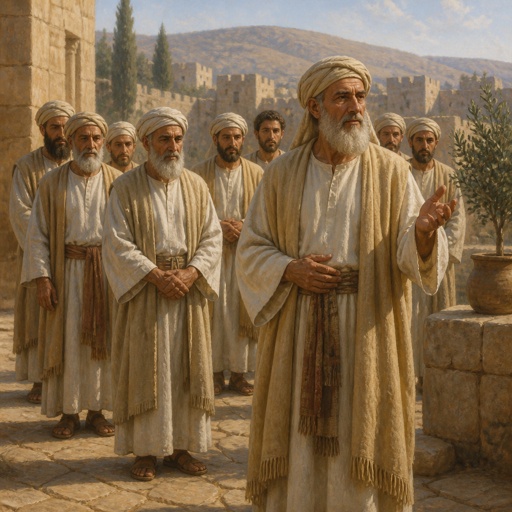
"¶ The priests: the children of Jedaiah, of the house of Jeshua, nine hundred seventy and three." - Nehemiah 7:39

Nehemiah 12:5 - "Miamin, Maadiah, Bilgah,"

Nehemiah 12:33 - "And Azariah, Ezra, and Meshullam,"

Nehemiah 12:4 - "Iddo, Ginnetho, Abijah,"

Nehemiah 12:2 - "Amariah, Malluch, Hattush,"

Nehemiah 12:3 - "Shechaniah, Rehum, Meremoth,"

Nehemiah 10:12 - "Zaccur, Sherebiah, Shebaniah,"

Nehemiah 12:6 - "Shemaiah, and Joiarib, Jedaiah,"

Exodus 39:12 - "And the third row, a ligure, an agate, and an amethyst."

Nehemiah 12:12 - "And in the days of Joiakim were priests, the chief of the fathers: of Seraiah, Meraiah; of Jeremiah, Hananiah;"

Nehemiah 12:13 - "Of Ezra, Meshullam; of Amariah, Jehohanan;"

Nehemiah 12:16 - "Of Iddo, Zechariah; of Ginnethon, Meshullam;"

Nehemiah 12:20 - "Of Sallai, Kallai; of Amok, Eber;"

Nehemiah 12:19 - "And of Joiarib, Mattenai; of Jedaiah, Uzzi;"

Nehemiah 12:34 - "Judah, and Benjamin, and Shemaiah, and Jeremiah,"

Nehemiah 12:15 - "Of Harim, Adna; of Meraioth, Helkai;"

Nehemiah 12:18 - "Of Bilgah, Shammua; of Shemaiah, Jehonathan;"

Nehemiah 12:21 - "Of Hilkiah, Hashabiah; of Jedaiah, Nethaneel."

Nehemiah 12:14 - "Of Melicu, Jonathan; of Shebaniah, Joseph;"

Mark 12:39 - "And the chief seats in the synagogues, and the uppermost rooms at feasts:"

Nehemiah 12:17 - "Of Abijah, Zichri; of Miniamin, of Moadiah, Piltai;"

John 12:39 - "Therefore they could not believe, because that Esaias said again,"

Nehemiah 12:11 - "And Joiada begat Jonathan, and Jonathan begat Jaddua."

Nehemiah 10:39 - "For the children of Israel and the children of Levi shall bring the offering of the corn, of the new wine, and the oil, unto the chambers, where are the vessels of the sanctuary, and the priests that minister, and the porters, and the singers: and we will not forsake the house of our God."