What does Nehemiah 12:31 mean?
"Then I brought up the princes of Judah upon the wall, and appointed two great companies of them that gave thanks, whereof one went on the right hand upon the wall toward the dung gate:" - Nehemiah 12:31
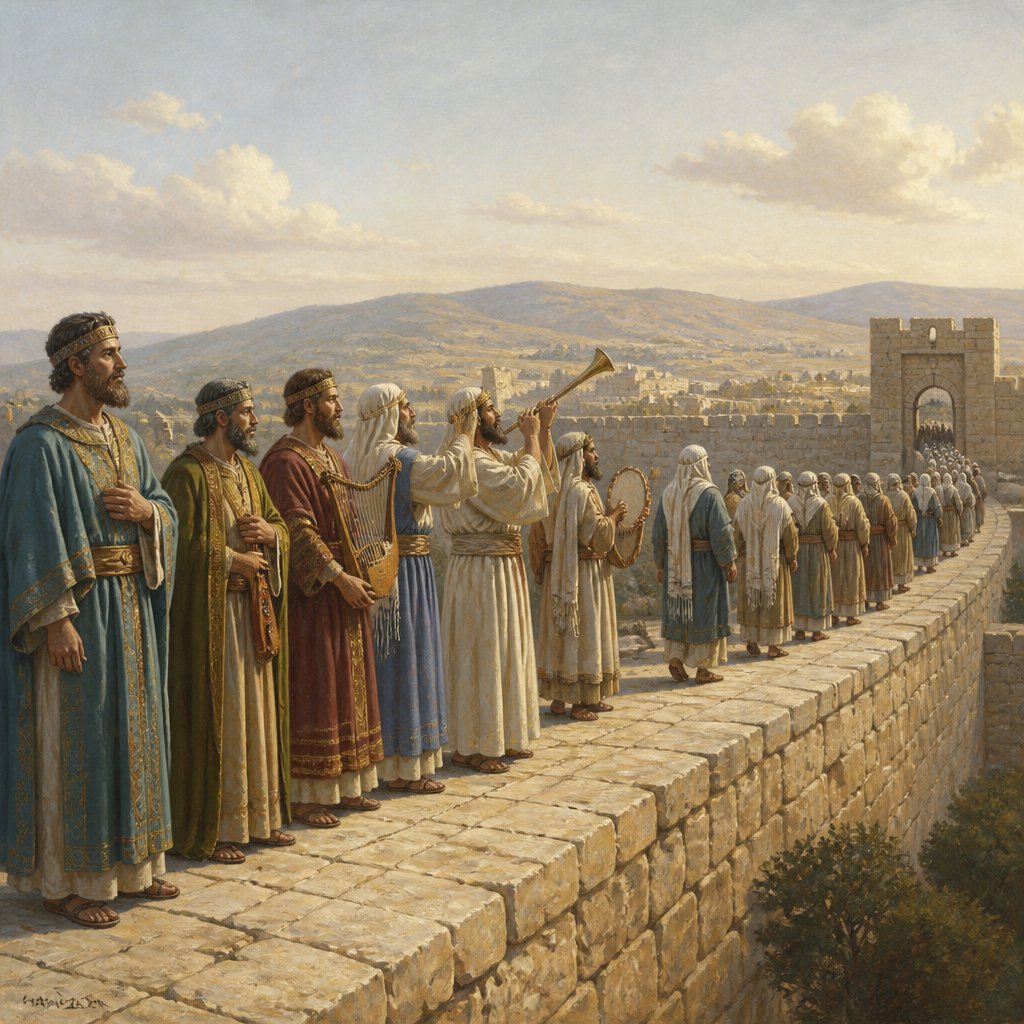
Nehemiah 12:31 from the King James Version (KJV) of the Bible reads, "Then I brought up the princes of Judah upon the wall, and appointed two great companies of them that gave thanks, whereof one went on the right hand upon the wall toward the dung gate."
This verse is taken from the book of Nehemiah, which is a part of the Hebrew Bible and the Old Testament of the Christian Bible. The book of Nehemiah is set during the time when the Jews were allowed to return to Jerusalem after the Babylonian exile. Nehemiah, the central figure of the book, is a high-ranking official in the Persian empire who is appointed as the governor of Judea. He is tasked with rebuilding the walls of Jerusalem and restoring the city to its former glory.
In Nehemiah 12, the people gather together to celebrate the completion of the wall. The verse in question describes how Nehemiah brought the princes of Judah to the wall and divided them into two companies. One company went to the right side of the wall, and the other to the left, and both companies offered thanksgiving.
The context of this verse is important to understand its meaning. The wall of Jerusalem was not just a physical structure; it was a symbol of the city's strength and security. By rebuilding the wall, the people of Jerusalem were reclaiming their identity and asserting their independence. The act of bringing the princes of Judah to the wall and having them give thanks symbolizes the unity and gratitude of the people for what they have accomplished together. It also serves as a reminder of the faithfulness of God in protecting and preserving his people.
The verse also highlights the significance of the dung gate. In biblical times, the dung gate was used to remove garbage and waste from the city. Symbolically, it represents the removal of impurity and sin from the community. The fact that one of the companies of thanksgiving went towards the dung gate signifies the cleansing and purification of the people as they rededicate themselves to God.
One of the key themes present in this verse is the importance of thanksgiving and praise. Throughout the book of Nehemiah, we see the people offering prayers and thanksgiving to God for his faithfulness and provision. This act of gratitude reflects the humility and dependence of the people on God, and serves as a reminder to modern-day readers of the importance of acknowledging God's hand in their lives.
Another important theme is the unity and collaboration of the people. The fact that the princes of Judah are brought together to the wall signifies their shared responsibility and commitment to the rebuilding of Jerusalem. This theme of unity is echoed throughout the book of Nehemiah as the people work together to overcome various challenges and obstacles.
The verse also carries a message of restoration and renewal. The rebuilding of the wall and the gathering of the people for thanksgiving symbolize the restoration of Jerusalem as a city of strength and security. It also represents the spiritual renewal of the people as they recommit themselves to God and his purposes for them.
In conclusion, Nehemiah 12:31 from the King James Version of the Bible is a rich and nuanced verse that carries themes of thanksgiving, unity, purification, and restoration. Its placement within the larger narrative of the book of Nehemiah gives it even greater significance, as it reflects the culmination of the people's efforts to rebuild their city and renew their covenant with God. As with all biblical verses, its meaning and relevance continue to resonate with readers today, serving as a source of inspiration and guidance in their own spiritual journeys.
Have questions about Nehemiah 12:31?
Dive deeper into this scripture with Bible Chat — an AI-powered tool for exploring God's Word through conversation. Ask questions, get context, and grow in your understanding of the Bible.
Get Our Apps


Nehemiah 12:31 Artwork
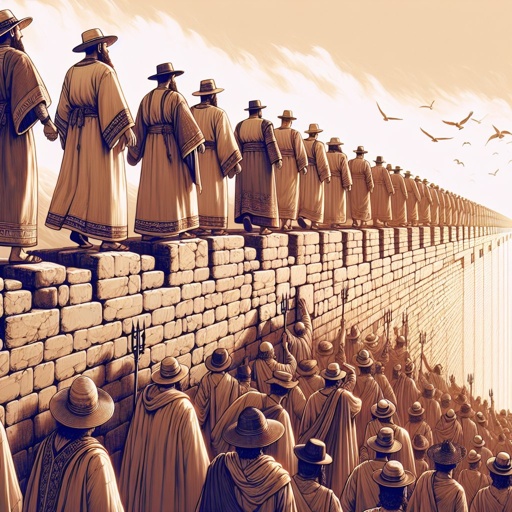
Nehemiah 12:31 - "Then I brought up the princes of Judah upon the wall, and appointed two great companies of them that gave thanks, whereof one went on the right hand upon the wall toward the dung gate:"
"Then I brought up the princes of Judah upon the wall, and appointed two great companies of them that gave thanks, whereof one went on the right hand upon the wall toward the dung gate:" - Nehemiah 12:31

Nehemiah 7:31 - "The men of Michmas, an hundred and twenty and two."

Titus 3:1-2

Titus 3:1-2

Nehemiah 13:31 - "And for the wood offering, at times appointed, and for the firstfruits. Remember me, O my God, for good."
Nehemiah 11:31 - "The children also of Benjamin from Geba dwelt at Michmash, and Aija, and Beth-el, and in their villages,"
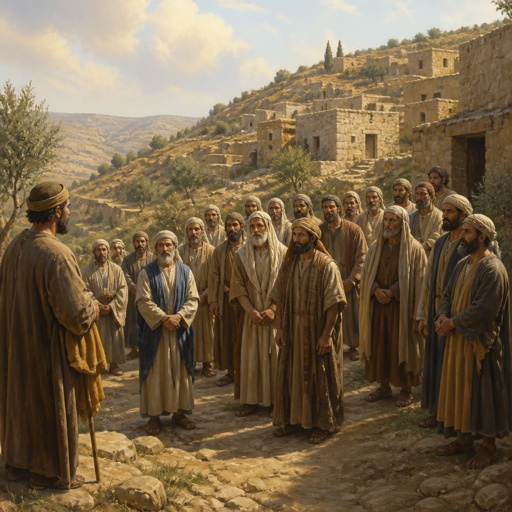
"The men of Michmas, an hundred and twenty and two." - Nehemiah 7:31

Nehemiah 12:26 - "These were in the days of Joiakim the son of Jeshua, the son of Jozadak, and in the days of Nehemiah the governor, and of Ezra the priest, the scribe."

Nehemiah 12:33 - "And Azariah, Ezra, and Meshullam,"

Nehemiah 12:5 - "Miamin, Maadiah, Bilgah,"

Nehemiah 12:2 - "Amariah, Malluch, Hattush,"

Nehemiah 12:4 - "Iddo, Ginnetho, Abijah,"

Nehemiah 12:3 - "Shechaniah, Rehum, Meremoth,"

Nehemiah 10:12 - "Zaccur, Sherebiah, Shebaniah,"

Nehemiah 12:6 - "Shemaiah, and Joiarib, Jedaiah,"

Nehemiah 12:12 - "And in the days of Joiakim were priests, the chief of the fathers: of Seraiah, Meraiah; of Jeremiah, Hananiah;"

Nehemiah 12:16 - "Of Iddo, Zechariah; of Ginnethon, Meshullam;"

Nehemiah 12:13 - "Of Ezra, Meshullam; of Amariah, Jehohanan;"

Nehemiah 12:20 - "Of Sallai, Kallai; of Amok, Eber;"

Nehemiah 12:19 - "And of Joiarib, Mattenai; of Jedaiah, Uzzi;"

Nehemiah 12:34 - "Judah, and Benjamin, and Shemaiah, and Jeremiah,"

Nehemiah 12:15 - "Of Harim, Adna; of Meraioth, Helkai;"

Nehemiah 12:18 - "Of Bilgah, Shammua; of Shemaiah, Jehonathan;"

Nehemiah 12:14 - "Of Melicu, Jonathan; of Shebaniah, Joseph;"

Nehemiah 12:21 - "Of Hilkiah, Hashabiah; of Jedaiah, Nethaneel."

Nehemiah 12:17 - "Of Abijah, Zichri; of Miniamin, of Moadiah, Piltai;"

Nehemiah 12:11 - "And Joiada begat Jonathan, and Jonathan begat Jaddua."
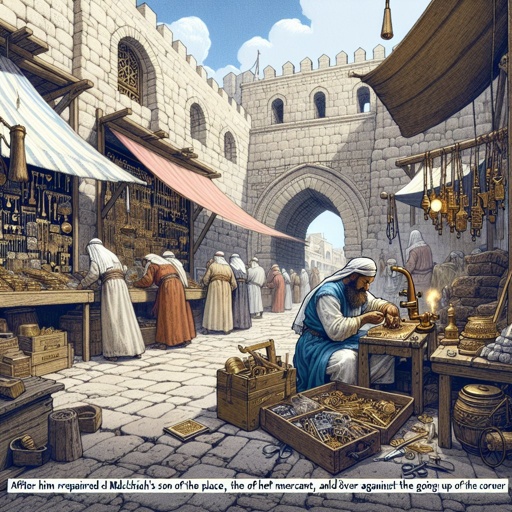
Nehemiah 3:31 - "After him repaired Malchiah the goldsmith's son unto the place of the Nethinims, and of the merchants, over against the gate Miphkad, and to the going up of the corner."

Nehemiah 7:12 - "The children of Elam, a thousand two hundred fifty and four."