What does Nehemiah 12:28 mean?
"And the sons of the singers gathered themselves together, both out of the plain country round about Jerusalem, and from the villages of Netophathi;" - Nehemiah 12:28
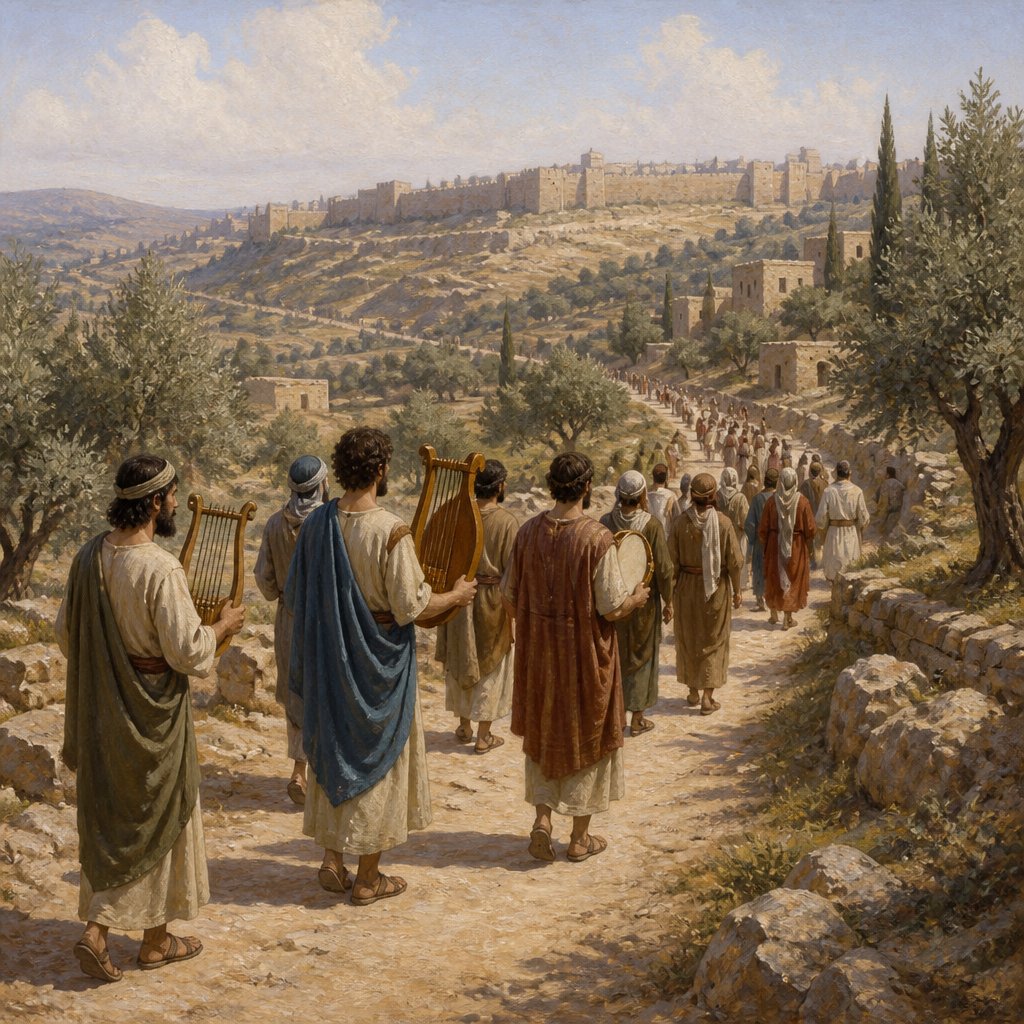
Nehemiah 12:28 (KJV) reads:
"And the sons of the singers gathered themselves together, both out of the plain country round about Jerusalem, and from the villages of Netophathi;"
The book of Nehemiah in the Old Testament provides a historical account of the rebuilding of the walls of Jerusalem after the Babylonian exile. The verse serves as a description of the gathering of the sons of the singers for a specific occasion within the historical context of the events following the completion of the wall.
The mention of "the sons of the singers" was significant because they played an essential role in the religious and cultural life of the Israelites. Singers held a respected and influential position in the community, and they played a crucial part in worship and celebration. The gathering of the singers from the countryside around Jerusalem and the villages of Netophathi reflects the unity and solidarity of the people in coming together for a common purpose.
The themes present in this verse include unity, community, and the importance of music and worship in the life of the Israelites. The gathering of the sons of the singers from different locations highlights the coming together of various groups to participate in a shared celebration or event. This theme of unity is essential in the larger context of the book of Nehemiah, which focuses on the rebuilding and restoration of the city of Jerusalem.
The mention of the singers also emphasizes the significance of music and worship in the religious life of the Israelites. Music and singing played a vital role in the worship of God and in the expression of faith and communal identity. The gathering of the sons of the singers for a specific occasion suggests the importance of communal worship and celebration as a way of honoring God and affirming the shared beliefs and values of the community.
The historical context of this verse provides additional layers of meaning. The rebuilding of the walls of Jerusalem was a significant undertaking that required the participation and cooperation of all the people. The verse represents a moment of celebration and thanksgiving following the completion of the wall, and the gathering of the singers symbolizes the communal joy and gratitude for this achievement.
Additionally, the mention of the singers from the countryside and villages reflects the inclusivity of the worship and celebration. It signifies that all members of the community, regardless of their location or social status, were invited to participate in the joyous occasion. This inclusivity and sense of community are central to the message of the book of Nehemiah, which emphasizes the importance of unity and cooperation in the face of challenges and adversity.
Symbolically, the gathering of the sons of the singers can represent the coming together of different gifts and talents for a common purpose. Each singer brought their unique voice and abilities to contribute to the collective worship and celebration, highlighting the value of diversity and individual contributions within the community.
In conclusion, Nehemiah 12:28 (KJV) is a verse that carries rich meaning within the larger context of the book of Nehemiah. It emphasizes the themes of unity, community, and the importance of music and worship in the religious and cultural life of the Israelites. The verse also carries historical and symbolic significance, highlighting the inclusivity and diversity of the community, as well as the shared purpose and joy in coming together for a communal celebration.
Have questions about Nehemiah 12:28?
Dive deeper into this scripture with Bible Chat — an AI-powered tool for exploring God's Word through conversation. Ask questions, get context, and grow in your understanding of the Bible.
Get Our Apps


Nehemiah 12:28 Artwork

Nehemiah 12:28 - "And the sons of the singers gathered themselves together, both out of the plain country round about Jerusalem, and from the villages of Netophathi;"
"And the sons of the singers gathered themselves together, both out of the plain country round about Jerusalem, and from the villages of Netophathi;" - Nehemiah 12:28

Nehemiah 11:28 - "And at Ziklag, and at Mekonah, and in the villages thereof,"

Nehemiah 7:28 - "The men of Beth-azmaveth, forty and two."

Nehemiah 12:26 - "These were in the days of Joiakim the son of Jeshua, the son of Jozadak, and in the days of Nehemiah the governor, and of Ezra the priest, the scribe."

"And at Ziklag, and at Mekonah, and in the villages thereof," - Nehemiah 11:28

Nehemiah 12:5 - "Miamin, Maadiah, Bilgah,"

Nehemiah 12:33 - "And Azariah, Ezra, and Meshullam,"

Nehemiah 12:4 - "Iddo, Ginnetho, Abijah,"

Nehemiah 12:2 - "Amariah, Malluch, Hattush,"

Nehemiah 12:3 - "Shechaniah, Rehum, Meremoth,"

Nehemiah 10:12 - "Zaccur, Sherebiah, Shebaniah,"

Nehemiah 12:6 - "Shemaiah, and Joiarib, Jedaiah,"

Nehemiah 12:12 - "And in the days of Joiakim were priests, the chief of the fathers: of Seraiah, Meraiah; of Jeremiah, Hananiah;"

Nehemiah 12:13 - "Of Ezra, Meshullam; of Amariah, Jehohanan;"

Nehemiah 12:16 - "Of Iddo, Zechariah; of Ginnethon, Meshullam;"

Nehemiah 12:20 - "Of Sallai, Kallai; of Amok, Eber;"

"The men of Beth-azmaveth, forty and two." - Nehemiah 7:28

Nehemiah 12:19 - "And of Joiarib, Mattenai; of Jedaiah, Uzzi;"

Nehemiah 12:34 - "Judah, and Benjamin, and Shemaiah, and Jeremiah,"

Nehemiah 12:15 - "Of Harim, Adna; of Meraioth, Helkai;"

Nehemiah 12:18 - "Of Bilgah, Shammua; of Shemaiah, Jehonathan;"

Nehemiah 12:21 - "Of Hilkiah, Hashabiah; of Jedaiah, Nethaneel."

Nehemiah 12:14 - "Of Melicu, Jonathan; of Shebaniah, Joseph;"

Nehemiah 3:28 - "From above the horse gate repaired the priests, every one over against his house."

Nehemiah 12:17 - "Of Abijah, Zichri; of Miniamin, of Moadiah, Piltai;"

Nehemiah 12:11 - "And Joiada begat Jonathan, and Jonathan begat Jaddua."

Nehemiah 7:12 - "The children of Elam, a thousand two hundred fifty and four."

Nehemiah 12:32 - "And after them went Hoshaiah, and half of the princes of Judah,"

"Miamin, Maadiah, Bilgah," - Nehemiah 12:5