What does Nehemiah 12:15 mean?
"Of Harim, Adna; of Meraioth, Helkai;" - Nehemiah 12:15
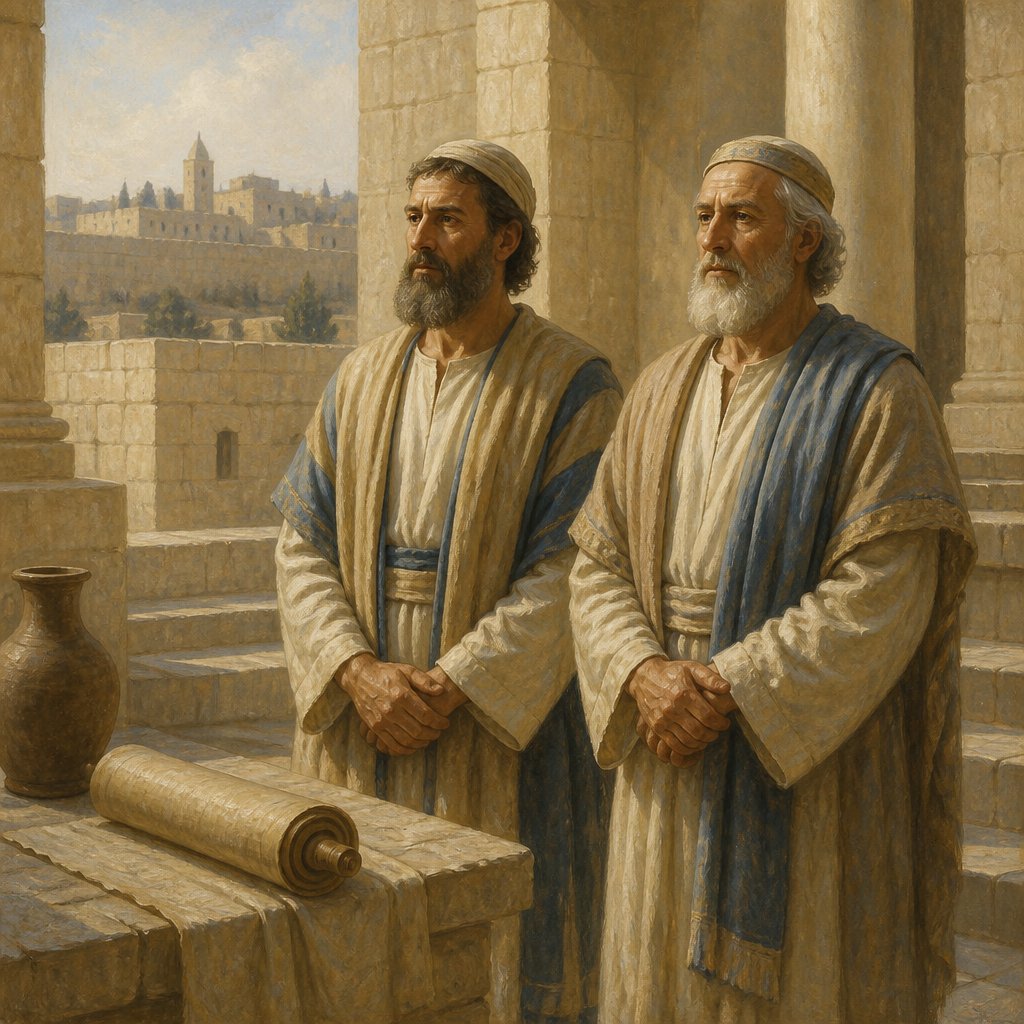
Nehemiah 12:15 in the King James Version reads: "And of the sons of Levi, Shemaiah the son of Hasshub, the son of Azrikam, the son of Hashabiah, of the sons of Merari;"
This verse is a part of the book of Nehemiah, which is a historical account of the efforts to rebuild Jerusalem's walls and restore the city after the Babylonian exile. The verse specifically mentions Shemaiah, a descendant of Levi, who played a role in the restoration efforts.
The book of Nehemiah is set in the 5th century BCE, during the time when the Jewish people had returned from exile in Babylon and were attempting to re-establish themselves in Jerusalem. The city's walls had been destroyed, leaving it vulnerable to attacks, and Nehemiah, a Jewish cupbearer to King Artaxerxes I of Persia, was tasked with overseeing the project to rebuild the walls.
In this verse, the mention of Shemaiah and his lineage emphasizes the importance of the Levites in the religious and social structure of the Jewish people. The Levites were one of the twelve tribes of Israel, and they were responsible for the religious duties in the Temple. By highlighting Shemaiah's ancestry, the verse serves to underscore the continuity of the religious traditions and the significance of the Levitical lineage in the rebuilding and restoration of Jerusalem.
The genealogy mentioned in this verse also mirrors the genealogies found throughout the Bible, particularly in the Old Testament. Genealogies were an important aspect of ancient Jewish culture, as they served to establish a person's identity, social standing, and inheritance rights. In the case of Shemaiah, his lineage traced back to Merari, one of the three sons of Levi, demonstrating his legitimate claim to the Levitical priesthood and his role in the restoration of Jerusalem's religious life.
Furthermore, the mention of Shemaiah and the Levites in the context of the rebuilding of Jerusalem's walls and the restoration of the city overall symbolizes the connection between the physical and spiritual well-being of the community. The Levites played a crucial role in the religious life of the Jewish people, and their involvement in the rebuilding efforts underscores the spiritual significance of the restoration project. It also highlights the idea that the physical and spiritual aspects of the community are interconnected and dependent on each other for the well-being of the people.
In a broader sense, this verse and the book of Nehemiah as a whole convey themes of faith, perseverance, and community solidarity. The efforts to rebuild Jerusalem's walls were met with opposition and challenges, but Nehemiah and the Jewish people persevered through their faith in God and their determination to restore their city. The mention of Shemaiah and the Levites in this context serves as a reminder of the importance of faith, unity, and the preservation of religious traditions in times of adversity.
In conclusion, Nehemiah 12:15 serves as a symbolic representation of the connection between the physical and spiritual aspects of the community, as well as the significance of faith, perseverance, and the preservation of religious traditions. The verse highlights the role of the Levites, specifically Shemaiah, in the restoration of Jerusalem, emphasizing the continuity of religious lineage and the importance of the Levitical priesthood in the community's restoration efforts. This verse, along with the broader themes of the book of Nehemiah, continues to provide valuable insights into the spiritual and social values of the Jewish people during the time of the restoration of Jerusalem.
Have questions about Nehemiah 12:15?
Dive deeper into this scripture with Bible Chat — an AI-powered tool for exploring God's Word through conversation. Ask questions, get context, and grow in your understanding of the Bible.
Get Our Apps


Nehemiah 12:15 Artwork

Nehemiah 12:15 - "Of Harim, Adna; of Meraioth, Helkai;"
"Of Harim, Adna; of Meraioth, Helkai;" - Nehemiah 12:15

Nehemiah 12:26 - "These were in the days of Joiakim the son of Jeshua, the son of Jozadak, and in the days of Nehemiah the governor, and of Ezra the priest, the scribe."

Nehemiah 10:15 - "Bunni, Azgad, Bebai,"

Nehemiah 12:5 - "Miamin, Maadiah, Bilgah,"

Nehemiah 12:33 - "And Azariah, Ezra, and Meshullam,"

Nehemiah 12:4 - "Iddo, Ginnetho, Abijah,"

Nehemiah 12:2 - "Amariah, Malluch, Hattush,"

Nehemiah 12:3 - "Shechaniah, Rehum, Meremoth,"

Nehemiah 10:12 - "Zaccur, Sherebiah, Shebaniah,"

Nehemiah 12:6 - "Shemaiah, and Joiarib, Jedaiah,"

Nehemiah 12:12 - "And in the days of Joiakim were priests, the chief of the fathers: of Seraiah, Meraiah; of Jeremiah, Hananiah;"

Nehemiah 12:13 - "Of Ezra, Meshullam; of Amariah, Jehohanan;"

Nehemiah 12:16 - "Of Iddo, Zechariah; of Ginnethon, Meshullam;"

Nehemiah 12:20 - "Of Sallai, Kallai; of Amok, Eber;"

Nehemiah 12:19 - "And of Joiarib, Mattenai; of Jedaiah, Uzzi;"

Nehemiah 12:34 - "Judah, and Benjamin, and Shemaiah, and Jeremiah,"

Nehemiah 12:18 - "Of Bilgah, Shammua; of Shemaiah, Jehonathan;"

Nehemiah 12:21 - "Of Hilkiah, Hashabiah; of Jedaiah, Nethaneel."

Nehemiah 12:14 - "Of Melicu, Jonathan; of Shebaniah, Joseph;"

Nehemiah 7:15 - "The children of Binnui, six hundred forty and eight."

Nehemiah 12:17 - "Of Abijah, Zichri; of Miniamin, of Moadiah, Piltai;"

Nehemiah 12:11 - "And Joiada begat Jonathan, and Jonathan begat Jaddua."
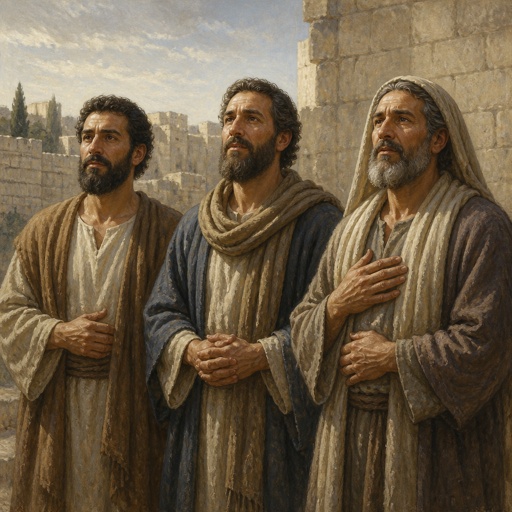
"Bunni, Azgad, Bebai," - Nehemiah 10:15

Nehemiah 6:15 – "So the wall was completed on the twenty-fifth of Elul, in fifty-two days."
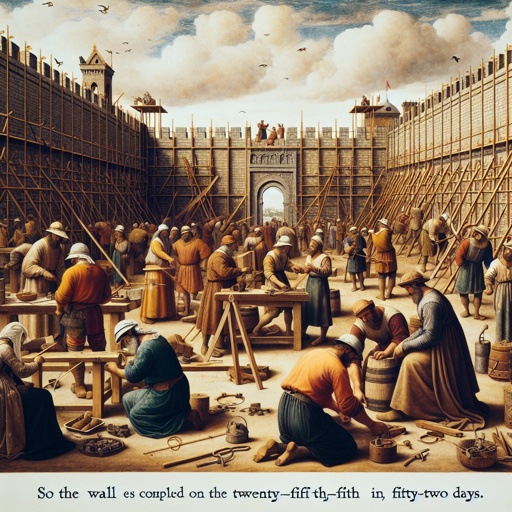
Nehemiah 6:15 – "So the wall was completed on the twenty-fifth of Elul, in fifty-two days."

Nehemiah 7:12 - "The children of Elam, a thousand two hundred fifty and four."

Nehemiah 12:32 - "And after them went Hoshaiah, and half of the princes of Judah,"

"Miamin, Maadiah, Bilgah," - Nehemiah 12:5

"Shemaiah, and Joiarib, Jedaiah," - Nehemiah 12:6