What does Nehemiah 12:12 mean?
"And in the days of Joiakim were priests, the chief of the fathers: of Seraiah, Meraiah; of Jeremiah, Hananiah;" - Nehemiah 12:12
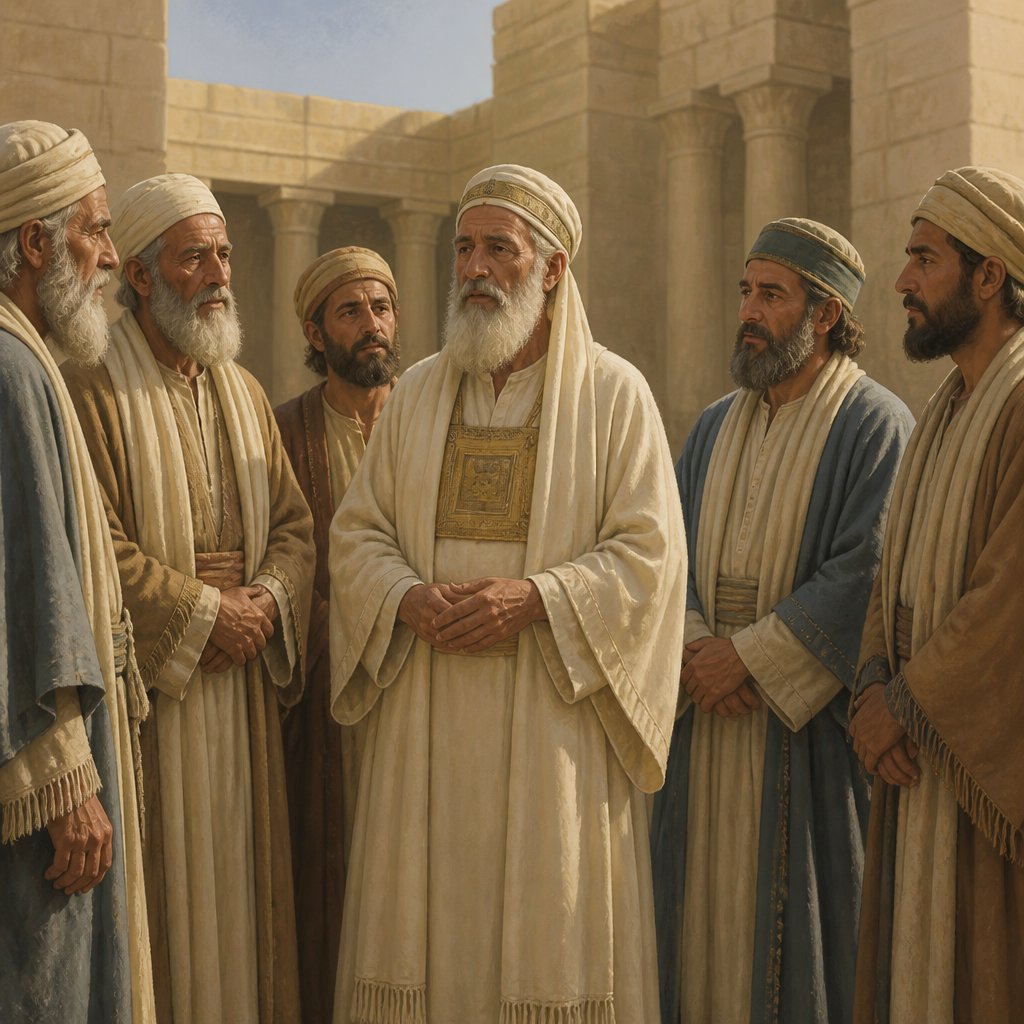
Nehemiah 12:12 (KJV) declares:
"And in the days of Joiakim were priests, the chief of the fathers: of Seraiah, Meraiah; of Jeremiah, Hananiah;"
The Book of Nehemiah, an Old Testament book, tells the story of Nehemiah, a Jewish cupbearer to King Artaxerxes I of Persia, who is granted permission to return to Jerusalem to rebuild its walls after they had been destroyed by the Babylonians. The verse Nehemiah 12:12 is a part of the genealogy of the priests during the time of Joiakim, who was a high priest at that time.
The genealogy mentioned in this verse highlights the importance of the priesthood in the religious and social fabric of ancient Israel. The priesthood was a hereditary position, passed down from father to son, and played a vital role in leading religious rituals, interpreting the law, and upholding the moral and spiritual well-being of the community. The mention of the chief of the fathers and their descendants gives a sense of continuity and tradition within the priesthood, emphasizing the importance of lineage and ancestry in the Jewish faith.
The repetition of the names of the priests and their descendants in this verse serves to underscore their significance and prominence within the community. It also reflects the meticulous record-keeping of lineage and heritage that was important in ancient Israel, as it established one’s identity, social status, and rights within the community.
Furthermore, the mention of the priests' names in the genealogy highlights the individuality and personal history of each priest, emphasizing their unique contributions to the religious life of the community. It also serves as a reminder of the human aspect of the priesthood, with each priest being a distinct individual with their own experiences, challenges, and virtues.
On a symbolic level, the genealogy in Nehemiah 12:12 reflects the interconnectedness of the community of priests and the significance of their shared heritage and ancestry. It also serves to emphasize the continuity and stability of the priesthood throughout generations, illustrating the endurance and resilience of the religious traditions and practices within ancient Israel.
In a broader context, this verse is also a part of the larger theme of restoration and renewal found in the Book of Nehemiah. Nehemiah's efforts to rebuild the walls of Jerusalem and restore the city to its former glory are emblematic of the spiritual and physical renewal of the Jewish people after their exile and the devastation wrought upon their land. The genealogy in Nehemiah 12:12 serves as a testament to the enduring legacy of the priesthood and the unbroken spirit of the Jewish people, despite the trials and tribulations they have faced.
In conclusion, Nehemiah 12:12 is a verse that illuminates the significance of the priesthood and the continuity of tradition within the Jewish community. It emphasizes the importance of lineage and ancestry, while also highlighting the individuality of each priest. As part of the larger narrative of restoration and renewal in the Book of Nehemiah, this verse underscores the enduring resilience and spiritual strength of the Jewish people.
Have questions about Nehemiah 12:12?
Dive deeper into this scripture with Bible Chat — an AI-powered tool for exploring God's Word through conversation. Ask questions, get context, and grow in your understanding of the Bible.
Get Our Apps


Nehemiah 12:12 Artwork

Nehemiah 12:12 - "And in the days of Joiakim were priests, the chief of the fathers: of Seraiah, Meraiah; of Jeremiah, Hananiah;"
"And in the days of Joiakim were priests, the chief of the fathers: of Seraiah, Meraiah; of Jeremiah, Hananiah;" - Nehemiah 12:12

Nehemiah 12:5 - "Miamin, Maadiah, Bilgah,"

Nehemiah 12:33 - "And Azariah, Ezra, and Meshullam,"

Nehemiah 12:4 - "Iddo, Ginnetho, Abijah,"

Nehemiah 12:2 - "Amariah, Malluch, Hattush,"

Nehemiah 12:3 - "Shechaniah, Rehum, Meremoth,"

Nehemiah 10:12 - "Zaccur, Sherebiah, Shebaniah,"

Nehemiah 12:6 - "Shemaiah, and Joiarib, Jedaiah,"

Nehemiah 12:13 - "Of Ezra, Meshullam; of Amariah, Jehohanan;"

Nehemiah 12:16 - "Of Iddo, Zechariah; of Ginnethon, Meshullam;"

Nehemiah 12:20 - "Of Sallai, Kallai; of Amok, Eber;"

Nehemiah 12:19 - "And of Joiarib, Mattenai; of Jedaiah, Uzzi;"

Nehemiah 12:34 - "Judah, and Benjamin, and Shemaiah, and Jeremiah,"

Nehemiah 12:15 - "Of Harim, Adna; of Meraioth, Helkai;"

Nehemiah 12:18 - "Of Bilgah, Shammua; of Shemaiah, Jehonathan;"

Nehemiah 12:21 - "Of Hilkiah, Hashabiah; of Jedaiah, Nethaneel."

Nehemiah 12:14 - "Of Melicu, Jonathan; of Shebaniah, Joseph;"

Nehemiah 12:26 - "These were in the days of Joiakim the son of Jeshua, the son of Jozadak, and in the days of Nehemiah the governor, and of Ezra the priest, the scribe."

Nehemiah 12:17 - "Of Abijah, Zichri; of Miniamin, of Moadiah, Piltai;"

Nehemiah 12:11 - "And Joiada begat Jonathan, and Jonathan begat Jaddua."

Nehemiah 7:12 - "The children of Elam, a thousand two hundred fifty and four."

Nehemiah 12:32 - "And after them went Hoshaiah, and half of the princes of Judah,"

"Miamin, Maadiah, Bilgah," - Nehemiah 12:5

"Shemaiah, and Joiarib, Jedaiah," - Nehemiah 12:6

"Iddo, Ginnetho, Abijah," - Nehemiah 12:4

"Zaccur, Sherebiah, Shebaniah," - Nehemiah 10:12

"Shechaniah, Rehum, Meremoth," - Nehemiah 12:3

"And Azariah, Ezra, and Meshullam," - Nehemiah 12:33
"Amariah, Malluch, Hattush," - Nehemiah 12:2