What does Nehemiah 11:4 mean?
"And at Jerusalem dwelt certain of the children of Judah, and of the children of Benjamin. Of the children of Judah; Athaiah the son of Uzziah, the son of Zechariah, the son of Amariah, the son of Shephatiah, the son of Mahalaleel, of the children of Perez;" - Nehemiah 11:4
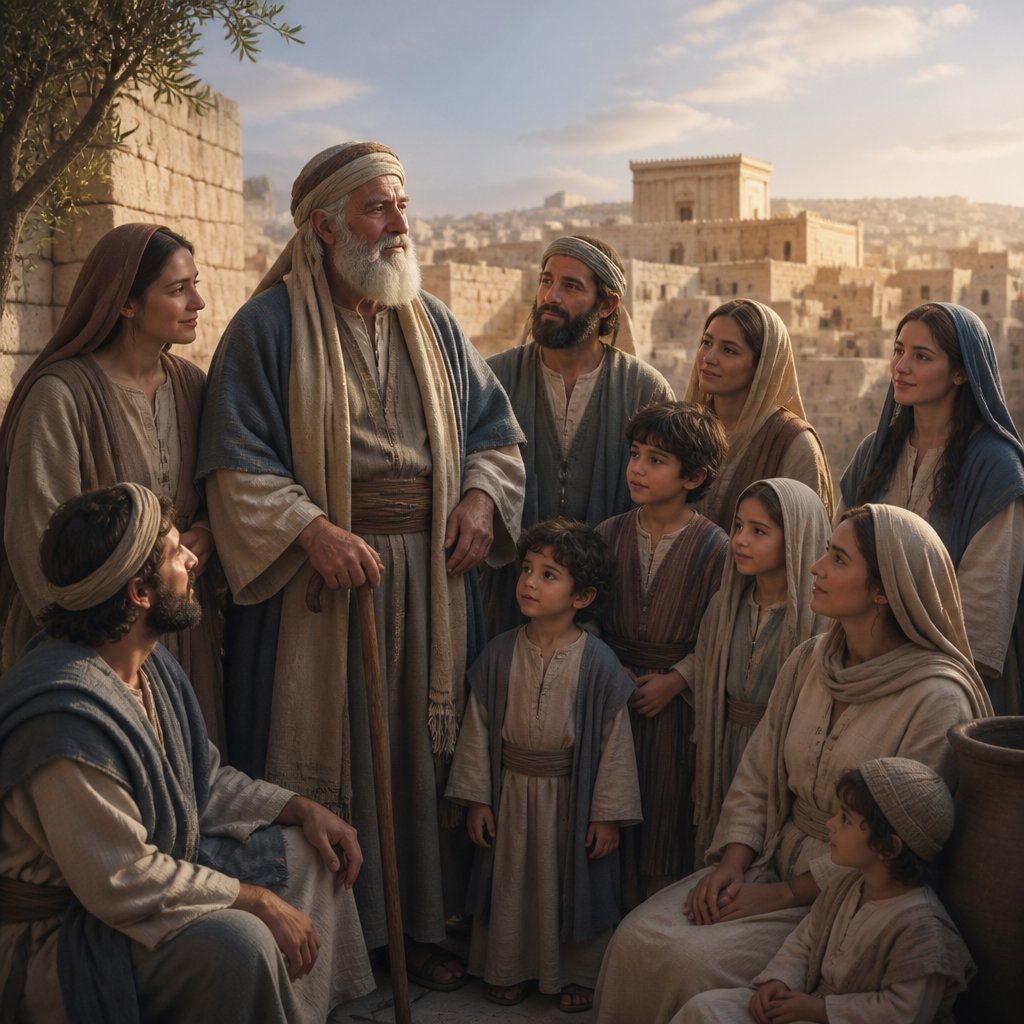
Nehemiah 11:4 (KJV) states, "And at Jerusalem dwelt certain of the children of Judah, and of the children of Benjamin. Of the children of Judah; Athaiah the son of Uzziah, the son of Zechariah, the son of Amariah, the son of Shephatiah, the son of Mahalaleel, of the children of Perez;"
This verse comes from the book of Nehemiah in the Old Testament, which recounts the story of Nehemiah, a high-ranking Jewish official in the Persian court, who is sent by the Persian king to help rebuild the walls of Jerusalem. After completing the task, Nehemiah then focuses on rebuilding the spiritual and moral state of the Jewish community in Jerusalem.
In order to fully understand the significance of Nehemiah 11:4, it is important to consider the broader context of the book of Nehemiah. The verse is part of a detailed list of the families and individuals who were chosen to settle in Jerusalem after its walls were rebuilt. These families played a crucial role in the restoration and repopulation of Jerusalem, which was essential for the city's security and prosperity.
One of the key themes that can be drawn from Nehemiah 11:4 is the importance of the city of Jerusalem as a symbol of spiritual and national identity for the people of Judah and Benjamin. The verse emphasizes the significance of the city as the dwelling place for the descendants of these two tribes, reinforcing the idea that Jerusalem was the heart and soul of the Jewish community. This reflects the deep sense of attachment and loyalty that the Jewish people felt towards their sacred city, as it was an embodiment of their religious heritage and cultural identity.
Furthermore, the detailed genealogy presented in Nehemiah 11:4 serves as a reminder of the continuity and lineage of the Jewish people. By tracing the ancestry of the individuals who resided in Jerusalem, the verse highlights the deep connections between the past, present, and future generations of the Jewish community. This genealogy also underscores the importance of preserving and passing down the religious and cultural traditions that defined the identity of the Jewish people.
Symbolically, the presence of the descendants of Judah and Benjamin in Jerusalem signifies the reunification of the Jewish community and the restoration of their sense of belonging and purpose. After years of exile and dispersion, the reunification of the people in their ancestral homeland was a powerful symbol of renewal, hope, and resilience. This unity was essential for the community to rebuild and thrive, both spiritually and physically, in the city of Jerusalem.
From a spiritual perspective, Nehemiah 11:4 can also be interpreted as a symbol of God's faithfulness and providence towards His people. The fact that specific individuals and families were designated to dwell in Jerusalem reflects the divine plan and purpose for the restoration of the city. It demonstrates God's intention to establish a community of faithful followers who would continue to uphold His covenant and serve as a light to the nations.
In conclusion, Nehemiah 11:4 carries profound themes of identity, lineage, unity, and divine providence within the broader context of the book of Nehemiah. The verse serves as a testament to the enduring significance of Jerusalem as a symbol of spiritual and national heritage for the Jewish people. It also underscores the importance of genealogy and the continuity of tradition in preserving the collective memory and faith of the community. Ultimately, Nehemiah 11:4 highlights the foundational principles of faith, community, and restoration that are central to the biblical narrative and the ongoing spiritual journey of God's people.
Have questions about Nehemiah 11:4?
Dive deeper into this scripture with Bible Chat — an AI-powered tool for exploring God's Word through conversation. Ask questions, get context, and grow in your understanding of the Bible.
Get Our Apps


Nehemiah 11:4 Artwork

Nehemiah 11:4 - "And at Jerusalem dwelt certain of the children of Judah, and of the children of Benjamin. Of the children of Judah; Athaiah the son of Uzziah, the son of Zechariah, the son of Amariah, the son of Shephatiah, the son of Mahalaleel, of the children of Perez;"
"And at Jerusalem dwelt certain of the children of Judah, and of the children of Benjamin. Of the children of Judah; Athaiah the son of Uzziah, the son of Zechariah, the son of Amariah, the son of Shephatiah, the son of Mahalaleel, of the children of Perez;" - Nehemiah 11:4

Nehemiah 4:11 - "And our adversaries said, They shall not know, neither see, till we come in the midst among them, and slay them, and cause the work to cease."

Nehemiah 11:11-14

Nehemiah 11:13

Nehemiah 11:1-19

Nehemiah 11:34 - "Hadid, Zeboim, Neballat,"

Nehemiah 10:11 - "Micha, Rehob, Hashabiah,"

Nehemiah 11:33 - "Hazor, Ramah, Gittaim,"

Nehemiah 11:32 - "And at Anathoth, Nob, Ananiah,"

Nehemiah 4:6

Nehemiah 11:26 - "And at Jeshua, and at Moladah, and at Beth-phelet,"

Nehemiah 11:29 - "And at En-rimmon, and at Zareah, and at Jarmuth,"

Nehemiah 4:6

Nehemiah 4:6

Nehemiah 11:35 - "Lod, and Ono, the valley of craftsmen."

Nehemiah 11:28 - "And at Ziklag, and at Mekonah, and in the villages thereof,"

Nehemiah 11:36 - "And of the Levites were divisions in Judah, and in Benjamin."

Nehemiah 11:10 - "Of the priests: Jedaiah the son of Joiarib, Jachin."

Nehemiah 12:4 - "Iddo, Ginnetho, Abijah,"

Nehemiah 12:11 - "And Joiada begat Jonathan, and Jonathan begat Jaddua."

Nehemiah 10:4 - "Hattush, Shebaniah, Malluch,"

Nehemiah 11:27 - "And at Hazar-shual, and at Beer-sheba, and in the villages thereof,"

Nehemiah 2:11 - "So I came to Jerusalem, and was there three days."

Nehemiah 11:11 - "Seraiah the son of Hilkiah, the son of Meshullam, the son of Zadok, the son of Meraioth, the son of Ahitub, was the ruler of the house of God."

"And at Anathoth, Nob, Ananiah," - Nehemiah 11:32

"Hadid, Zeboim, Neballat," - Nehemiah 11:34

"Hazor, Ramah, Gittaim," - Nehemiah 11:33

"Micha, Rehob, Hashabiah," - Nehemiah 10:11

Nehemiah 11:21 - "But the Nethinims dwelt in Ophel: and Ziha and Gispa were over the Nethinims."