What does Nehemiah 11:20 mean?
"¶ And the residue of Israel, of the priests, and the Levites, were in all the cities of Judah, every one in his inheritance." - Nehemiah 11:20
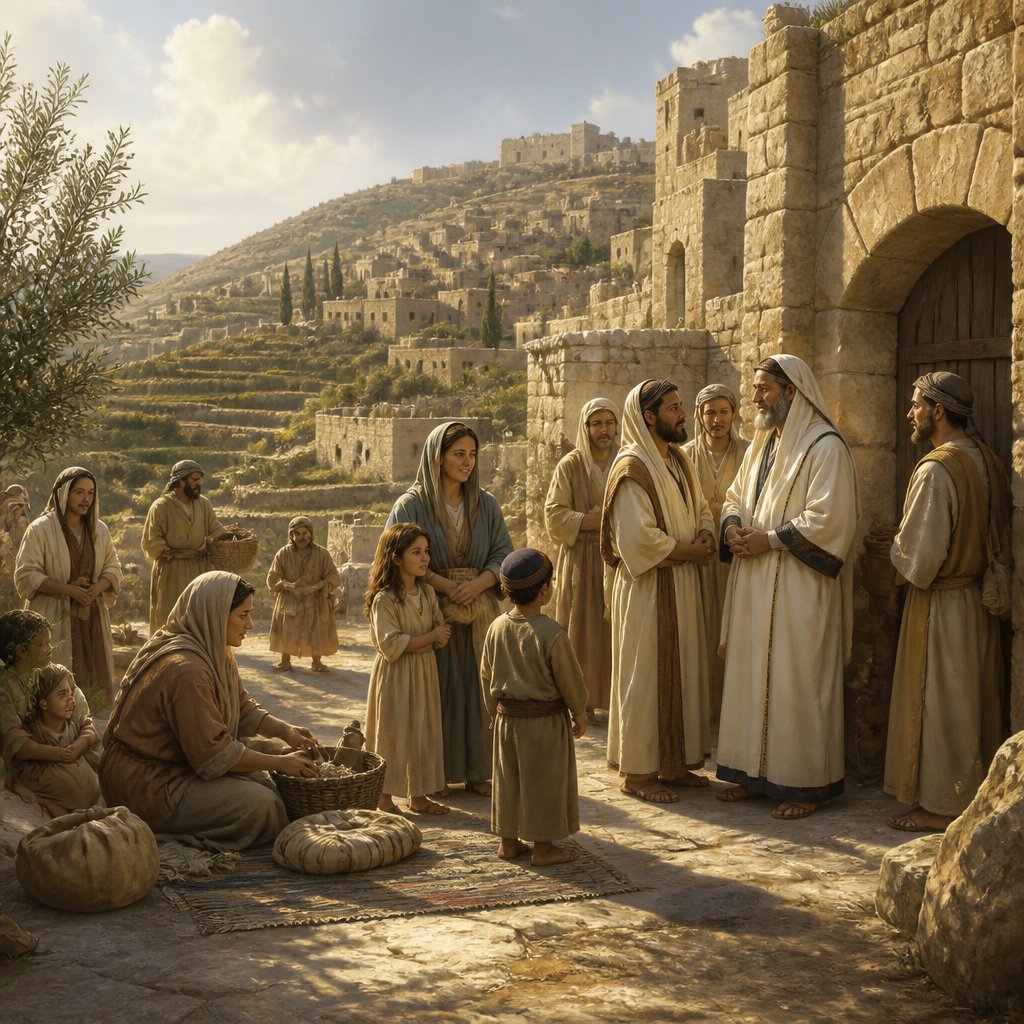
The Bible verse Nehemiah 11:20 from the King James Version (KJV) reads, “And the residue of Israel, of the priests, and the Levites, were in all the cities of Judah, every one in his inheritance.” This verse is part of the Old Testament book of Nehemiah, which tells the story of Nehemiah, a Jewish captive who served as a cupbearer to the Persian king Artaxerxes. In this verse, we see the writer describing the resettlement of Israelites, priests, and Levites in the cities of Judah after they had returned from exile in Babylon.
The book of Nehemiah takes place during the time when the Israelites were beginning to rebuild Jerusalem after their exile. This verse specifically addresses the distribution of the priests and Levites throughout the cities of Judah. The term “residue of Israel” refers to the remainder or the remnant of Israel, indicating that only a portion of the population had returned to their homeland. This suggests that the restoration of the Israelites was a gradual process, and not all of them had returned to Judah at this point.
The priests and Levites were the religious leaders and assistants responsible for carrying out the rituals and sacrifices in the Jewish temple. The fact that they were distributed throughout the cities of Judah shows that they were integral to the religious and spiritual life of the community. This distribution also served to ensure that the religious practices and traditions were upheld in each city, and the people had access to the necessary religious services and guidance.
The phrase “every one in his inheritance” further emphasizes the idea of the Israelite community reclaiming their ancestral land and heritage. The inheritance was not only related to the physical land they inhabited, but also to their spiritual and cultural heritage as God’s chosen people. This notion of inheritance is a central theme in the Old Testament, reflecting the covenant between God and the Israelites and their rightful claim to the land of Judah.
The verse also underscores the importance of community and belonging. Each individual was settled in a specific city, not in isolation, but as part of a larger community. This sense of belonging and communal living was crucial for the survival and flourishing of the Israelite people as they sought to rebuild their nation and their identity after years of exile and displacement.
Symbolically, this verse conveys the idea of restoration and renewal. The return of the priests, Levites, and Israelites to their cities represents the spiritual and cultural revival of the Jewish community. It signifies a reestablishment of their religious practices, traditions, and way of life in their homeland.
Overall, Nehemiah 11:20 captures the spirit of resilience, restoration, and community among the Israelite people as they sought to rebuild their lives and their nation after the exile. It highlights the significance of heritage, belonging, and religious leadership in the process of rebuilding and renewal. As such, this verse continues to hold relevance for believers today, reminding them of the importance of community, heritage, and the enduring faithfulness of God.
Have questions about Nehemiah 11:20?
Dive deeper into this scripture with Bible Chat — an AI-powered tool for exploring God's Word through conversation. Ask questions, get context, and grow in your understanding of the Bible.
Get Our Apps


Nehemiah 11:20 Artwork

Nehemiah 11:20 - "¶ And the residue of Israel, of the priests, and the Levites, were in all the cities of Judah, every one in his inheritance."
"¶ And the residue of Israel, of the priests, and the Levites, were in all the cities of Judah, every one in his inheritance." - Nehemiah 11:20

Nehemiah 11:11-14

Nehemiah 11:13

Nehemiah 11:1-19

Nehemiah 10:20 - "Magpiash, Meshullam, Hezir,"

Nehemiah 12:20 - "Of Sallai, Kallai; of Amok, Eber;"

Nehemiah 7:20 - "The children of Adin, six hundred fifty and five."

Nehemiah 11:34 - "Hadid, Zeboim, Neballat,"

Nehemiah 10:11 - "Micha, Rehob, Hashabiah,"

Nehemiah 11:33 - "Hazor, Ramah, Gittaim,"

Nehemiah 11:32 - "And at Anathoth, Nob, Ananiah,"

Nehemiah 11:26 - "And at Jeshua, and at Moladah, and at Beth-phelet,"

Nehemiah 11:29 - "And at En-rimmon, and at Zareah, and at Jarmuth,"

Nehemiah 11:35 - "Lod, and Ono, the valley of craftsmen."

Nehemiah 11:28 - "And at Ziklag, and at Mekonah, and in the villages thereof,"

"Magpiash, Meshullam, Hezir," - Nehemiah 10:20

Nehemiah 11:36 - "And of the Levites were divisions in Judah, and in Benjamin."

Nehemiah 11:10 - "Of the priests: Jedaiah the son of Joiarib, Jachin."

Nehemiah 12:11 - "And Joiada begat Jonathan, and Jonathan begat Jaddua."

Nehemiah 11:27 - "And at Hazar-shual, and at Beer-sheba, and in the villages thereof,"

Nehemiah 2:11 - "So I came to Jerusalem, and was there three days."

Nehemiah 11:11 - "Seraiah the son of Hilkiah, the son of Meshullam, the son of Zadok, the son of Meraioth, the son of Ahitub, was the ruler of the house of God."
"Of Sallai, Kallai; of Amok, Eber;" - Nehemiah 12:20

Nehemiah 13:20 - "So the merchants and sellers of all kind of ware lodged without Jerusalem once or twice."

"And at Anathoth, Nob, Ananiah," - Nehemiah 11:32

"Hadid, Zeboim, Neballat," - Nehemiah 11:34

"Hazor, Ramah, Gittaim," - Nehemiah 11:33

"Micha, Rehob, Hashabiah," - Nehemiah 10:11

Nehemiah 11:21 - "But the Nethinims dwelt in Ophel: and Ziha and Gispa were over the Nethinims."