What does Nehemiah 11:18 mean?
"All the Levites in the holy city were two hundred fourscore and four." - Nehemiah 11:18
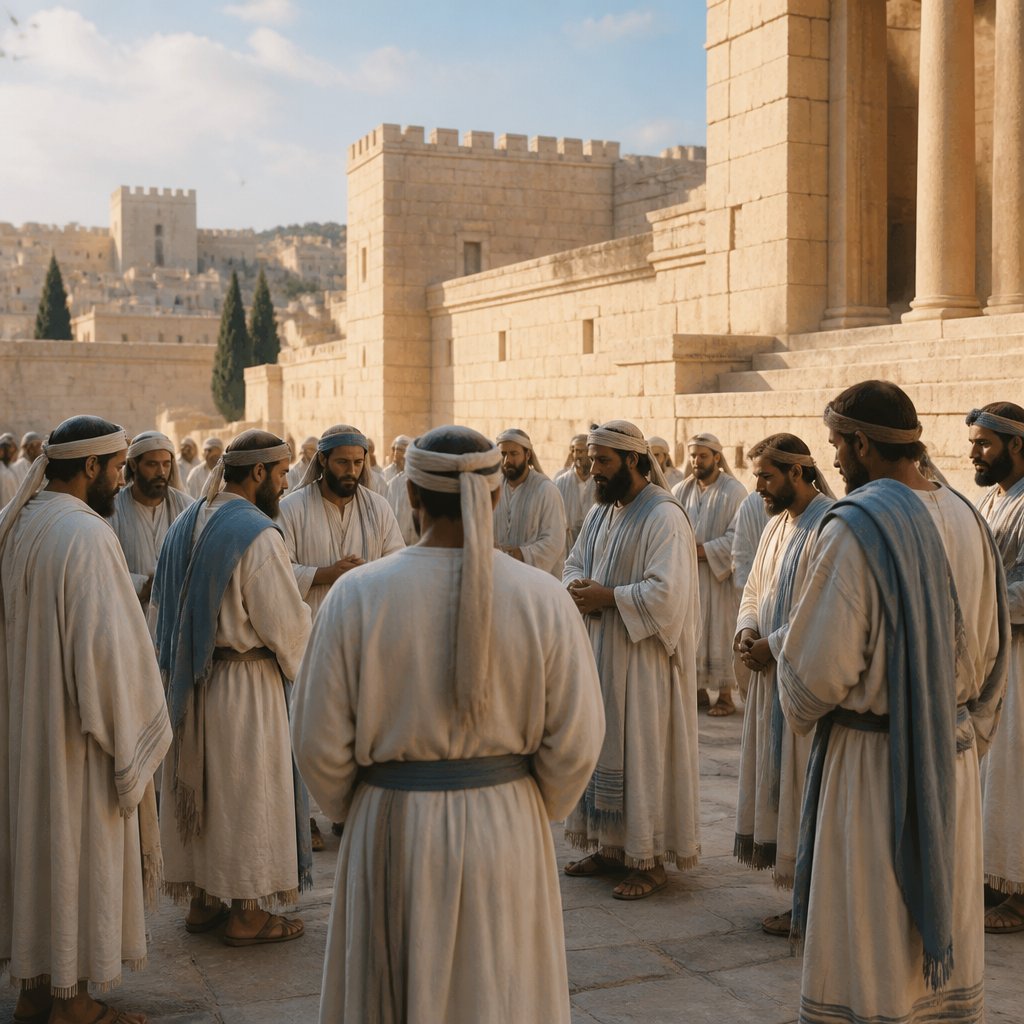
Nehemiah 11:18 in the King James Version of the Bible reads: "All the Levites in the holy city were two hundred fourscore and four."
This verse is part of the book of Nehemiah, which tells the story of Nehemiah's efforts to rebuild the wall of Jerusalem and restore the worship of God. In this particular verse, Nehemiah is referencing the number of Levites who lived in the holy city of Jerusalem. The Levites were a tribe of Israel who were set apart for the service of the Lord, particularly in the areas of worship and teaching.
The city of Jerusalem was considered holy because it was the site of the Temple, the central place of worship for the Israelites. The presence of 284 Levites in the holy city was significant because they were responsible for leading the people in worship, offering sacrifices, and teaching the word of God. Their presence in such a significant number demonstrated the importance of their role in the spiritual life of the community.
In a broader sense, this verse can also be seen as a symbol of the importance of worship and spiritual leadership in the life of the believer. The Levites were not only responsible for the external rituals of worship, but also for the spiritual well-being of the people. They were tasked with teaching and upholding the law of God, and guiding the people in their relationship with Him.
The number 284 mentioned in this verse may also carry some symbolic significance. In biblical numerology, the number 8 often represents new beginnings or resurrection, while the number 4 is associated with creation or the earth. Therefore, the combination of these numbers could be seen as a symbol of the renewal and re-creation of the spiritual life of the people through the worship and teaching of the Levites.
One of the key themes that can be drawn from this verse is the importance of spiritual leadership and the worship of God in the life of a believer. The Levites' presence in the holy city was a constant reminder to the people of the centrality of worship and the need to maintain a close relationship with God. Their role as teachers and guides also emphasizes the importance of spiritual instruction and guidance in the life of a community.
Additionally, this verse highlights the significance of Jerusalem as the holy city and the center of worship for the Israelites. The presence of a large number of Levites in the city underscores its importance as a place of spiritual significance and devotion.
In terms of the historical context, the book of Nehemiah was written during a time when the Israelites had returned from exile and were working to rebuild and restore their nation. The city of Jerusalem and its Temple were central to this restoration, and the presence of the Levites was essential in reestablishing the worship and teaching of the law. Therefore, this verse also serves as a reminder of the faithfulness of God in restoring His people and the importance of preserving the worship of God in the life of the community.
In conclusion, Nehemiah 11:18 is a verse that carries a rich symbolic and spiritual significance. It underscores the importance of worship, spiritual leadership, and the centrality of Jerusalem as the holy city. It serves as a reminder of the essential role of the Levites in the spiritual life of the community and the faithfulness of God in restoring His people.
Have questions about Nehemiah 11:18?
Dive deeper into this scripture with Bible Chat — an AI-powered tool for exploring God's Word through conversation. Ask questions, get context, and grow in your understanding of the Bible.
Get Our Apps


Nehemiah 11:18 Artwork

Nehemiah 11:18 - "All the Levites in the holy city were two hundred fourscore and four." respectful, symbolic bible verse art
"All the Levites in the holy city were two hundred fourscore and four." - Nehemiah 11:18

Nehemiah 11:11-14

Nehemiah 11:13

Nehemiah 11:1-19

Nehemiah 10:18 - "Hodijah, Hashum, Bezai,"

Nehemiah 12:18 - "Of Bilgah, Shammua; of Shemaiah, Jehonathan;"

Nehemiah 11:34 - "Hadid, Zeboim, Neballat,"

Nehemiah 10:11 - "Micha, Rehob, Hashabiah,"

Nehemiah 11:33 - "Hazor, Ramah, Gittaim,"

Nehemiah 11:32 - "And at Anathoth, Nob, Ananiah,"

Nehemiah 7:18 - "The children of Adonikam, six hundred threescore and seven."

Nehemiah 11:26 - "And at Jeshua, and at Moladah, and at Beth-phelet,"

Nehemiah 11:29 - "And at En-rimmon, and at Zareah, and at Jarmuth,"

Nehemiah 11:35 - "Lod, and Ono, the valley of craftsmen."

Nehemiah 11:28 - "And at Ziklag, and at Mekonah, and in the villages thereof,"

Nehemiah 11:36 - "And of the Levites were divisions in Judah, and in Benjamin."

Nehemiah 11:10 - "Of the priests: Jedaiah the son of Joiarib, Jachin."

"Hodijah, Hashum, Bezai," - Nehemiah 10:18

Nehemiah 12:11 - "And Joiada begat Jonathan, and Jonathan begat Jaddua."

Nehemiah 11:27 - "And at Hazar-shual, and at Beer-sheba, and in the villages thereof,"

Nehemiah 2:11 - "So I came to Jerusalem, and was there three days."

Nehemiah 11:11 - "Seraiah the son of Hilkiah, the son of Meshullam, the son of Zadok, the son of Meraioth, the son of Ahitub, was the ruler of the house of God."

"Of Bilgah, Shammua; of Shemaiah, Jehonathan;" - Nehemiah 12:18

"And at Anathoth, Nob, Ananiah," - Nehemiah 11:32

"Hadid, Zeboim, Neballat," - Nehemiah 11:34

"Hazor, Ramah, Gittaim," - Nehemiah 11:33

"Micha, Rehob, Hashabiah," - Nehemiah 10:11

Nehemiah 11:21 - "But the Nethinims dwelt in Ophel: and Ziha and Gispa were over the Nethinims."

Nehemiah 11:8 - "And after him Gabbai, Sallai, nine hundred twenty and eight."