What does Nahum 1:7 mean?
"The LORD is good, a strong hold in the day of trouble; and he knoweth them that trust in him." - Nahum 1:7
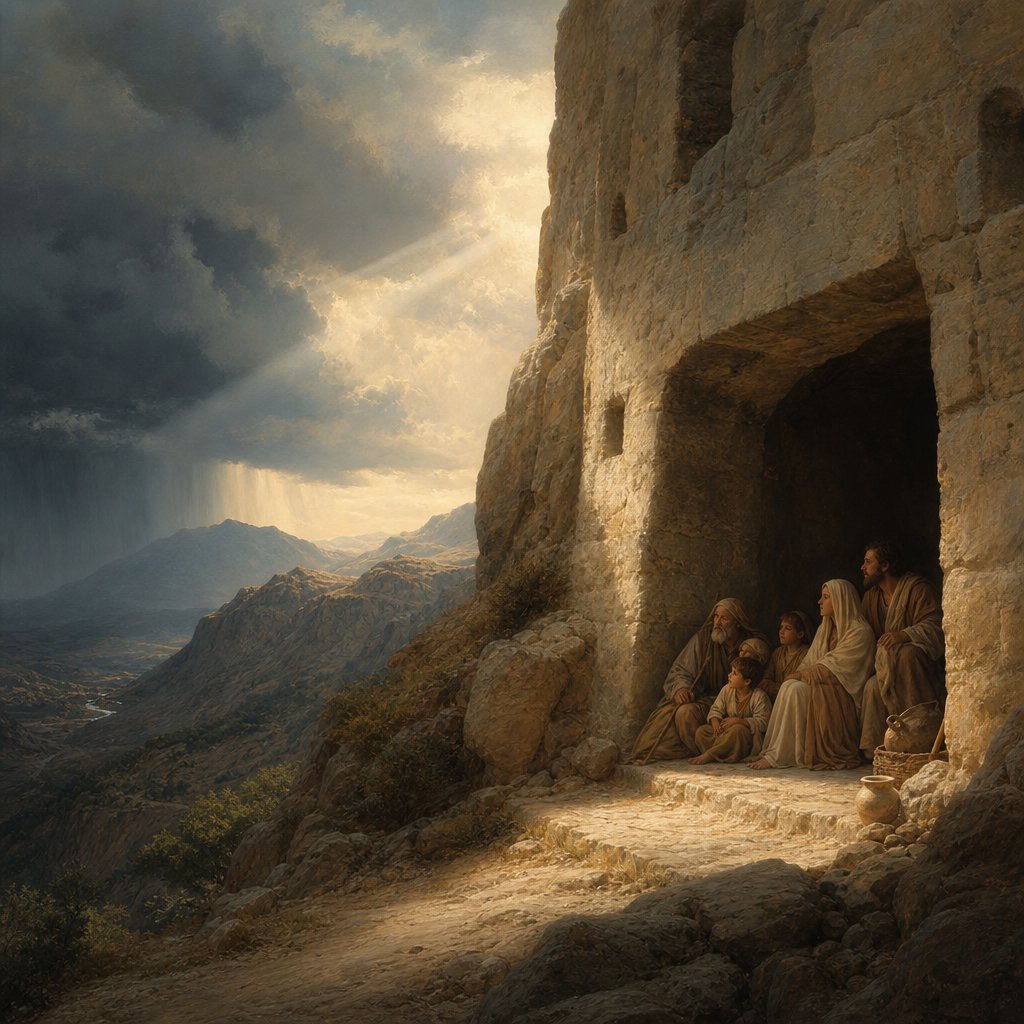
Nahum 1:7 in the King James Version reads, “The LORD is good, a strong hold in the day of trouble; and he knoweth them that trust in him.” In the flow of Nahum’s prophecy, this sentence functions like a bright, steady line of assurance set within an oracle that is otherwise filled with the language of divine majesty, wrath, and judgment. Nahum speaks chiefly about the downfall of Nineveh, the capital of Assyria, a brutal empire that had long terrified surrounding nations and had previously humbled even Judah. The book opens by presenting the LORD as jealous for His honour, powerful over creation, and unstoppable in His dealings with evil. Against that backdrop, Nahum 1:7 is not a detached encouragement; it is the moral and spiritual center that clarifies what God’s power means for different kinds of people. The same God who will not “at all acquit the wicked” is, at the same time, good to those who trust Him.
The first claim, “The LORD is good,” is not a vague statement about God’s pleasantness but a covenantal declaration about His character. In a book announcing judgment, “good” means the LORD is not arbitrary, not capricious, not cruel in His power. His judgments are not the eruptions of a temper; they are the settled outworking of righteousness. This goodness includes moral purity, faithfulness to His promises, and a protective kindness toward those who belong to Him. Nahum places this truth at the forefront because Judah, hearing of Assyria’s violence and perhaps remembering earlier times when Assyria had been used as a rod of chastening, might have been tempted to interpret history as though evil were stronger than God, or as though God were indifferent. Nahum answers that fear by anchoring everything in the goodness of the LORD: even when He overturns kingdoms, His actions remain consistent with His holy and benevolent nature.
When the verse continues, “a strong hold in the day of trouble,” it uses imagery that would have been immediately felt in an age of fortified cities and invading armies. A “strong hold” is a place of refuge—something defended, secure, and capable of withstanding assault. In Nahum’s context, that symbolism is especially pointed because Nineveh itself was famous for its fortifications and apparent invincibility. The prophecy will show that Nineveh’s walls and might cannot preserve it when the LORD rises in judgment. By contrast, the LORD Himself is presented as the true fortress for His people. This is a profound reversal of human assumptions: what looks strong in the world proves fragile under God’s hand, while what appears vulnerable—those who trust the LORD—are safe because their refuge is not stone and iron but the living God. “In the day of trouble” makes the promise realistic rather than sentimental; trouble is not denied, and danger is not minimized. The verse does not claim that God’s people will never see distress, only that distress is not their final master, because the LORD is a shelter that trouble cannot penetrate.
The closing phrase, “and he knoweth them that trust in him,” brings the promise from the public realm of empires and wars into the personal realm of relationship. In Scripture, God’s “knowing” is more than awareness; it is recognition, regard, and covenant care. It is the difference between merely noticing a crowd and acknowledging one’s own. Here the LORD distinguishes between two responses to His rule: those who oppose Him and those who “trust in him.” Trust is the hinge of the verse. The prophecy announces that God’s power will sweep away the proud and violent, but it also insists that faith is not swallowed up by that power; faith is the appointed way of safety. To say that He “knoweth” such people means that amid upheaval God is not confused about who belongs to Him, nor are they lost in the noise of judgment. They are within His attention, His concern, and His keeping.
This single verse therefore gathers several themes that are essential to the book of Nahum. It sets mercy beside justice without diluting either. It frames divine judgment as good news for the oppressed, because the overthrow of cruelty is part of God’s goodness. It exposes false refuges, especially the kind of security that depends on human strength, political dominance, or fortified systems. It elevates the spiritual reality that the safest place is not a circumstance but a Person. And it underlines that the dividing line in the “day of trouble” is not nationality or outward power but whether one trusts in the LORD. Within a prophecy that announces Nineveh’s end, Nahum 1:7 assures Judah—and by extension any reader—that God’s holiness is not a threat to the faithful; it is their defence. The LORD’s goodness is not contradicted by His judgments; it is displayed through them, and it becomes a strong hold for those who rest their confidence in Him.
Have questions about Nahum 1:7?
Dive deeper into this scripture with Bible Chat — an AI-powered tool for exploring God's Word through conversation. Ask questions, get context, and grow in your understanding of the Bible.
Get Our Apps


Nahum 1:7 Artwork

Nahum 1:7 - "The LORD is good, a strong hold in the day of trouble; and he knoweth them that trust in him."

"The LORD is good, a strong hold in the day of trouble; and he knoweth them that trust in him." - Nahum 1:7

Nahum 1:1 - "The burden of Nineveh. The book of the vision of Nahum the Elkoshite."

"The burden of Nineveh. The book of the vision of Nahum the Elkoshite." - Nahum 1:1

Nahum 1:6

Nahum 3:1 - "Woe to the bloody city! it is all full of lies and robbery; the prey departeth not;"

Nahum 1:3 – "The Lord is slow to anger but great in power; the Lord will not leave the guilty unpunished."

Nahum 2:7 - "And Huzzab shall be led away captive, she shall be brought up, and her maids shall lead her as with the voice of doves, tabering upon their breasts."

Nahum 1:11 - "There is one come out of thee, that imagineth evil against the LORD, a wicked counsellor."

Nahum 1:13 - "For now will I break his yoke from off thee, and will burst thy bonds in sunder."

Nahum 1:10 - "For while they be folden together as thorns, and while they are drunken as drunkards, they shall be devoured as stubble fully dry."

Nahum 1:5 - "The mountains quake at him, and the hills melt, and the earth is burned at his presence, yea, the world, and all that dwell therein."

Nahum 1:8 - "But with an overrunning flood he will make an utter end of the place thereof, and darkness shall pursue his enemies."

Nahum 3:7 - "And it shall come to pass, that all they that look upon thee shall flee from thee, and say, Nineveh is laid waste: who will bemoan her? whence shall I seek comforters for thee?"

Nahum 1:4 - "He rebuketh the sea, and maketh it dry, and drieth up all the rivers: Bashan languisheth, and Carmel, and the flower of Lebanon languisheth."

Nahum 1:2 - "God is jealous, and the LORD revengeth; the LORD revengeth, and is furious; the LORD will take vengeance on his adversaries, and he reserveth wrath for his enemies."

Nahum 1:9 - "What do ye imagine against the LORD? he will make an utter end: affliction shall not rise up the second time."

Nahum 1:3 - "The LORD is slow to anger, and great in power, and will not at all acquit the wicked: the LORD hath his way in the whirlwind and in the storm, and the clouds are the dust of his feet."

"Woe to the bloody city! it is all full of lies and robbery; the prey departeth not;" - Nahum 3:1

"Behold upon the mountains the feet of him that bringeth good tidings, that publisheth peace! O Judah, keep thy solemn feasts, perform thy vows: for the wicked shall no more pass through thee; he is utterly cut off." - Nahum 1:15

Nahum 2:1 - "He that dasheth in pieces is come up before thy face: keep the munition, watch the way, make thy loins strong, fortify thy power mightily."

Nahum 1:6 - "Who can stand before his indignation? and who can abide in the fierceness of his anger? his fury is poured out like fire, and the rocks are thrown down by him."

"There is one come out of thee, that imagineth evil against the LORD, a wicked counsellor." - Nahum 1:11

Nahum 1:12 - "Thus saith the LORD; Though they be quiet, and likewise many, yet thus shall they be cut down, when he shall pass through. Though I have afflicted thee, I will afflict thee no more."

"For now will I break his yoke from off thee, and will burst thy bonds in sunder." - Nahum 1:13

"For while they be folden together as thorns, and while they are drunken as drunkards, they shall be devoured as stubble fully dry." - Nahum 1:10

Nahum 1:14 - "And the LORD hath given a commandment concerning thee, that no more of thy name be sown: out of the house of thy gods will I cut off the graven image and the molten image: I will make thy grave; for thou art vile."

"But with an overrunning flood he will make an utter end of the place thereof, and darkness shall pursue his enemies." - Nahum 1:8

Nahum 1:15 - "Behold upon the mountains the feet of him that bringeth good tidings, that publisheth peace! O Judah, keep thy solemn feasts, perform thy vows: for the wicked shall no more pass through thee; he is utterly cut off."
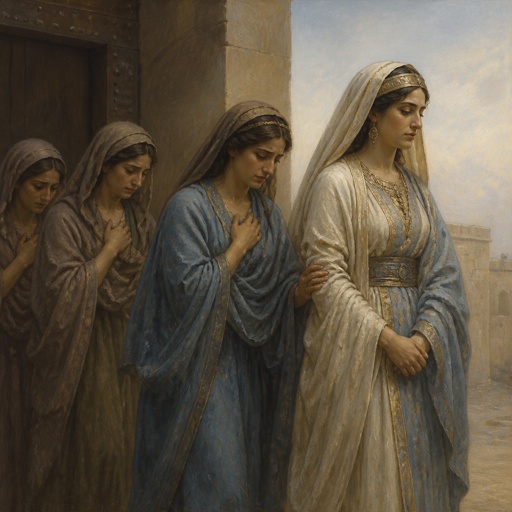
"And Huzzab shall be led away captive, she shall be brought up, and her maids shall lead her as with the voice of doves, tabering upon their breasts." - Nahum 2:7