What does Nahum 1:2 mean?
"God is jealous, and the LORD revengeth; the LORD revengeth, and is furious; the LORD will take vengeance on his adversaries, and he reserveth wrath for his enemies." - Nahum 1:2

The verse Nahum 1:2 in the King James Version of the Bible reads, "God is jealous, and the Lord revengeth; the Lord revengeth, and is furious; the Lord will take vengeance on his adversaries, and he reserveth wrath for his enemies." This verse comes from the book of Nahum, which is a prophetic book in the Old Testament. Nahum is one of the twelve Minor Prophets, and his book focuses on the impending destruction of Nineveh, the capital of the Assyrian Empire.
The verse Nahum 1:2 reflects the character and nature of God as a jealous, vengeful, and furious deity. It describes God's response to the actions of his adversaries and enemies, indicating that he will take vengeance and reserve wrath for them. This characterization of God may seem contradictory to the popular image of a loving and merciful God, but it is important to understand the context and deeper meanings behind these attributes.
First, it is essential to recognize that the term "jealous" in this verse refers to God's jealous regard for his people and his exclusive right to their worship and obedience. In the Old Testament, God often expressed his jealousy for the Israelites, warning them against worshiping other gods and idols. This jealousy is rooted in God's desire for a faithful and covenantal relationship with his people, and it demonstrates his passionate commitment to their well-being and spiritual fidelity.
The mention of God's vengeance and fury in this verse reveals another aspect of his character. While God is often associated with love and forgiveness, he is also just and righteous. In the face of evil and injustice, God acts as a defender of the innocent and a punisher of the wicked. The language of vengeance and wrath signifies God's commitment to upholding moral order and holding accountable those who rebel against his will.
Moreover, the context of the book of Nahum provides insight into the specific historical and cultural circumstances that inform this verse. At the time of Nahum's prophetic ministry, Nineveh had become a symbol of ruthless power and wickedness. The Assyrian Empire, of which Nineveh was the capital, had inflicted immense suffering and cruelty on many nations, including Israel. In this context, the portrayal of God as a jealous and vengeful deity reflects the divine response to the atrocities committed by the Assyrians.
Symbolism can also be found in the verse Nahum 1:2. God's jealousy and vengeance are symbolic of his unwavering commitment to justice and righteousness. His fury represents the intensity of his response to evil and his determination to bring about retribution. Additionally, the mention of adversaries and enemies alludes to the spiritual warfare and opposition that God's people face, both in ancient times and today.
In summary, the verse Nahum 1:2 presents a complex and multifaceted portrayal of God's character. It reveals his passionate love for his people, his commitment to justice, and his response to evil. In the broader context of the book of Nahum, this verse speaks to the divine judgment against the oppressors and the assurance of deliverance for the faithful. Ultimately, it invites reflection on the nature of God and the profound implications of his attributes for humanity.
Have questions about Nahum 1:2?
Dive deeper into this scripture with Bible Chat — an AI-powered tool for exploring God's Word through conversation. Ask questions, get context, and grow in your understanding of the Bible.
Get Our Apps


Nahum 1:2 Artwork

Nahum 1:2 - "God is jealous, and the LORD revengeth; the LORD revengeth, and is furious; the LORD will take vengeance on his adversaries, and he reserveth wrath for his enemies."

"God is jealous, and the LORD revengeth; the LORD revengeth, and is furious; the LORD will take vengeance on his adversaries, and he reserveth wrath for his enemies." - Nahum 1:2

Nahum 1:1 - "The burden of Nineveh. The book of the vision of Nahum the Elkoshite."

"The burden of Nineveh. The book of the vision of Nahum the Elkoshite." - Nahum 1:1

Nahum 2:4

Nahum 1:6

Nahum 2:1 - "He that dasheth in pieces is come up before thy face: keep the munition, watch the way, make thy loins strong, fortify thy power mightily."

Nahum 2:6 - "The gates of the rivers shall be opened, and the palace shall be dissolved."

Nahum 3:2 - "The noise of a whip, and the noise of the rattling of the wheels, and of the pransing horses, and of the jumping chariots."

Nahum 3:1 - "Woe to the bloody city! it is all full of lies and robbery; the prey departeth not;"

Nahum 1:3 – "The Lord is slow to anger but great in power; the Lord will not leave the guilty unpunished."

Nahum 2:2 - "For the LORD hath turned away the excellency of Jacob, as the excellency of Israel: for the emptiers have emptied them out, and marred their vine branches."

Nahum 1:11 - "There is one come out of thee, that imagineth evil against the LORD, a wicked counsellor."

Nahum 1:7 - "The LORD is good, a strong hold in the day of trouble; and he knoweth them that trust in him."

Nahum 2:9 - "Take ye the spoil of silver, take the spoil of gold: for there is none end of the store and glory out of all the pleasant furniture."

Nahum 1:13 - "For now will I break his yoke from off thee, and will burst thy bonds in sunder."

Nahum 1:10 - "For while they be folden together as thorns, and while they are drunken as drunkards, they shall be devoured as stubble fully dry."

Nahum 1:5 - "The mountains quake at him, and the hills melt, and the earth is burned at his presence, yea, the world, and all that dwell therein."

Nahum 1:8 - "But with an overrunning flood he will make an utter end of the place thereof, and darkness shall pursue his enemies."

Nahum 2:12 - "The lion did tear in pieces enough for his whelps, and strangled for his lionesses, and filled his holes with prey, and his dens with ravin."

"The gates of the rivers shall be opened, and the palace shall be dissolved." - Nahum 2:6

Nahum 2:5 - "He shall recount his worthies: they shall stumble in their walk; they shall make haste to the wall thereof, and the defence shall be prepared."

Nahum 2:10 - "She is empty, and void, and waste: and the heart melteth, and the knees smite together, and much pain is in all loins, and the faces of them all gather blackness."

Nahum 2:8 - "But Nineveh is of old like a pool of water: yet they shall flee away. Stand, stand, shall they cry; but none shall look back."

Nahum 1:4 - "He rebuketh the sea, and maketh it dry, and drieth up all the rivers: Bashan languisheth, and Carmel, and the flower of Lebanon languisheth."

Nahum 2:7 - "And Huzzab shall be led away captive, she shall be brought up, and her maids shall lead her as with the voice of doves, tabering upon their breasts."

Nahum 2:11 - "Where is the dwelling of the lions, and the feedingplace of the young lions, where the lion, even the old lion, walked, and the lion's whelp, and none made them afraid?"

Nahum 1:9 - "What do ye imagine against the LORD? he will make an utter end: affliction shall not rise up the second time."
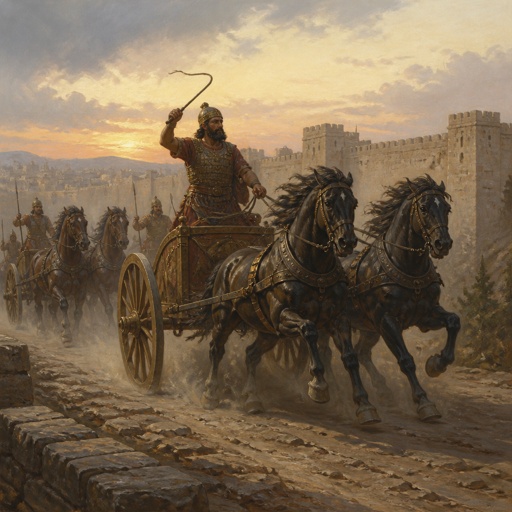
"The noise of a whip, and the noise of the rattling of the wheels, and of the pransing horses, and of the jumping chariots." - Nahum 3:2

Nahum 2:4 - "The chariots shall rage in the streets, they shall justle one against another in the broad ways: they shall seem like torches, they shall run like the lightnings."