What does Micah 4:1 mean?
"But in the last days it shall come to pass, that the mountain of the house of the LORD shall be established in the top of the mountains, and it shall be exalted above the hills; and people shall flow unto it." - Micah 4:1
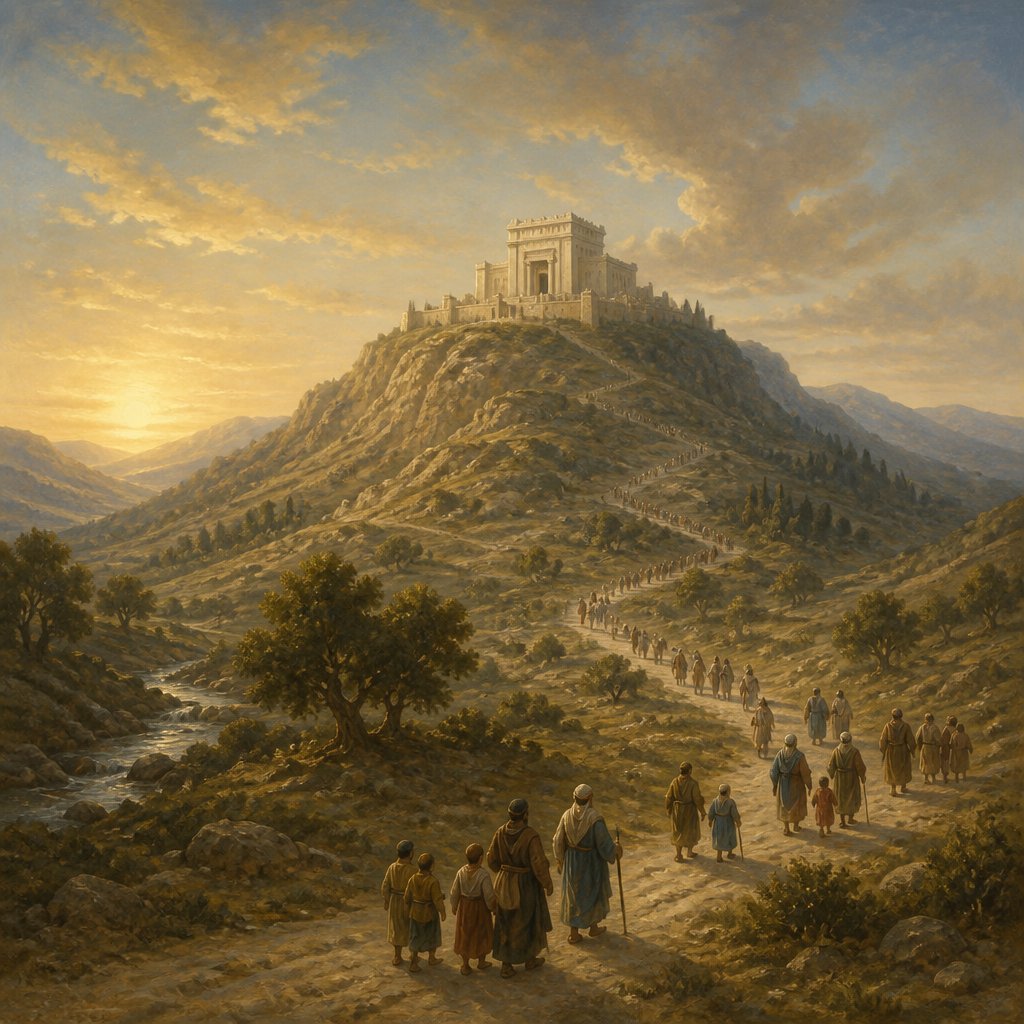
Micah 4:1 from the King James Version of the Bible reads, "But in the last days it shall come to pass, that the mountain of the house of the Lord shall be established in the top of the mountains, and it shall be exalted above the hills; and people shall flow unto it."
This verse is part of a prophecy from the prophet Micah, who lived in the 8th century BC. Micah was a contemporary of the prophets Isaiah, Hosea, and Amos, and he ministered primarily to the southern kingdom of Judah. His prophecy contains messages of judgment and hope, and Micah 4:1 falls into the latter category.
The first part of the verse, "But in the last days it shall come to pass," indicates that the fulfillment of this prophecy will take place in the future, particularly in the eschatological "last days," a period often associated with the end times or the final consummation of God's kingdom. This phrase sets the stage for what follows, signaling that the events described will occur at a time appointed by God.
The verse goes on to illustrate a vision of the future glory of Jerusalem as the spiritual center of the world. The "mountain of the house of the Lord" here represents Jerusalem and its temple, the central worship place for the people of Israel. In this eschatological vision, the mountain of the Lord's house is established as the highest and most exalted, symbolizing the supreme authority and preeminence of God's dwelling place.
The imagery of the mountain being "exalted above the hills" reinforces the idea of Jerusalem's elevation and prominence, both physically and spiritually. Mountains are often symbols of strength, stability, and divine encounter in the Bible, and in this context, the exaltation of the mountain of the Lord's house signifies the exaltation of God's presence and reign over all creation.
The latter part of the verse, "and people shall flow unto it," speaks of the universal pilgrimage of nations and peoples to Jerusalem, drawn by the presence of the Lord and the revelation of His glory. This influx of people represents a movement of spiritual seeking and devotion, as individuals from all nations come to worship and align themselves with the Lord. The "flow" of people suggests a continuous and abundant stream, reflecting the irresistible and unceasing nature of this movement towards God.
Overall, Micah 4:1 conveys a powerful vision of the future exaltation of God's dwelling place and the global recognition of His sovereignty. It emphasizes the divine authority of Jerusalem as the spiritual epicenter of the world, drawing all peoples to worship and acknowledge the supremacy of the Lord. This prophecy ultimately points to the fulfillment of God's redemptive plan and the establishment of His kingdom, where all nations will experience the fullness of His presence and glory.
In terms of themes, the verse highlights the universal reign of God and the inclusion of all nations in His redemptive purposes. It underscores the unifying power of God's presence, which transcends cultural and geographical boundaries. Additionally, the verse emphasizes the concepts of spiritual pilgrimage and worship, portraying the longing of humanity to seek after and encounter the divine.
Contextually, Micah 4:1 should be understood within the broader context of Micah's prophecy, which addresses both judgment for Israel's sins and restoration through the coming of a righteous ruler from Bethlehem. This verse comes within a section of the book that speaks of the future glory of Zion and the establishment of God's kingdom, offering hope and encouragement to the people of Judah amidst the impending judgment.
In conclusion, Micah 4:1 from the King James Version of the Bible presents a vivid and compelling vision of the eschatological exaltation of God's dwelling place and the universal pilgrimage of all nations to worship Him. It captures the overarching themes of divine sovereignty, spiritual unity, and the fulfillment of God's redemptive plan, resonating with profound implications for both ancient Israel and contemporary believers. This verse serves as a poignant reminder of the ultimate triumph and glory of God's kingdom, inspiring hope and confidence in His enduring purposes.
Have questions about Micah 4:1?
Dive deeper into this scripture with Bible Chat — an AI-powered tool for exploring God's Word through conversation. Ask questions, get context, and grow in your understanding of the Bible.
Get Our Apps


Micah 4:1 Artwork

Micah 4:1 - "But in the last days it shall come to pass, that the mountain of the house of the LORD shall be established in the top of the mountains, and it shall be exalted above the hills; and people shall flow unto it."
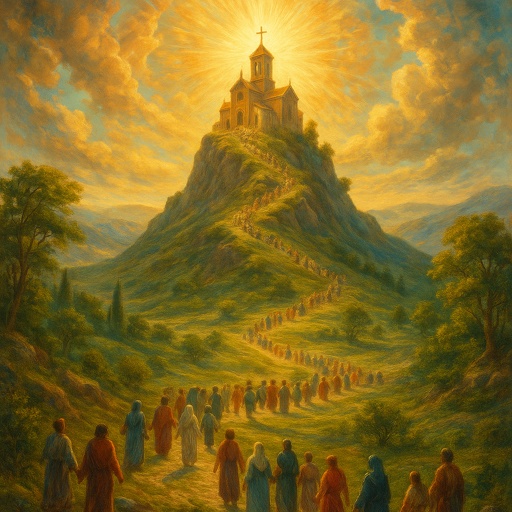
"But in the last days it shall come to pass, that the mountain of the house of the LORD shall be established in the top of the mountains, and it shall be exalted above the hills; and people shall flow unto it." - Micah 4:1
"But in the last days it shall come to pass, that the mountain of the house of the LORD shall be established in the top of the mountains, and it shall be exalted above the hills; and people shall flow unto it." - Micah 4:1

Micah 1:4 - "And the mountains shall be molten under him, and the valleys shall be cleft, as wax before the fire, and as the waters that are poured down a steep place."

Micah 1:1 - "The word of the LORD that came to Micah the Morasthite in the days of Jotham, Ahaz, and Hezekiah, kings of Judah, which he saw concerning Samaria and Jerusalem."

Micah 5:2-5

Micah 1:3-4 - "For behold, the Lord is coming out of His place, And will come down and tread on the high places of the earth. The mountains will melt under Him, And the valleys will split, Like wax before the fire, Like waters poured down a steep place."

Micah 4:4 - "But they shall sit every man under his vine and under his fig tree; and none shall make them afraid: for the mouth of the LORD of hosts hath spoken it."

Micah 4:12 - "But they know not the thoughts of the LORD, neither understand they his counsel: for he shall gather them as the sheaves into the floor."

Judges 17:1 - "And there was a man of mount Ephraim, whose name was Micah."
![Micah 4:4
[4]Everyone will sit under their own vine
and under their own fig tree,
and no one will make them afraid,
for the Lord Almighty has spoken.](https://media.bible.art/8a86fa9e-f417-42fe-bc29-f62f431781f4-thumbnail.jpg)
Micah 4:4 [4]Everyone will sit under their own vine and under their own fig tree, and no one will make them afraid, for the Lord Almighty has spoken.

Micah 4:6 - "In that day, saith the LORD, will I assemble her that halteth, and I will gather her that is driven out, and her that I have afflicted;"

1 Chronicles 8:35 - "And the sons of Micah were, Pithon, and Melech, and Tarea, and Ahaz."

Judges 18:4 - "And he said unto them, Thus and thus dealeth Micah with me, and hath hired me, and I am his priest."

Micah 4:5 - "For all people will walk every one in the name of his god, and we will walk in the name of the LORD our God for ever and ever."

1 Chronicles 9:41 - "And the sons of Micah were, Pithon, and Melech, and Tahrea, and Ahaz."

1 Chronicles 9:40 - "And the son of Jonathan was Merib-baal: and Merib-baal begat Micah."

Micah 4:11 - "¶ Now also many nations are gathered against thee, that say, Let her be defiled, and let our eye look upon Zion."

"The word of the LORD that came to Micah the Morasthite in the days of Jotham, Ahaz, and Hezekiah, kings of Judah, which he saw concerning Samaria and Jerusalem." - Micah 1:1

1 Chronicles 8:34 - "And the son of Jonathan was Merib-baal; and Merib-baal begat Micah."

"And the mountains shall be molten under him, and the valleys shall be cleft, as wax before the fire, and as the waters that are poured down a steep place." - Micah 1:4

1 Chronicles 5:5 - "Micah his son, Reaia his son, Baal his son,"
Micah 7:4 - "The best of them is as a brier: the most upright is sharper than a thorn hedge: the day of thy watchmen and thy visitation cometh; now shall be their perplexity."
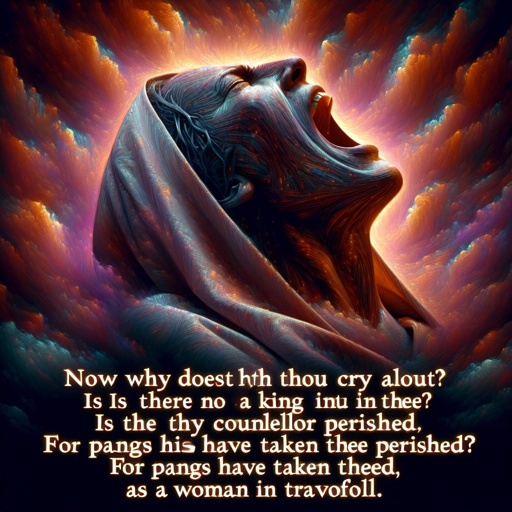
Micah 4:9 - "Now why dost thou cry out aloud? is there no king in thee? is thy counsellor perished? for pangs have taken thee as a woman in travail."

1 Chronicles 9:15 - "And Bakbakkar, Heresh, and Galal, and Mattaniah the son of Micah, the son of Zichri, the son of Asaph;"

Micah 6:4 - "For I brought thee up out of the land of Egypt, and redeemed thee out of the house of servants; and I sent before thee Moses, Aaron, and Miriam."

Micah 1:10 - "¶ Declare ye it not at Gath, weep ye not at all: in the house of Aphrah roll thyself in the dust."
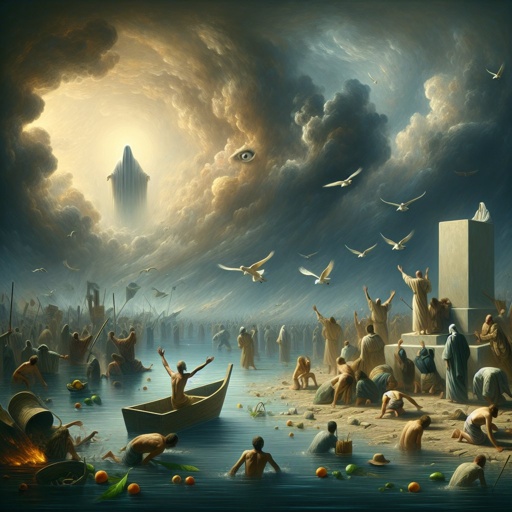
Micah 3:4 - "Then shall they cry unto the LORD, but he will not hear them: he will even hide his face from them at that time, as they have behaved themselves ill in their doings."

Micah 5:4 - "¶ And he shall stand and feed in the strength of the LORD, in the majesty of the name of the LORD his God; and they shall abide: for now shall he be great unto the ends of the earth."

Micah 4:8 - "¶ And thou, O tower of the flock, the strong hold of the daughter of Zion, unto thee shall it come, even the first dominion; the kingdom shall come to the daughter of Jerusalem."