What does Micah 1:9 mean?
"For her wound is incurable; for it is come unto Judah; he is come unto the gate of my people, even to Jerusalem." - Micah 1:9
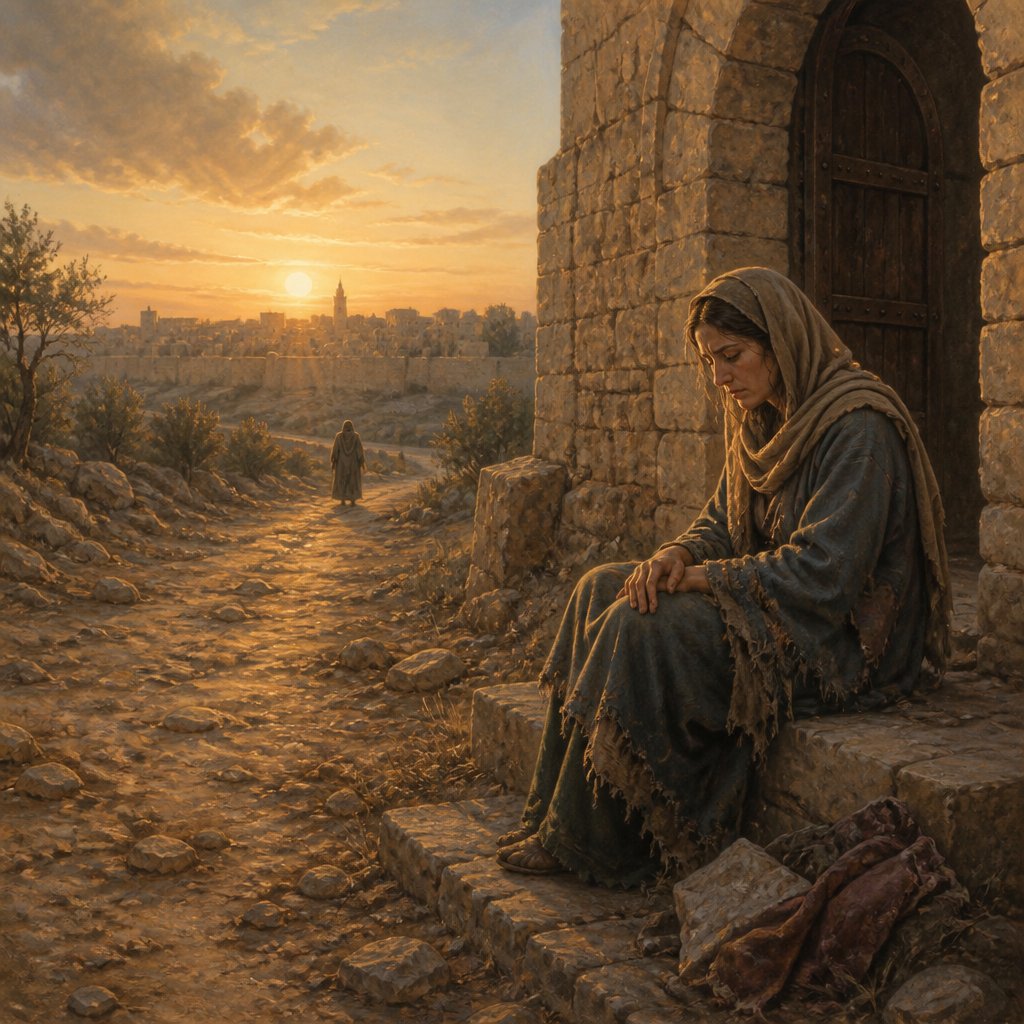
Micah 1:9 (KJV) says, "For her wound is incurable; for it is come unto Judah; he is come unto the gate of my people, even to Jerusalem."
The Book of Micah is one of the twelve minor prophets in the Old Testament and is attributed to the prophet Micah, who was known for his social justice messages and warnings of impending judgment. This verse is part of a larger passage where Micah is proclaiming judgment against Israel and Judah for their sins and is warning of their impending destruction.
In this verse, we see the prophet lamenting over the wounded and incurable state of Israel and Judah. The use of the word "incurable" emphasizes the severity of their spiritual and moral decay. This wound is not something that can be easily healed or fixed. It signifies the deep-rooted corruption and rebellion that has infected the nation.
The mention of the wound coming unto Judah and reaching the gate of Jerusalem signifies the widespread nature of this spiritual sickness. It has not just affected a few individuals or a particular area, but has spread throughout the entire nation and has even reached the holiest city of Jerusalem. This emphasizes the severity and urgency of the situation.
The overarching theme of this verse is the consequences of unrepentant sin and the impending judgment. Throughout the book, Micah repeatedly emphasizes the consequences of Israel and Judah's disobedience and idolatry, warning of the destruction and exile that will come as a result. This verse, in particular, highlights the severity of these consequences and the widespread nature of the spiritual decay within the nation.
From a historical context, the prophet Micah was speaking during a time of great moral and social decay in Israel and Judah. The people had turned away from God, engaging in idolatry, injustice, and oppression of the poor. Micah's message was a call to repentance and a warning of the consequences if they continued down this path. The invasion and fall of Judah at the hands of the Babylonians in 586 BC can be seen as the fulfillment of his prophecies.
Symbolically, the "wound" can also be seen as representing the consequences of sin and the brokenness that it brings. It signifies the spiritual and moral decay that has infected the nation, and its "incurable" nature emphasizes the severity and hopelessness of the situation. The mention of the wound reaching Jerusalem, the holy city, symbolizes the defilement of all that is sacred and righteous.
In conclusion, Micah 1:9 is a powerful and sobering reminder of the consequences of sin and the severity of God's judgment. It serves as a warning to Israel and Judah and to all who read it, emphasizing the widespread nature of their spiritual decay and the urgency of repentance. It also serves as a reminder of the faithfulness of God to uphold his justice and righteousness. This verse continues to challenge and convict readers today, calling for a response of repentance and obedience to God.
Have questions about Micah 1:9?
Dive deeper into this scripture with Bible Chat — an AI-powered tool for exploring God's Word through conversation. Ask questions, get context, and grow in your understanding of the Bible.
Get Our Apps


Micah 1:9 Artwork

Micah 1:9 - "For her wound is incurable; for it is come unto Judah; he is come unto the gate of my people, even to Jerusalem."
"For her wound is incurable; for it is come unto Judah; he is come unto the gate of my people, even to Jerusalem." - Micah 1:9

1 Chronicles 9:41 - "And the sons of Micah were, Pithon, and Melech, and Tahrea, and Ahaz."

1 Chronicles 9:40 - "And the son of Jonathan was Merib-baal: and Merib-baal begat Micah."

1 Chronicles 9:15 - "And Bakbakkar, Heresh, and Galal, and Mattaniah the son of Micah, the son of Zichri, the son of Asaph;"

"And the sons of Micah were, Pithon, and Melech, and Tahrea, and Ahaz." - 1 Chronicles 9:41

"And the son of Jonathan was Merib-baal: and Merib-baal begat Micah." - 1 Chronicles 9:40

Micah 1:1 - "The word of the LORD that came to Micah the Morasthite in the days of Jotham, Ahaz, and Hezekiah, kings of Judah, which he saw concerning Samaria and Jerusalem."

"And Bakbakkar, Heresh, and Galal, and Mattaniah the son of Micah, the son of Zichri, the son of Asaph;" - 1 Chronicles 9:15

Micah 5:2-5

Micah 5:9 - "Thine hand shall be lifted up upon thine adversaries, and all thine enemies shall be cut off."
Micah 3:9 - "Hear this, I pray you, ye heads of the house of Jacob, and princes of the house of Israel, that abhor judgment, and pervert all equity."

Judges 17:1 - "And there was a man of mount Ephraim, whose name was Micah."

Micah 6:9 - "The LORD'S voice crieth unto the city, and the man of wisdom shall see thy name: hear ye the rod, and who hath appointed it."

1 Chronicles 8:35 - "And the sons of Micah were, Pithon, and Melech, and Tarea, and Ahaz."
Micah 4:9 - "Now why dost thou cry out aloud? is there no king in thee? is thy counsellor perished? for pangs have taken thee as a woman in travail."

Micah 2:9 - "The women of my people have ye cast out from their pleasant houses; from their children have ye taken away my glory for ever."

"The word of the LORD that came to Micah the Morasthite in the days of Jotham, Ahaz, and Hezekiah, kings of Judah, which he saw concerning Samaria and Jerusalem." - Micah 1:1

1 Chronicles 8:34 - "And the son of Jonathan was Merib-baal; and Merib-baal begat Micah."

1 Chronicles 5:5 - "Micah his son, Reaia his son, Baal his son,"

Micah 1:10 - "¶ Declare ye it not at Gath, weep ye not at all: in the house of Aphrah roll thyself in the dust."

Micah 1:14 - "Therefore shalt thou give presents to Moresheth-gath: the houses of Achzib shall be a lie to the kings of Israel."

Judges 17:9 - "And Micah said unto him, Whence comest thou? And he said unto him, I am a Levite of Beth-lehem-judah, and I go to sojourn where I may find a place."

Micah 1:12 - "For the inhabitant of Maroth waited carefully for good: but evil came down from the LORD unto the gate of Jerusalem."

Micah 1:3 - "For, behold, the LORD cometh forth out of his place, and will come down, and tread upon the high places of the earth."

"And there was a man of mount Ephraim, whose name was Micah." - Judges 17:1

Micah 1:8 - "Therefore I will wail and howl, I will go stripped and naked: I will make a wailing like the dragons, and mourning as the owls."

Micah 2:1 - "Woe to them that devise iniquity, and work evil upon their beds! when the morning is light, they practise it, because it is in the power of their hand."

Micah 1:5 - "For the transgression of Jacob is all this, and for the sins of the house of Israel. What is the transgression of Jacob? is it not Samaria? and what are the high places of Judah? are they not Jerusalem?"

Micah 3:1 - "And I said, Hear, I pray you, O heads of Jacob, and ye princes of the house of Israel; Is it not for you to know judgment?"