What does Micah 1:5 mean?
"For the transgression of Jacob is all this, and for the sins of the house of Israel. What is the transgression of Jacob? is it not Samaria? and what are the high places of Judah? are they not Jerusalem?" - Micah 1:5
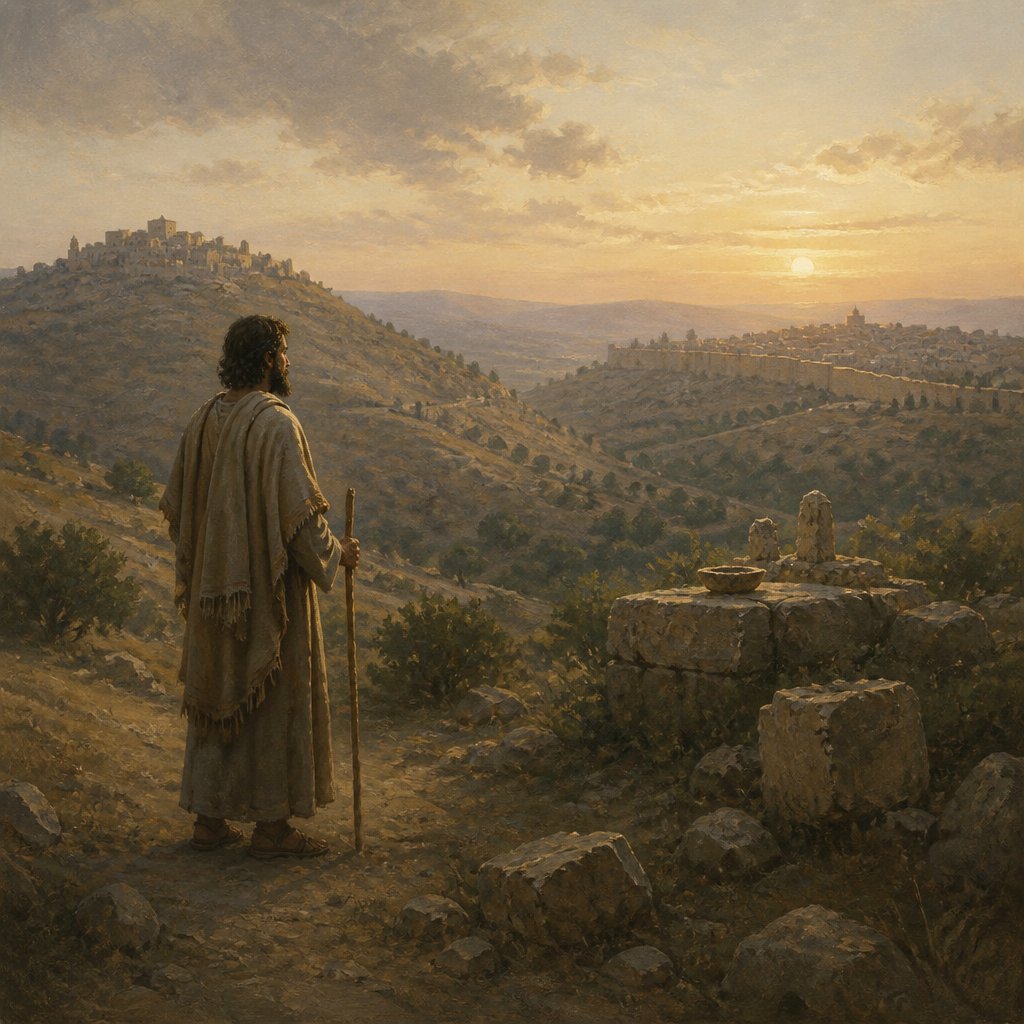
Micah 1:5 (KJV) states, "For the transgression of Jacob is all this, and for the sins of the house of Israel. What is the transgression of Jacob? is it not Samaria? and what are the high places of Judah? are they not Jerusalem?"
The book of Micah is a prophetic book in the Old Testament, and the prophet Micah delivered messages from God to both the northern kingdom of Israel and the southern kingdom of Judah. The verse in question is part of a larger message of judgment against the people of Israel and Judah for their collective transgressions and sins.
The verse begins with a declaration that all the turmoil and destruction facing the people is a result of the transgression of Jacob (another name for Israel) and the sins of the house of Israel. This sets the stage for the prophecy of judgment and warns the people of the consequences of their actions.
The verse then poses a series of rhetorical questions, asking what the transgression of Jacob is and then answering the question by naming Samaria, the capital of the northern kingdom of Israel. This highlights the corruption and sinfulness of the people of Israel, as Samaria had become a center of idolatry and moral decay. The mention of Samaria serves as a symbol of the moral decay and spiritual apostasy that had overtaken the northern kingdom.
The verse goes on to ask what the high places of Judah are, and then names Jerusalem as the high place. In ancient Israel, high places were locations where pagan worship and idolatry took place, often on elevated ground. By mentioning the high places of Judah and specifically naming Jerusalem, the prophet is drawing attention to the spiritual corruption and idolatry that had infiltrated the southern kingdom of Judah, including its capital city.
Overall, the verse serves as an indictment against the people of Israel and Judah for their collective sinfulness and rebellion against God. It highlights the widespread nature of their transgressions and the spiritual decay that had infected both kingdoms.
In a broader thematic sense, this verse speaks to the consequences of sin and the importance of obedience to God's commands. The prophet Micah is warning the people that their actions have brought about judgment, and that they must turn from their sinful ways and return to God in order to avoid the impending destruction.
The verse also serves as a reminder of the holiness of God and His righteous judgment. The mention of Samaria and Jerusalem as centers of idolatry and sin emphasizes the contrast between the purity and righteousness of God and the moral decay of the people. It underscores the need for repentance and spiritual renewal in order to avoid the judgment that is to come.
In its historical context, this verse reflects the moral and spiritual decay that characterized the kingdoms of Israel and Judah during the time of the prophet Micah. The rampant idolatry and social injustices that were prevalent in the society had provoked God's judgment, and Micah's message was a call to repentance and a return to covenant faithfulness.
In conclusion, Micah 1:5 is a powerful and sobering reminder of the consequences of sin and the need for spiritual renewal. It serves as a warning against the dangers of idolatry and moral decay, and a call to return to God's ways. As with all prophetic messages, it speaks to the timeless truth of God's holiness and His call for His people to live in obedience and faithfulness.
Have questions about Micah 1:5?
Dive deeper into this scripture with Bible Chat — an AI-powered tool for exploring God's Word through conversation. Ask questions, get context, and grow in your understanding of the Bible.
Get Our Apps


Micah 1:5 Artwork

Micah 1:5 - "For the transgression of Jacob is all this, and for the sins of the house of Israel. What is the transgression of Jacob? is it not Samaria? and what are the high places of Judah? are they not Jerusalem?"
"For the transgression of Jacob is all this, and for the sins of the house of Israel. What is the transgression of Jacob? is it not Samaria? and what are the high places of Judah? are they not Jerusalem?" - Micah 1:5

Micah 5:2-5

1 Chronicles 5:5 - "Micah his son, Reaia his son, Baal his son,"

"Micah his son, Reaia his son, Baal his son," - 1 Chronicles 5:5

Micah 5:1 - "Now gather thyself in troops, O daughter of troops: he hath laid siege against us: they shall smite the judge of Israel with a rod upon the cheek."

Micah 1:1 - "The word of the LORD that came to Micah the Morasthite in the days of Jotham, Ahaz, and Hezekiah, kings of Judah, which he saw concerning Samaria and Jerusalem."

Micah 5:15 - "And I will execute vengeance in anger and fury upon the heathen, such as they have not heard."

Micah 2:5 - "Therefore thou shalt have none that shall cast a cord by lot in the congregation of the LORD."

Micah 5:11 - "And I will cut off the cities of thy land, and throw down all thy strong holds:"

Micah 5:12 - "And I will cut off witchcrafts out of thine hand; and thou shalt have no more soothsayers:"

Micah 5:14 - "And I will pluck up thy groves out of the midst of thee: so will I destroy thy cities."

Micah 5:9 - "Thine hand shall be lifted up upon thine adversaries, and all thine enemies shall be cut off."

Judges 17:1 - "And there was a man of mount Ephraim, whose name was Micah."

Micah 4:5 - "For all people will walk every one in the name of his god, and we will walk in the name of the LORD our God for ever and ever."

Micah 7:5 - "¶ Trust ye not in a friend, put ye not confidence in a guide: keep the doors of thy mouth from her that lieth in thy bosom."

Judges 17:5 - "And the man Micah had an house of gods, and made an ephod, and teraphim, and consecrated one of his sons, who became his priest."

Micah 5:5 - "And this man shall be the peace, when the Assyrian shall come into our land: and when he shall tread in our palaces, then shall we raise against him seven shepherds, and eight principal men."

1 Chronicles 8:35 - "And the sons of Micah were, Pithon, and Melech, and Tarea, and Ahaz."

Micah 5:7 - "And the remnant of Jacob shall be in the midst of many people as a dew from the LORD, as the showers upon the grass, that tarrieth not for man, nor waiteth for the sons of men."

1 Chronicles 9:41 - "And the sons of Micah were, Pithon, and Melech, and Tahrea, and Ahaz."

Micah 5:10 - "And it shall come to pass in that day, saith the LORD, that I will cut off thy horses out of the midst of thee, and I will destroy thy chariots:"

1 Chronicles 9:40 - "And the son of Jonathan was Merib-baal: and Merib-baal begat Micah."

"The word of the LORD that came to Micah the Morasthite in the days of Jotham, Ahaz, and Hezekiah, kings of Judah, which he saw concerning Samaria and Jerusalem." - Micah 1:1

1 Chronicles 8:34 - "And the son of Jonathan was Merib-baal; and Merib-baal begat Micah."

Micah 5:4 - "¶ And he shall stand and feed in the strength of the LORD, in the majesty of the name of the LORD his God; and they shall abide: for now shall he be great unto the ends of the earth."

Micah 5:13 - "Thy graven images also will I cut off, and thy standing images out of the midst of thee; and thou shalt no more worship the work of thine hands."

Micah 5:3 - "Therefore will he give them up, until the time that she which travaileth hath brought forth: then the remnant of his brethren shall return unto the children of Israel."

1 Chronicles 9:15 - "And Bakbakkar, Heresh, and Galal, and Mattaniah the son of Micah, the son of Zichri, the son of Asaph;"

"And I will execute vengeance in anger and fury upon the heathen, such as they have not heard." - Micah 5:15