What does Matthew 9:17 mean?
"Neither do men put new wine into old bottles: else the bottles break, and the wine runneth out, and the bottles perish: but they put new wine into new bottles, and both are preserved." - Matthew 9:17
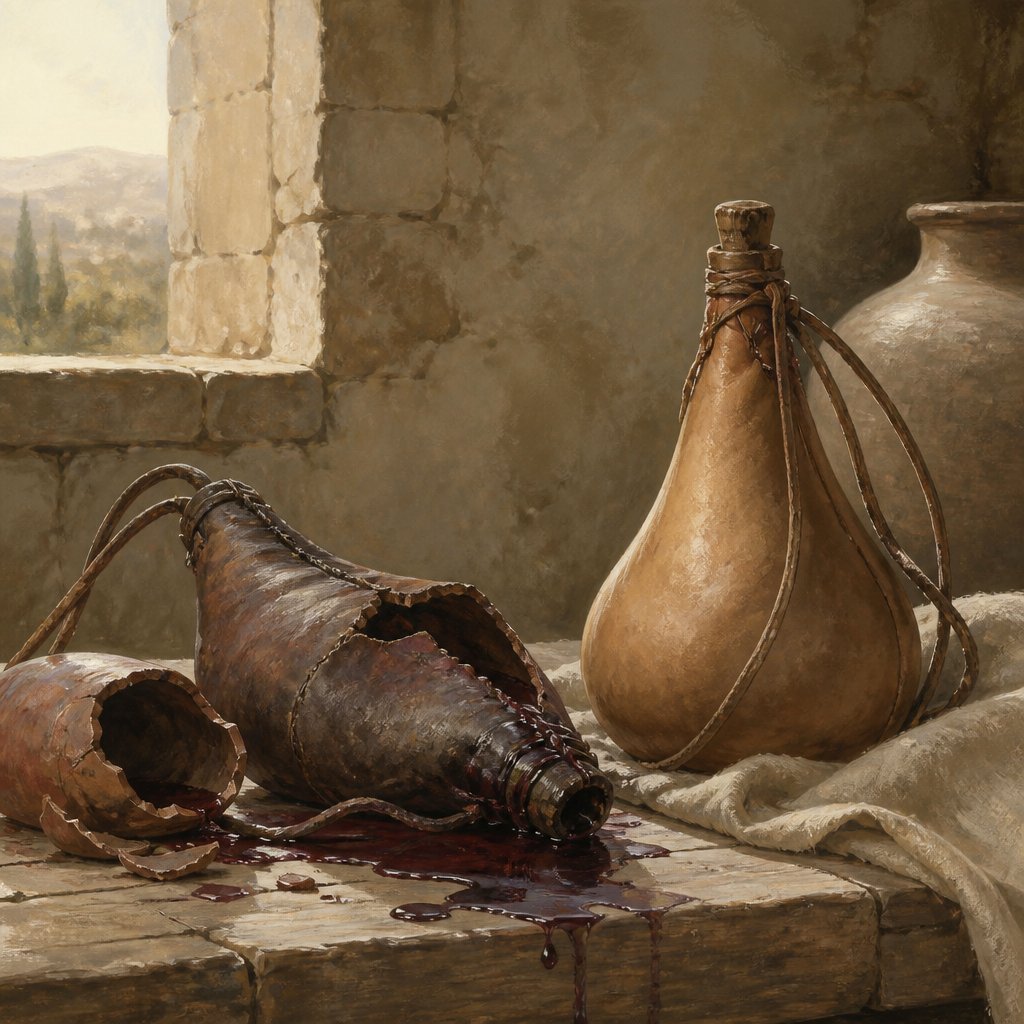
Matthew 9:17 (KJV) states, "Neither do men put new wine into old bottles: else the bottles break, and the wine runneth out, and the bottles perish: but they put new wine into new bottles, and both are preserved."
This verse is part of a larger passage in which Jesus is responding to a question about why His disciples do not fast as often as the disciples of John the Baptist and the Pharisees. In this particular verse, Jesus uses the analogy of new wine and old wineskins to illustrate the idea that His message and teachings cannot be contained within the confines of the traditional religious practices of the time. This passage is significant because it speaks to the transformative nature of Jesus' ministry and the need for a fresh understanding of spirituality and faith.
In order to fully understand the meaning and significance of this verse, it is important to consider the themes, context, and symbolism present in the passage. The themes of renewal, transformation, and the incompatibility of traditional religious practices with Jesus' teachings are all present in this verse. The context of Jesus' ministry within the larger narrative of the Gospels also provides important insight into the significance of this passage.
First, let's consider the theme of renewal. In this verse, Jesus uses the image of new wine and old wineskins to convey the idea that His message requires a new approach and a fresh perspective. The old wineskins represent the traditional religious practices and beliefs of the time, which are unable to contain or adapt to the transformative nature of Jesus' teachings. The new wine, on the other hand, symbolizes the new message of Christ, which requires a receptacle that is flexible and open to change. This theme of renewal and the need for a fresh understanding of faith is a central aspect of Jesus' ministry and is echoed throughout the New Testament.
In addition, this verse also addresses the theme of transformation. Jesus' analogy of new wine and old wineskins emphasizes the transformative power of His message. Just as new wine has the potential to change and improve with age, so too does the message of Jesus have the power to transform lives and bring about spiritual growth. However, this transformation requires a willingness to let go of old, rigid ways of thinking and embrace a new understanding of faith.
Furthermore, the context of this verse within the larger narrative of Jesus' ministry is crucial to understanding its significance. During His time on earth, Jesus constantly challenged the religious authorities and traditions of the day, advocating for a deeper, more personal relationship with God. This verse is part of a larger discourse on the incompatibility of traditional religious practices with the radical message of Christ. It serves as a reminder that the transformative power of Jesus' ministry requires a receptive and open-minded approach to faith.
Symbolically, the image of new wine and old wineskins carries significant meaning. In biblical times, wine was a symbol of joy, abundance, and spiritual renewal. The analogy of new wine and old wineskins serves as a visual representation of the need for a new receptacle for the new message of Christ. The old wineskins, unable to expand and adapt, represent the rigid and inflexible nature of traditional religious practices. The breaking of the old wineskins and the loss of the wine symbolize the consequences of trying to contain the transformative message of Jesus within the confines of the old ways. Conversely, putting new wine into new wineskins symbolizes the need for a receptive and open-minded approach to the teachings of Christ.
In conclusion, Matthew 9:17 (KJV) is a powerful and profound verse that captures the transformative nature of Jesus' ministry. Through the analogy of new wine and old wineskins, Jesus conveys the need for a fresh understanding of faith and the incompatibility of traditional religious practices with His message. The themes of renewal, transformation, and the symbolism of new wine and old wineskins all contribute to the rich and profound meaning of this verse. It serves as a reminder that the message of Christ requires a receptive and open-minded approach, one that is willing to let go of old ways and embrace a new understanding of faith.
Have questions about Matthew 9:17?
Dive deeper into this scripture with Bible Chat — an AI-powered tool for exploring God's Word through conversation. Ask questions, get context, and grow in your understanding of the Bible.
Get Our Apps


Matthew 9:17 Artwork

Matthew 9:17 - "Neither do men put new wine into old bottles: else the bottles break, and the wine runneth out, and the bottles perish: but they put new wine into new bottles, and both are preserved."
"Neither do men put new wine into old bottles: else the bottles break, and the wine runneth out, and the bottles perish: but they put new wine into new bottles, and both are preserved." - Matthew 9:17

Matthew 17:9 - "And as they came down from the mountain, Jesus charged them, saying, Tell the vision to no man, until the Son of man be risen again from the dead."

mat 17:1-9

Matthew 17:17-18

Matthew 17:17-18

Matthew 17:20

Matthew 6:17

Matthew 17:20

Matthew 9:21

Matthew 19:16-17

Matthew 6:17-18

Matthew 17:14-21

Matthew 17:14-15

Matthew 3:13-17

Matthew 9:21-22

Matthew 9:21-22

Matthew 9:21-22

Matthew 9:21-22

Matthew 9:21-22

Matthew 2:9

Matthew 9:9 - "¶ And as Jesus passed forth from thence, he saw a man, named Matthew, sitting at the receipt of custom: and he saith unto him, Follow me. And he arose, and followed him."

Matthew 2:9

Matthew 2:17 - "Then was fulfilled that which was spoken by Jeremy the prophet, saying,"

Matthew 17:21 - "Howbeit this kind goeth not out but by prayer and fasting."

Matthew 9:16-17 - "No one sews a patch of unshrunk cloth on an old garment, for the patch will pull away from the garment, making the tear worse. Neither do people pour new wine into old wineskins. If they do, the skins will burst; the wine will run out and the wineskins will be ruined. No, they pour new wine into new wineskins, and both are preserved."

Rev 9:17

Matthew 12:17 - "That it might be fulfilled which was spoken by Esaias the prophet, saying,"

Matthew 6:9-13

Matthew 17:7 - "And Jesus came and touched them, and said, Arise, and be not afraid."