What does Matthew 9:16-17 mean?
"No man putteth a piece of new cloth unto an old garment, for that which is put in to fill it up taketh from the garment, and the rent is made worse. Neither do men put new wine into old bottles: else the bottles break, and the wine runneth out, and the bottles perish: but they put new wine into new bottles, and both are preserved." - Matthew 9:16-17
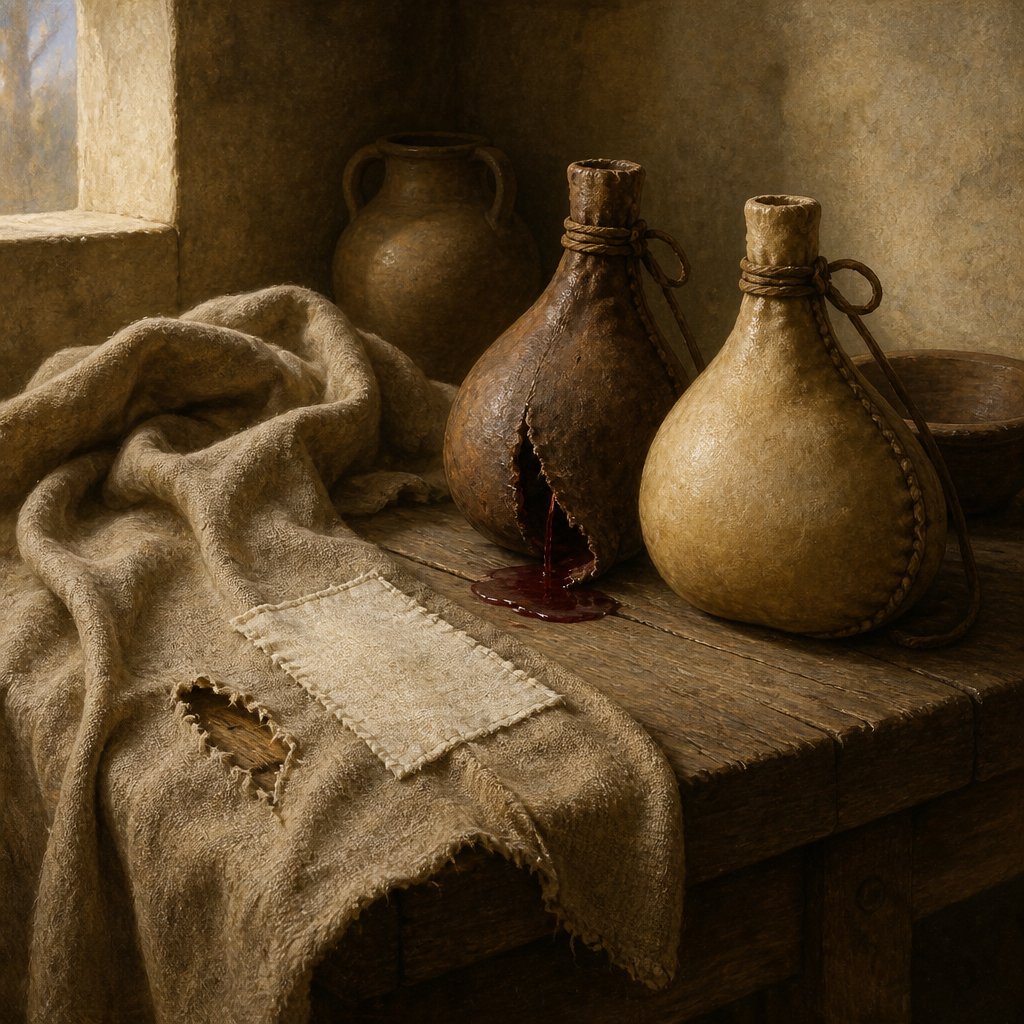
Matthew 9:16-17 in the King James Version of the Bible reads as follows:
"No man putteth a piece of new cloth unto an old garment, for that which is put in to fill it up taketh from the garment, and the rent is made worse. Neither do men put new wine into old bottles: else the bottles break, and the wine runneth out, and the bottles perish: but they put new wine into new bottles, and both are preserved."
This passage conveys a profound message about the nature of spiritual growth and renewal. In these verses, Jesus uses two simple and straightforward metaphors to illustrate the inability to mix the old ways of thinking and living with the new life that he was introducing through his teachings and ministry.
The first metaphor compares the integration of new teachings and wisdom into old ways of thinking to putting a piece of new cloth onto an old garment. It suggests that attempting to patch up an old way of living with new beliefs or principles will only result in further damage to the existing fabric. The new ideas will not seamlessly integrate with the old ones, but rather create a disjointed and unsustainable system.
The second metaphor compares the introduction of new spiritual truths to old mindsets to pouring new wine into old wineskins. This analogy emphasizes the potential for rigid and inflexible thinking to hinder the reception and retention of new spiritual truths. Just as old wineskins lack the elasticity to contain the fermentation process of new wine, old ways of thinking and living may not have the capacity to absorb and adapt to the transformative nature of new spiritual insights.
The broader context of this passage in the Gospel of Matthew reveals that Jesus is addressing the religious leaders of his time, particularly the Pharisees, who were resistant to his teachings and critical of his approach to spirituality. Jesus had come to bring about a new way of understanding and living out God's kingdom, but the religious leaders were steeped in tradition and legalism, unable to embrace the newness and freedom that Jesus offered.
The themes in this passage are rooted in the concepts of spiritual renewal, transformation, and the incompatibility of old and new mindsets. It serves as a warning against the danger of clinging to tradition and resisting growth and change, particularly in the realm of faith and spirituality. Jesus emphasizes the need for openness and receptivity to the new things that God is doing, rather than being confined by rigid religious structures and human tradition.
Furthermore, this passage holds symbolic significance in its metaphorical representation of the necessary receptivity and openness to the new revelations and workings of God in our lives. It speaks to the importance of constantly renewing our minds and hearts, shedding old ways of thinking and living that hinder our spiritual growth, and embracing the transformative power of God's truth and love.
Overall, Matthew 9:16-17 conveys a profound spiritual truth about the nature of growth and renewal. It serves as a call to embrace the newness of God's kingdom, to let go of old, outdated ways of thinking and living, and to open ourselves to the transformative power of God's truth in our lives. The message remains relevant and timeless, challenging us to examine our own hearts and minds and to be open to the ongoing work of renewal and transformation that God desires for us.
Have questions about Matthew 9:16-17?
Dive deeper into this scripture with Bible Chat — an AI-powered tool for exploring God's Word through conversation. Ask questions, get context, and grow in your understanding of the Bible.
Get Our Apps


Matthew 9:16-17 Artwork

Matthew 9:16-17 - "No one sews a patch of unshrunk cloth on an old garment, for the patch will pull away from the garment, making the tear worse. Neither do people pour new wine into old wineskins. If they do, the skins will burst; the wine will run out and the wineskins will be ruined. No, they pour new wine into new wineskins, and both are preserved."
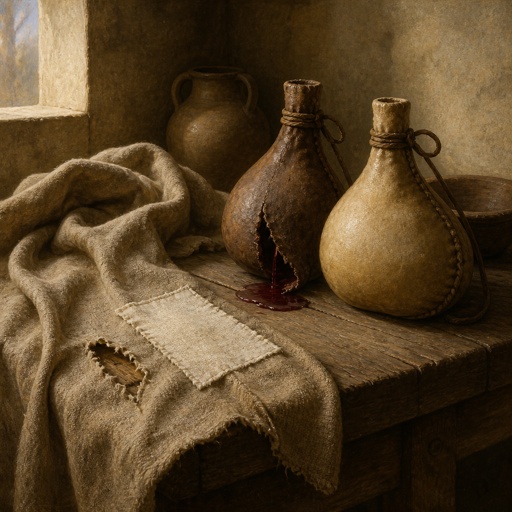
"No one sews a patch of unshrunk cloth on an old garment, for the patch will pull away from the garment, making the tear worse. Neither do people pour new wine into old wineskins. If they do, the skins will burst; the wine will run out and the wineskins will be ruined. No, they pour new wine into new wineskins, and both are preserved." - Matthew 9:16-17

Matthew 19:16-17

Matthew 17:16 - "And I brought him to thy disciples, and they could not cure him."

Matthew 9:16 - "No man putteth a piece of new cloth unto an old garment, for that which is put in to fill it up taketh from the garment, and the rent is made worse."
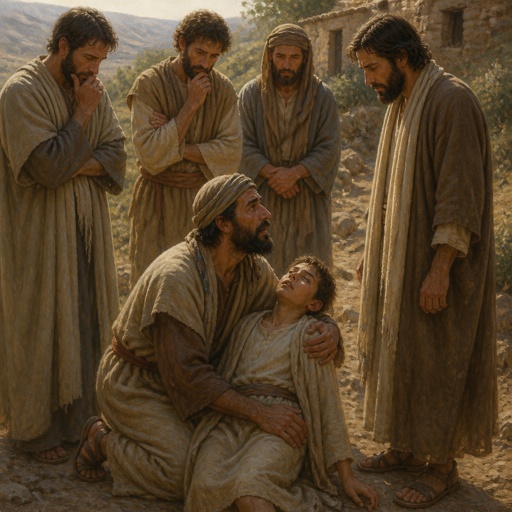
"And I brought him to thy disciples, and they could not cure him." - Matthew 17:16

Matthew 16:9 - "Do ye not yet understand, neither remember the five loaves of the five thousand, and how many baskets ye took up?"

Matthew 17:9 - "And as they came down from the mountain, Jesus charged them, saying, Tell the vision to no man, until the Son of man be risen again from the dead."

Matthew 16:17 - "And Jesus answered and said unto him, Blessed art thou, Simon Bar-jona: for flesh and blood hath not revealed it unto thee, but my Father which is in heaven."

Matthew 11:16-17 - "But to what shall I compare this generation? It is like children sitting in the marketplaces and calling to their playmates, 'We played the flute for you, and you did not dance; we sang a dirge, and you did not mourn.'"

Matthew 9:17 - "Neither do men put new wine into old bottles: else the bottles break, and the wine runneth out, and the bottles perish: but they put new wine into new bottles, and both are preserved."

mat 17:1-9

Matthew 17:17-18

Matthew 17:17-18

Matthew 3:16

Matthew 3:16

Matthew 3:16

Matthew 17:20

Matthew 6:17

Matthew 17:20

Matthew 16:25

Matthew 8:16-17 - "When evening came, many who were demon-possessed were brought to him, and he drove out the spirits with a word and healed all the sick. This was to fulfill what was spoken through the prophet Isaiah: "He took up our infirmities and bore our diseases.""

Matthew 16:16 - "And Simon Peter answered and said, Thou art the Christ, the Son of the living God."

Matthew 9:21

Matthew 19:16-17 - "Just then a man came up to Jesus and asked, “Teacher, what good thing must I do to get eternal life?” “Why do you ask me about what is good?” Jesus replied. “There is only One who is good. If you want to enter life, keep the commandments.”"

Galatians 5:16-17

Galatians 5:16-17

Matthew 3:13-17

Matthew 17:14-15

Matthew 6:17-18