What does Matthew 9:1 mean?
"And he entered into a ship, and passed over, and came into his own city." - Matthew 9:1
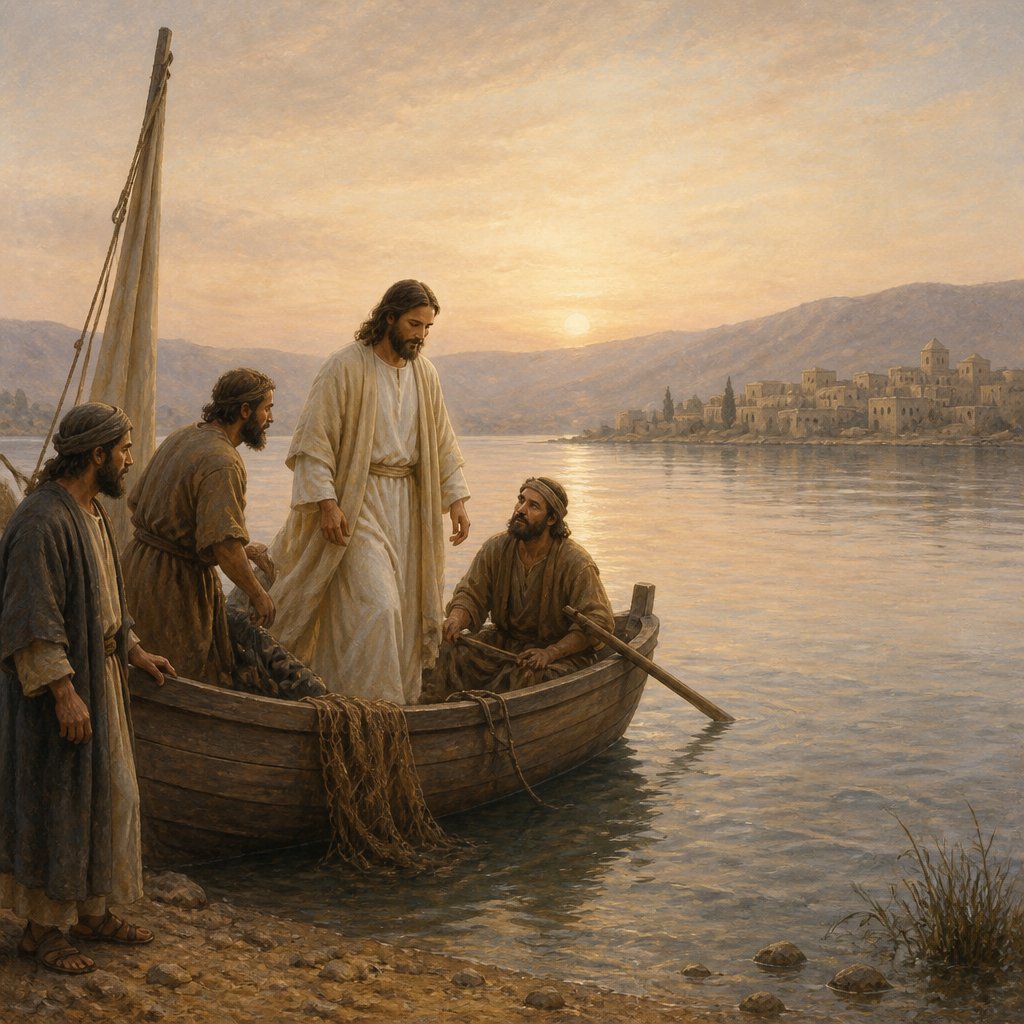
Matthew 9:1 - "And he entered into a ship, and passed over, and came into his own city."
This verse, found in the Gospel of Matthew, is a simple yet significant moment in the life of Jesus Christ. Let us delve deeper into the meaning and context of this verse, and explore the themes and symbolism it holds.
The preceding events in the Gospel of Matthew provide some important context for this verse. In the verses leading up to this moment, Jesus had just performed several miraculous healings, including the healing of a paralyzed man and the casting out of demons. These miraculous acts had garnered attention and followers, but also criticism from the religious leaders of the time.
In Matthew 8:34, after Jesus casts out a legion of demons from two men, the townspeople beg him to leave their region. This rejection, along with the growing opposition from the religious leaders, creates a sense of tension and conflict surrounding Jesus and his ministry. It is in this context that we encounter the verse in question.
"And he entered into a ship, and passed over, and came into his own city." This simple verse holds a deeper significance within the overall narrative of the Gospel. Jesus, after facing rejection and opposition, returns to "his own city." This city is most likely referring to Capernaum, which served as a base for Jesus’ ministry in the Galilee region.
The act of Jesus entering a ship and passing over the Sea of Galilee carries symbolic significance. Throughout the Gospels, the sea is often used to symbolize chaos, the unknown, and the forces of evil. By entering a ship and passing over the sea, Jesus is demonstrating his dominion over chaos and evil. His journey across the sea can also be seen as a metaphor for his ministry, as he crosses over from one region to another to bring the good news of the Kingdom of God.
Upon returning to his own city, Jesus continues his ministry, teaching and performing miracles. This act of returning to his home base serves as a symbol of resilience and steadfastness in the face of adversity. It conveys the message that, despite rejection and opposition, Jesus remains committed to his mission and continues to bring healing and hope to those in need.
This verse also carries the theme of homecoming and belonging. The phrase "his own city" emphasizes Jesus' connection to a specific place and community. This theme of homecoming is significant in the context of Jesus’ identity as the Messiah. It reinforces the idea that Jesus came not only to bring salvation to the world, but also to fulfill the promises made to his own people.
In a broader sense, this verse can also be interpreted as a call to return to our own spiritual centers and places of belonging. Just as Jesus returned to his own city, we are called to return to the foundational truths of our faith and our personal spiritual journeys. This can be a source of comfort and strength, especially in times of adversity and opposition.
In conclusion, Matthew 9:1 holds a rich and multilayered meaning within the larger narrative of the Gospel of Matthew. It reflects themes of resilience, belonging, and the triumph of good over evil. The symbolic act of Jesus entering a ship and returning to his own city serves as a powerful reminder of his unwavering commitment to his mission, and it offers a message of hope and perseverance for all who encounter it.
Have questions about Matthew 9:1?
Dive deeper into this scripture with Bible Chat — an AI-powered tool for exploring God's Word through conversation. Ask questions, get context, and grow in your understanding of the Bible.
Get Our Apps


Matthew 9:1 Artwork

Matthew 9:1 - "And he entered into a ship, and passed over, and came into his own city."
"And he entered into a ship, and passed over, and came into his own city." - Matthew 9:1

Matthew 2:9

Matthew 9:37-38

Matthew 1:9 - "And Ozias begat Joatham; and Joatham begat Achaz; and Achaz begat Ezekias;"

Matthew 9:21

Matthew 9:21-22

Matthew 9:21-22

Matthew 9:21-22

Matthew 9:21-22

Matthew 9:21-22
"And Ozias begat Joatham; and Joatham begat Achaz; and Achaz begat Ezekias;" - Matthew 1:9

Matthew 9:9 - "¶ And as Jesus passed forth from thence, he saw a man, named Matthew, sitting at the receipt of custom: and he saith unto him, Follow me. And he arose, and followed him."

Matthew 2:9

Matthew 6:9-13

Matthew 9:7 - "And he arose, and departed to his house."

Matthew 9:26 - "And the fame hereof went abroad into all that land."

Matthew 5:9 - "Blessed are the peacemakers: for they shall be called the children of God."

Matthew 13:9 - "Who hath ears to hear, let him hear."

Matthew 12:9 - "And when he was departed thence, he went into their synagogue:"

Matthew 9:19 - "And Jesus arose, and followed him, and so did his disciples."

Matthew 15:9 - "But in vain they do worship me, teaching for doctrines the commandments of men."

Matthew 9:3 - "And, behold, certain of the scribes said within themselves, This man blasphemeth."

Matthew 26:9 - "For this ointment might have been sold for much, and given to the poor."

mat 17:1-9

Matthew 9:32 - "¶ As they went out, behold, they brought to him a dumb man possessed with a devil."

Matthew 9:29 - "Then touched he their eyes, saying, According to your faith be it unto you."

Matthew 10:9 - "Provide neither gold, nor silver, nor brass in your purses,"

Matthew 9:31 - "But they, when they were departed, spread abroad his fame in all that country."

Matthew 9:34 - "But the Pharisees said, He casteth out devils through the prince of the devils."