What does Matthew 6:33 mean?
"But seek ye first the kingdom of God, and his righteousness; and all these things shall be added unto you." - Matthew 6:33
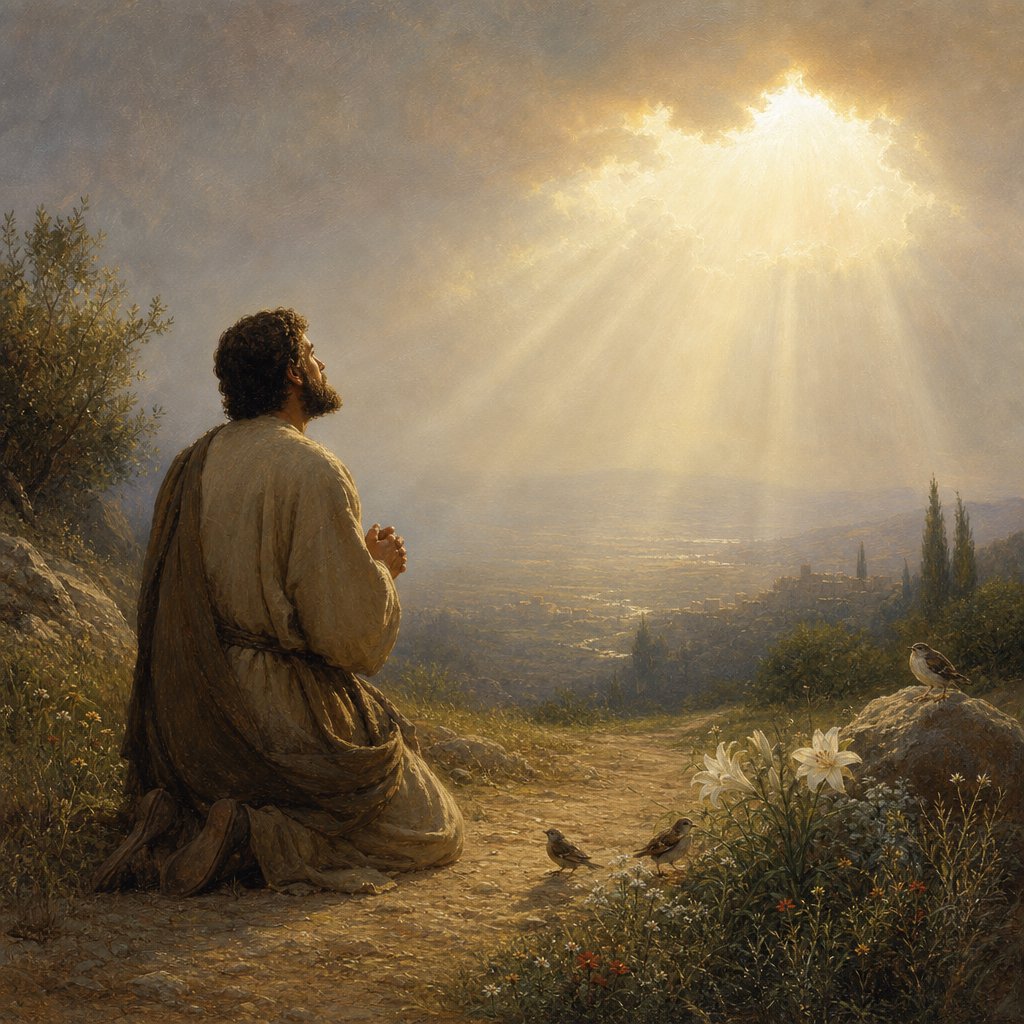
“But seek ye first the kingdom of God, and his righteousness; and all these things shall be added unto you.” Matthew 6:33 (KJV)
Matthew 6:33 stands near the close of a section in the Sermon on the Mount where the Lord speaks directly to the inward anxieties that govern outward life. In the verses immediately surrounding it, Jesus has been addressing the human preoccupation with necessities—what to eat, what to drink, what to wear—and He has been exposing how easily the heart can be mastered by care. The command in verse 33 is therefore not an isolated inspirational line but the climax of an argument: if the Father feeds the fowls of the air and clothes the lilies of the field, and if man is of more value than they, then the life of the disciple is not to be organized around fear-driven pursuit of provision but around God Himself. The verse gathers all of that teaching into a single priority: “seek ye first.”
To “seek” in this setting is more than a casual interest; it is the deliberate orientation of the whole person—mind, desire, planning, and effort—toward a supreme object. Christ does not merely counsel that the kingdom be included among other pursuits; He insists it be sought “first,” as the ruling aim that orders every other aim. The word “first” carries the weight of supremacy and precedence, indicating what governs the heart before anything else is weighed. In the earlier part of the chapter Jesus has already set this framework by speaking of “treasures,” the “eye” as the lamp of the body, and the impossibility of serving “two masters.” In that light, Matthew 6:33 functions like the corrective center: do not make mammon the master and then ask God to bless the arrangement; rather, enthrone God’s reign in the heart and let everything else take its proper place under Him.
“The kingdom of God” in Matthew 6:33 (KJV) is not presented as a mere location but as God’s rule, God’s reign, God’s ordering of life according to His will. In the Sermon on the Mount, the kingdom is closely tied to the kind of people the Beatitudes describe and the kind of obedience Jesus expounds: humility of spirit, mourning over sin, meekness, hungering and thirsting after righteousness, mercy, purity of heart, peacemaking, and steadfastness under persecution. Seeking the kingdom, then, means embracing God as King, desiring His purposes, submitting to His commands, and valuing His promises above immediate security. It is to live as one who belongs to God’s government even while still walking through the ordinary world of work, food, clothing, and time.
When Jesus adds “and his righteousness,” He presses the seeker beyond a general religious interest into the moral and spiritual character that corresponds to God Himself. In Matthew 6, righteousness is not mere outward display; earlier in the chapter Christ warns against doing alms, praying, and fasting “to be seen of men.” The righteousness God calls for is real, inward, and Godward. It is righteousness that springs from the Father’s approval rather than from the applause of others. It includes trust in God instead of anxiety, sincerity instead of performance, and obedience that is not negotiated by fear. In this way, “his righteousness” is both the standard and the gift that shapes the disciple’s life: God’s own rightness is what the disciple seeks to align with, not simply a human notion of respectability.
The promise, “and all these things shall be added unto you,” points back to the specific “things” discussed in the passage: food, drink, and raiment—the basic provisions that often dominate human thought. The phrase “shall be added” is significant because it suggests these necessities are not the primary object of pursuit but the Father’s addition, His appendage to a rightly ordered life. The disciple is not called to neglect practical responsibilities; rather, the disciple is called to refuse the tyranny of worry and the idolatry of provision. God is portrayed in the context as a Father who knows what His children need. The promise therefore rests on relationship: the one who seeks God’s reign and God’s righteousness is not abandoned to chance but is cared for by a Father whose knowledge and power exceed the disciple’s foresight.
The symbolism Jesus employs in the surrounding context deepens the meaning of verse 33. The fowls of the air, which do not sow or reap yet are fed, symbolize lives sustained not by anxious control but by the Creator’s care. The lilies of the field, clothed in beauty beyond Solomon, symbolize the Father’s lavish provision that does not depend on human striving. These images are not meant to romanticize passivity but to rebuke unbelief: if God’s providence extends to creatures and grass, then anxious obsession over “these things” is exposed as a kind of practical atheism, living as though God were not Father. Verse 33 is the remedy: replace anxiety with seeking, fear with faith, and self-ruled planning with God-ruled priorities.
There is also a contrast in the immediate context between the disciple and “the Gentiles,” for Jesus says, “For after all these things do the Gentiles seek.” In that comparison, seeking is again the key word. The nations are characterized by a life whose seeking centers on material necessities as ultimate concerns, as though life were bounded by the visible and the immediate. Christ calls His people to a different seeking, not because they have no bodily needs, but because they know the Father. Thus Matthew 6:33 becomes a marker of identity: it describes the distinctive pursuit of those who belong to God.
The significance of Matthew 6:33 is therefore both practical and spiritual. Practically, it teaches a reordered life: decisions, ambitions, habits, and goals are to be governed by the question of God’s reign and God’s righteousness rather than by the pressure of securing “these things” at any cost. Spiritually, it reveals what faith looks like in daily life: faith is not only believing truths but entrusting oneself to the Father’s care while pursuing the Father’s will. The verse does not promise luxury, nor does it deny hardship, but it does anchor the disciple’s life in the certainty that God’s priorities are safe priorities, and that a life centered on the kingdom is not a life abandoned to lack.
Read as the culmination of the chapter’s warnings and invitations, Matthew 6:33 calls the reader to a single-hearted devotion. It summons the heart away from divided service, away from showy religion, away from anxious striving, and toward a life in which God is first. In doing so, it gives both a command and a comfort: the command is to seek the kingdom of God and his righteousness; the comfort is that the Father is able and willing to “add” what is truly needed as His child walks under His rule.
Have questions about Matthew 6:33?
Dive deeper into this scripture with Bible Chat — an AI-powered tool for exploring God's Word through conversation. Ask questions, get context, and grow in your understanding of the Bible.
Get Our Apps


Matthew 6:33 Artwork

Matthew 6:33. Seeking God's righteousness

Matthew 6:33 - "But seek ye first the kingdom of God, and his righteousness; and all these things shall be added unto you."

"But seek ye first the kingdom of God, and his righteousness; and all these things shall be added unto you." - Matthew 6:33

Matthew 6:33-34 - "But seek first his kingdom and his righteousness, and all these things will be given to you as well. Therefore do not worry about tomorrow, for tomorrow will worry about itself. Each day has enough trouble of its own."

"But seek ye first the kingdom of God, and his righteousness; and all these things shall be added unto you." - Matthew 6:33
"But seek ye first the kingdom of God, and his righteousness; and all these things shall be added unto you." - Matthew 6:33
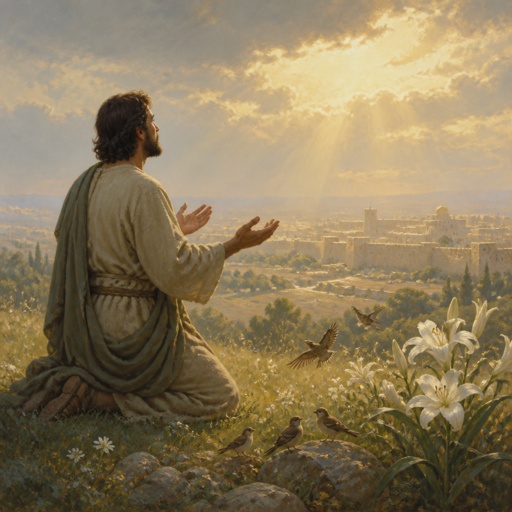
"But seek first his kingdom and his righteousness, and all these things will be given to you as well. Therefore do not worry about tomorrow, for tomorrow will worry about itself. Each day has enough trouble of its own." - Matthew 6:33-34

Matthew 14:22-33

Mathew 6:33

Matthew 22:33 - "And when the multitude heard this, they were astonished at his doctrine."

Isaiah 33:6

Isaiah 33:6

Isaiah 33:6

Matthew 20:33 - "They say unto him, Lord, that our eyes may be opened."

Matthew 6:6

Matthew 25:33 - "And he shall set the sheep on his right hand, but the goats on the left."

Matthew 27:33 - "And when they were come unto a place called Golgotha, that is to say, a place of a skull,"

Matthew 14:33 - "Then they that were in the ship came and worshipped him, saying, Of a truth thou art the Son of God."

Matthew 6:31-33 - "Therefore do not worry, saying, ‘What shall we eat?’ or ‘What shall we drink?’ or ‘What shall we wear?’ For after all these things the Gentiles seek. For your heavenly Father knows that you need all these things. But seek first the kingdom of God and His righteousness, and all these things shall be added to you."

Genesis 33:6 - "Then the handmaidens came near, they and their children, and they bowed themselves."

Matthew 24:33 - "So likewise ye, when ye shall see all these things, know that it is near, even at the doors."

Matthew 9:33 - "And when the devil was cast out, the dumb spake: and the multitudes marvelled, saying, It was never so seen in Israel."

Matthew 8:33 - "And they that kept them fled, and went their ways into the city, and told every thing, and what was befallen to the possessed of the devils."

Matthew 18:33 - "Shouldest not thou also have had compassion on thy fellowservant, even as I had pity on thee?"

Exodus 33:6 - "And the children of Israel stripped themselves of their ornaments by the mount Horeb."

Deuteronomy 33:6 - "¶ Let Reuben live, and not die; and let not his men be few."

Numbers 33:6 - "And they departed from Succoth, and pitched in Etham, which is in the edge of the wilderness."

Matthew 6:23

Matthew 10:33 - "But whosoever shall deny me before men, him will I also deny before my Father which is in heaven."

Matthew 26:33 - "Peter answered and said unto him, Though all men shall be offended because of thee, yet will I never be offended."