What does Matthew 6:11 mean?
"Give us this day our daily bread." - Matthew 6:11
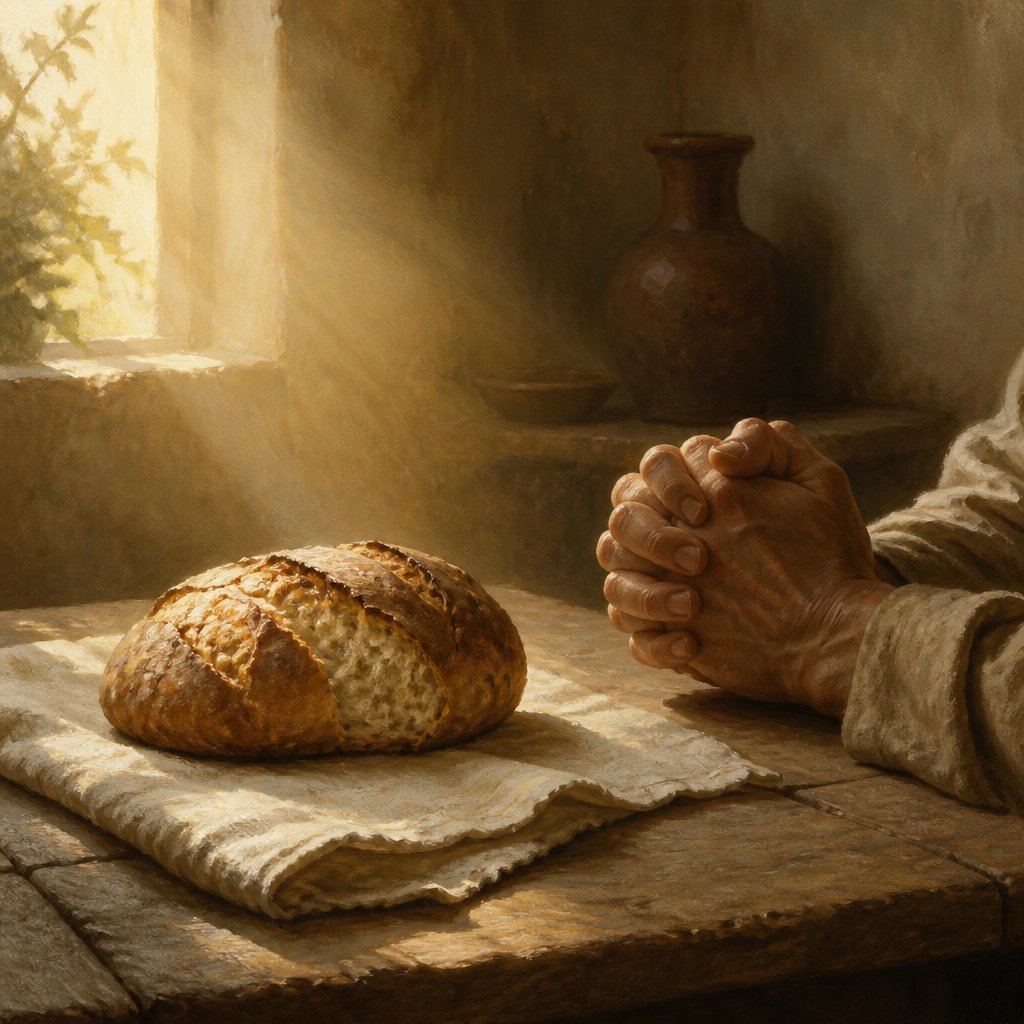
Matthew 6:11 (KJV) states, "Give us this day our daily bread." This verse is part of the Lord's Prayer, which Jesus taught to his disciples as a model for how they should pray. In this verse, Jesus is instructing his followers to ask God to provide them with their basic sustenance each day.
The first theme that can be derived from this verse is the theme of dependence on God. By asking for "our daily bread," Jesus is reminding his followers that they are reliant on God for their daily needs. This theme of dependence is also echoed in other parts of the Bible, such as in Psalm 23 where it states, "The Lord is my shepherd; I shall not want" (Psalm 23:1, KJV). This theme reminds us that, as human beings, we are not self-sufficient and need to rely on God for our provision.
Another theme that can be drawn from this verse is the theme of gratitude. By asking for "our daily bread," Jesus is teaching his disciples to be grateful for the provision that God gives them. This theme of gratitude is also emphasized in other parts of the Bible, such as in 1 Thessalonians 5:18 where it states, "In every thing give thanks: for this is the will of God in Christ Jesus concerning you" (1 Thessalonians 5:18, KJV). This theme of gratitude reminds us to be thankful for the blessings that God provides, even if they are as simple as daily sustenance.
Contextually, Jesus' teaching of the Lord's Prayer comes in the midst of the Sermon on the Mount, where he is teaching his disciples about various aspects of the Christian life. In the preceding verses, Jesus warns against practicing acts of righteousness in order to be seen by others, such as giving to the needy, praying, and fasting. Instead, Jesus teaches his followers to do these things in secret, so that they will be seen and rewarded by God. This context further emphasizes the theme of dependence on God, as Jesus is teaching his disciples to rely on God for their needs rather than seeking recognition from others.
Symbolically, the "daily bread" mentioned in this verse can represent not only physical sustenance, but also spiritual sustenance. Jesus refers to himself as the "bread of life" in John 6:35, where he states, "I am the bread of life: he that cometh to me shall never hunger; and he that believeth on me shall never thirst" (John 6:35, KJV). This symbolizes the idea that Jesus is the source of both physical and spiritual nourishment for believers.
In conclusion, Matthew 6:11 (KJV) is a verse that teaches the themes of dependence on God and gratitude for his provision. It also holds symbolic significance in representing both physical and spiritual sustenance. This verse is a reminder for Christians to rely on God for their daily needs and to be thankful for the blessings that he provides. It is a powerful example of Jesus' teachings on prayer and trust in God's provision.
Have questions about Matthew 6:11?
Dive deeper into this scripture with Bible Chat — an AI-powered tool for exploring God's Word through conversation. Ask questions, get context, and grow in your understanding of the Bible.
Get Our Apps


Matthew 6:11 Artwork

Matthew 6:11 - "Give us this day our daily bread."
"Give us this day our daily bread." - Matthew 6:11

Matthew 11:6 - "And blessed is he, whosoever shall not be offended in me."
"And blessed is he, whosoever shall not be offended in me." - Matthew 11:6

Matthew 6:34

Matthew 6:22

Matthew 6:14

Matthew 6:30

Matthew 6:22

Matthew 6:34

Matthew 6:34

Matthew 6:6

Matthew 6:29 expressed as a rose garden

Matthew 3:11

Matthew 3:11

Matthew 3:11

Matthew 3:11

Matthew 3:11

Matthew 3:11

Matthew 3:11-12

Matthew 6:23

Matthew 3:11-12

Matthew 3:11

Matthew 3:11

Matthew 3:11

Matthew 11:1

Matthew 11:1

Matthew 11:3

Matthew 2:11

Matthew 28:11