What does Matthew 5:36 mean?
"Neither shalt thou swear by thy head, because thou canst not make one hair white or black." - Matthew 5:36
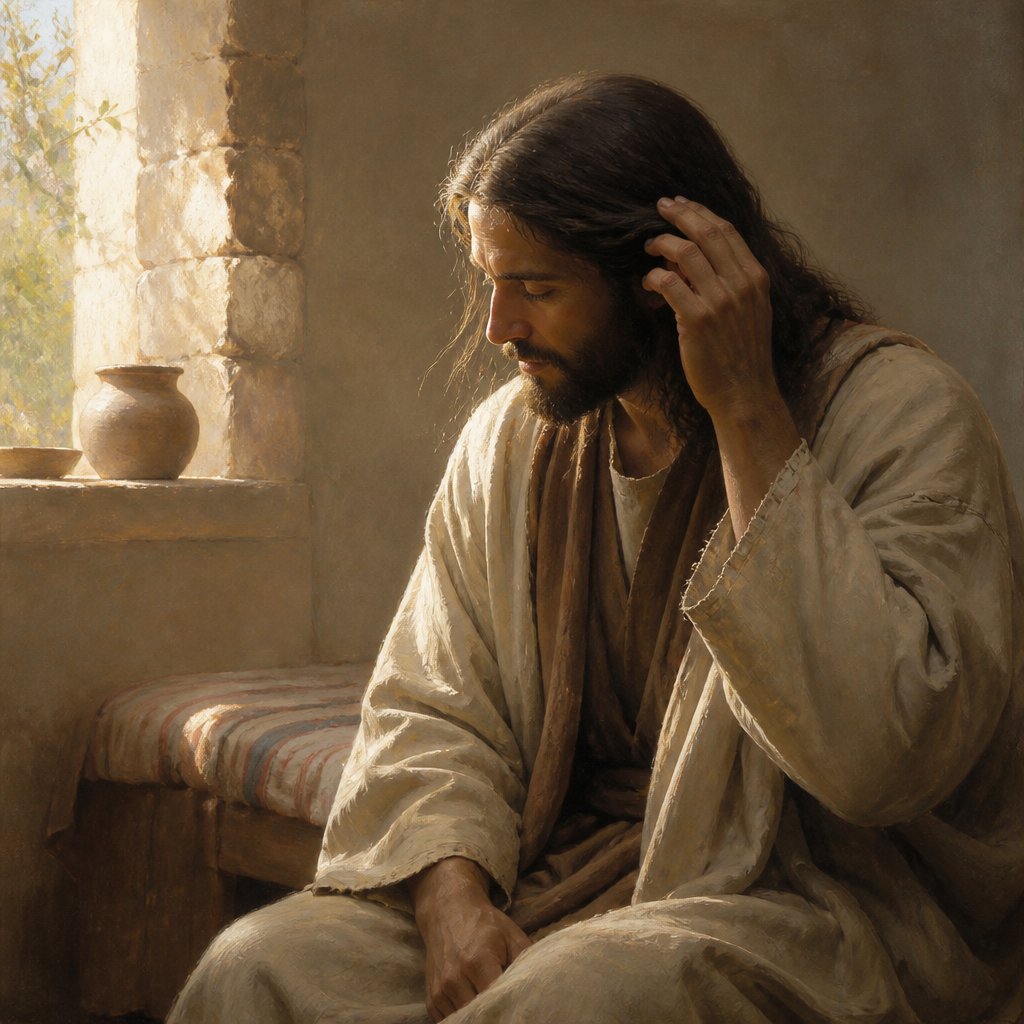
In Matthew 5:36, Jesus admonishes his followers to not swear by their head because they cannot make one hair white or black. This verse is part of Jesus’ Sermon on the Mount in which he delivers a series of teachings on various topics, including the law, anger, adultery, love for enemies, giving to the needy, prayer, and fasting. The Sermon on the Mount is regarded as one of the most important and influential teachings of Jesus, and it reflects his moral and ethical teachings.
The specific verse in question addresses the practice of taking oaths or making vows. In ancient times, taking an oath or making a vow was a common practice to guarantee the truthfulness of one’s words or the fulfillment of a promise. People would swear by various things, such as heaven, earth, Jerusalem, or even their own head, as a way of making their words more binding. However, Jesus instructs his followers not to swear by any of these things, as they have no power to change or control them. Instead, Jesus teaches that people should let their “yes” be yes and their “no” be no, and anything beyond that comes from the evil one (Matthew 5:37).
This teaching reflects a deeper understanding of integrity and honesty. Jesus is emphasizing the importance of being truthful and trustworthy in our words and actions. By encouraging his followers to speak honestly and keep their promises without the need for oaths or vows, Jesus is promoting a higher standard of moral conduct. This also aligns with the broader message of the Sermon on the Mount, which emphasizes the internal nature of righteousness and the transformation of the heart.
The context of this verse is significant, as it comes in the midst of Jesus’ teachings on the righteousness that surpasses that of the scribes and Pharisees. Throughout the sermon, Jesus challenges his listeners to embody a righteousness that is rooted in genuine piety, compassion, and love for others. He contrasts this with the external and performative righteousness of the religious leaders of his time. In this light, the instruction not to swear by one’s head can be viewed as a rejection of superficial and insincere practices in favor of a more authentic and upright way of living.
The symbolism in this verse can be interpreted in various ways. On one level, it symbolizes the futility of human attempts to control or manipulate external circumstances. The inability to change the color of one’s hair serves as a metaphor for the limitations of human power and agency. It also symbolizes the transient and ephemeral nature of human existence, highlighting the arrogance and folly of placing one’s trust in earthly things.
On a deeper level, the verse can be seen as a call to place one’s trust in God alone. By discouraging the use of oaths and vows, Jesus is redirecting his followers to rely on the truthfulness and constancy of God, rather than on their own efforts or the created world. This aligns with the broader biblical theme of trusting in God’s faithfulness and providence, as well as the commandment to have no other gods before Him.
Overall, Matthew 5:36 presents a profound and challenging teaching that calls for a radical shift in perspective and behavior. It invites us to embrace a higher standard of integrity and truthfulness, to prioritize inward righteousness over outward appearances, and to place our trust in God above all else. As part of the Sermon on the Mount, this verse forms an integral part of Jesus’ ethical and spiritual teachings, which continue to inspire and challenge believers to this day.
Have questions about Matthew 5:36?
Dive deeper into this scripture with Bible Chat — an AI-powered tool for exploring God's Word through conversation. Ask questions, get context, and grow in your understanding of the Bible.
Get Our Apps


Matthew 5:36 Artwork

Matthew 5:36 - "Neither shalt thou swear by thy head, because thou canst not make one hair white or black."
"Neither shalt thou swear by thy head, because thou canst not make one hair white or black." - Matthew 5:36

Matthew 12:36-37

matthew 12:36-37

Matthew 12:36-37

Matthew 27:36 - "And sitting down they watched him there;"

Matthew 22:36 - "Master, which is the great commandment in the law?"

Matthew 10:36 - "And a man's foes shall be they of his own household."

Luke 5:36

Matthew 24:36 - "¶ But of that day and hour knoweth no man, no, not the angels of heaven, but my Father only."

"And sitting down they watched him there;" - Matthew 27:36

Matthew 23:36 - "Verily I say unto you, All these things shall come upon this generation."

"Master, which is the great commandment in the law?" - Matthew 22:36

Matthew 21:36 - "Again, he sent other servants more than the first: and they did unto them likewise."

Matthew 9:36 (KJV) 36 But when he saw the multitudes, he was moved with compassion on them, because they fainted, and were scattered abroad, as sheep having no shepherd.

Matthew 14:36 - "And besought him that they might only touch the hem of his garment: and as many as touched were made perfectly whole."

Matthew 15:36 - "And he took the seven loaves and the fishes, and gave thanks, and brake them, and gave to his disciples, and the disciples to the multitude."

"And a man's foes shall be they of his own household." - Matthew 10:36

Matthew 25:36 - "Naked, and ye clothed me: I was sick, and ye visited me: I was in prison, and ye came unto me."

Job 36:5 - "Behold, God is mighty, and despiseth not any: he is mighty in strength and wisdom."

Matthew 9:36 - "¶ But when he saw the multitudes, he was moved with compassion on them, because they fainted, and were scattered abroad, as sheep having no shepherd."

Psalms 36:5 - "Thy mercy, O LORD, is in the heavens; and thy faithfulness reacheth unto the clouds."

Matthew 12:36 - "But I say unto you, That every idle word that men shall speak, they shall give account thereof in the day of judgment."

Matthew 5:5 - "Blessed are the meek: for they shall inherit the earth."

Matthew 5:44

Matthew 5:44

Matthew 5

Matthew 5

Matthew 26:36 - "¶ Then cometh Jesus with them unto a place called Gethsemane, and saith unto the disciples, Sit ye here, while I go and pray yonder."

Matthew 13:36 - "Then Jesus sent the multitude away, and went into the house: and his disciples came unto him, saying, Declare unto us the parable of the tares of the field."