What does Matthew 5:27 mean?
"¶ Ye have heard that it was said by them of old time, Thou shalt not commit adultery:" - Matthew 5:27

The verse Matthew 5:27 from the King James Version (KJV) reads: "Ye have heard that it was said by them of old time, Thou shalt not commit adultery." This verse is taken from the famous Sermon on the Mount, in which Jesus delivers a series of teachings to his followers. In this particular section of the sermon, Jesus is explaining the deeper spiritual significance of the Law of Moses and the Ten Commandments.
The immediate context of this verse is important for understanding its meaning. Jesus prefaces this statement with “Ye have heard that it was said by them of old time,” which indicates that he is referring to an established teaching or interpretation. The phrase “Thou shalt not commit adultery” is a direct quote from the seventh commandment in the Old Testament (Exodus 20:14). This commandment serves as a moral guideline for the Jewish people and has significant implications for personal relationships and social structures.
Jesus’ teachings in the Sermon on the Mount are not intended to abolish the Law, but rather to fulfill it (Matthew 5:17). Therefore, his purpose in this verse is to elevate the understanding of this particular commandment to a deeper, spiritual level. He goes on to say in Matthew 5:28, "But I say unto you, That whosoever looketh on a woman to lust after her hath committed adultery with her already in his heart." This statement raises the moral standard from physical actions to internal thoughts and desires.
On a thematic level, this verse addresses the issue of purity and righteousness in personal conduct. It emphasizes the importance of maintaining moral integrity not only in outward actions, but also in inward thoughts and attitudes. By addressing the issue of lustful thoughts, Jesus is challenging his followers to examine the condition of their hearts and to strive for purity and holiness in all areas of their lives.
The symbolism in this verse is also profound. Jesus’ use of the commandment against adultery as a metaphor for internal attitudes and desires is a powerful illustration of the spiritual reality behind the Law. It highlights the idea that sin begins in the heart and is not merely a matter of external actions. This symbolism serves to underscore the need for inner transformation and the importance of addressing the root causes of sinful behavior.
Furthermore, this verse also has broader social and cultural implications. In the context of Jesus’ time, the treatment of women and the issue of sexual morality were significant societal concerns. By addressing the issue of lustful thoughts and internal purity, Jesus is challenging the prevailing attitudes and behaviors of his culture. His teachings promote a higher standard of respect for women and call for a radical transformation of societal attitudes towards sexuality and gender dynamics.
In summary, Matthew 5:27 addresses the issue of personal purity and righteousness in a profound and transformative way. It challenges traditional interpretations of the Law and calls for a deeper, inward transformation. The verse has important implications for individual conduct, social attitudes, and the broader spiritual understanding of the Law. Through its powerful themes, context, and symbolism, this verse continues to inspire and convict believers to strive for purity and holiness in their hearts and lives.
Have questions about Matthew 5:27?
Dive deeper into this scripture with Bible Chat — an AI-powered tool for exploring God's Word through conversation. Ask questions, get context, and grow in your understanding of the Bible.
Get Our Apps


Matthew 5:27 Artwork

Matthew 5:27 - "¶ Ye have heard that it was said by them of old time, Thou shalt not commit adultery:"

Matthew 5:27-28 - "You have heard that it was said, 'You shall not commit adultery.' But I tell you that anyone who looks at a woman lustfully has already committed adultery with her in his heart."

"¶ Ye have heard that it was said by them of old time, Thou shalt not commit adultery:" - Matthew 5:27

"You have heard that it was said, 'You shall not commit adultery.' But I tell you that anyone who looks at a woman lustfully has already committed adultery with her in his heart." - Matthew 5:27-28

"And he cast down the pieces of silver in the temple, and departed, and went and hanged himself." - Matthew 27:5
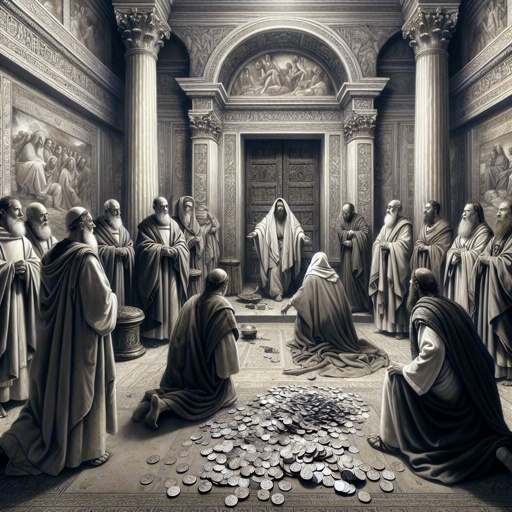
Matthew 27:5 - Show inside the Temple - Show 5 priests looking at Juda and coins - Show only a few pieces of silver coins on the floor - Show the door - Show Juda on his knees walking out the door - A cold theme

Matthew 27:5 - Show inside the Temple - Show 5 priests looking at Juda and coins - Show about 30 pieces of silver coins on the floor - Show the door - Show Juda on his knees walking out the door - A cold theme

Matthew 27:46

Matthew 27:35

Matthew 24:27

Matthew 27:26

Matthew 27:26

Matthew 27: 38

Matthew 27:27 - "Then the soldiers of the governor took Jesus into the common hall, and gathered unto him the whole band of soldiers."

Matthew 7:24-27

Matthew 27:16 - "And they had then a notable prisoner, called Barabbas."

Matthew 27:36 - "And sitting down they watched him there;"

Matthew 27:18 - "For he knew that for envy they had delivered him."

Matthew 22:27 - "And last of all the woman died also."

Matthew 27:39 - "¶ And they that passed by reviled him, wagging their heads,"

Matthew 27:8 - "Wherefore that field was called, The field of blood, unto this day."

Matthew 27:28 - "And they stripped him, and put on him a scarlet robe."

Genesis 27:5

Matthew 27:7 - "And they took counsel, and bought with them the potter's field, to bury strangers in."

Matthew 27:10 - "And gave them for the potter's field, as the Lord appointed me."

Matthew 5:5 - "Blessed are the meek: for they shall inherit the earth."

Matthew 5:44

Matthew 5:44

Matthew 5

Matthew 5