What does Matthew 2:6 mean?
"And thou Bethlehem, in the land of Juda, art not the least among the princes of Juda: for out of thee shall come a Governor, that shall rule my people Israel." - Matthew 2:6
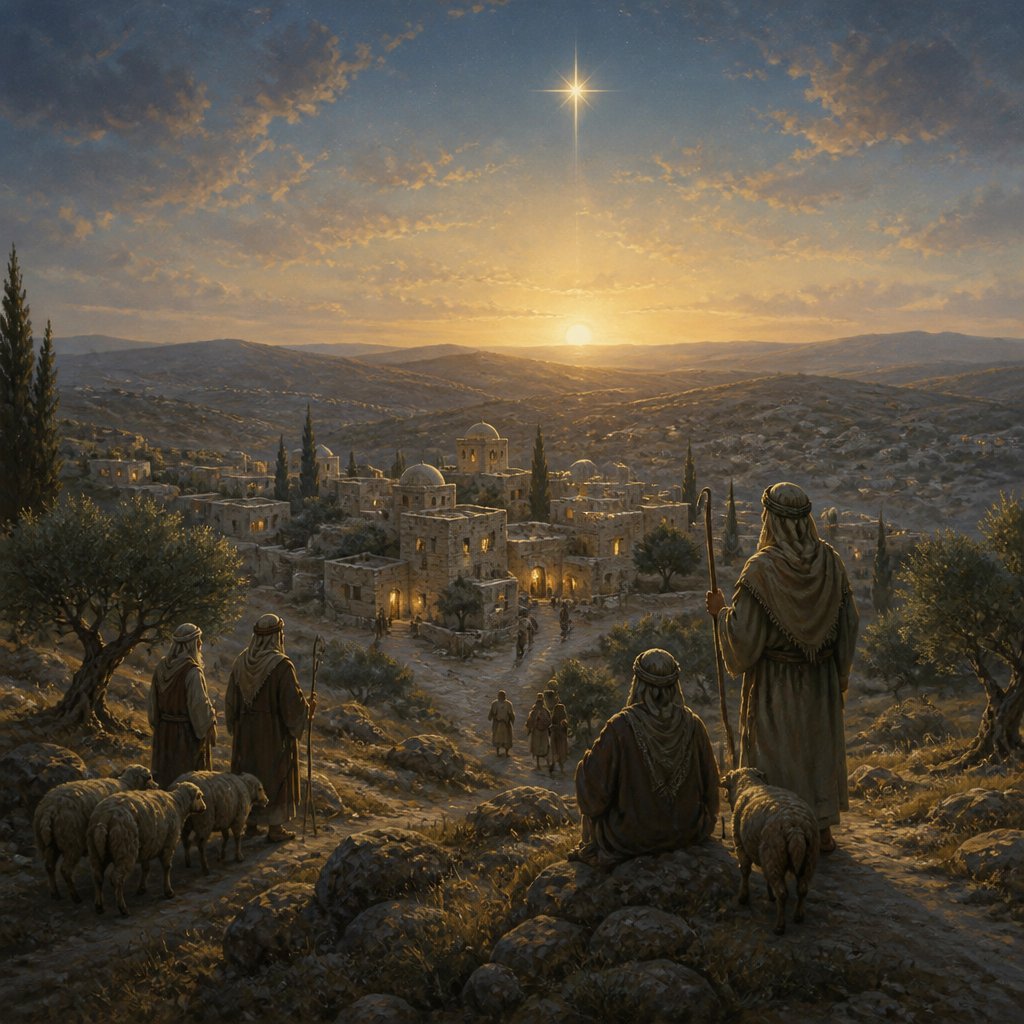
Matthew 2:6 (KJV) - "And thou Bethlehem, in the land of Juda, art not the least among the princes of Juda: for out of thee shall come a Governor, that shall rule my people Israel."
This verse is part of the story of the wise men who came from the East to worship the newborn Jesus. They went to Jerusalem and asked King Herod for the location of the one who had been born King of the Jews. Herod, feeling threatened by this news, consulted with the chief priests and scribes who told him that according to the prophet Micah, the Messiah would be born in Bethlehem. Herod then secretly asked the wise men to find the child and report back to him, so that he too could go and worship him. As the wise men continued their journey, they followed a star and found Jesus in Bethlehem, where they presented him with gifts of gold, frankincense, and myrrh.
This verse from Matthew 2:6 is a direct fulfillment of the prophecy found in Micah 5:2 which says, "But thou, Bethlehem Ephratah, though thou be little among the thousands of Judah, yet out of thee shall he come forth unto me that is to be ruler in Israel; whose goings forth have been from of old, from everlasting." The prophecy in Micah foretold that the Messiah, the ruler of Israel, would come from the small and insignificant town of Bethlehem. This is exactly what happened with the birth of Jesus, and this verse serves to confirm the fulfillment of this prophecy.
The theme of fulfillment of prophecy is prominent in this verse, as it underscores the divine plan of God and His sovereignty over history. It demonstrates that God's promises are true and trustworthy, and that He keeps His word. By using the Old Testament prophecy to confirm the birthplace of Jesus, Matthew also emphasizes the continuity and fulfillment of the Old Testament in the New Testament. This serves to validate Jesus as the long-awaited Messiah and fulfills the Messianic expectation of the Jewish people.
Another important theme in this verse is the kingship of Jesus. The title "Governor" or "Ruler" used in this verse highlights Jesus' authority and leadership over His people. It reaffirms the Messianic role of Jesus as the King of the Jews, and by extension, the King of all those who believe in Him. This establishes the earthly kingship of Jesus, as well as His eternal and divine nature as the ruler whose "goings forth have been from of old, from everlasting" (Micah 5:2).
The context of this verse is significant as it occurs within the larger narrative of the birth of Jesus and the events surrounding it. It introduces the geographical location of Jesus' birth in Bethlehem and provides a link to the Old Testament prophecies, thereby establishing the legitimacy and authenticity of Jesus as the promised Messiah. This verse also sets the stage for the conflict with King Herod, who feels threatened by the news of a new king being born. This conflict foreshadows the opposition and hostility that Jesus would face throughout His life and ministry.
Symbolism plays a role in this verse as well, particularly through the mention of Bethlehem. The town of Bethlehem, which means "house of bread" in Hebrew, holds symbolic significance as the birthplace of Jesus, who later identifies Himself as the "bread of life" (John 6:35). This symbolism emphasizes the spiritual nourishment and sustenance that Jesus provides to His followers, as well as His role as the source of everlasting life.
In conclusion, Matthew 2:6 is a pivotal verse that not only confirms the fulfillment of Old Testament prophecy in the birth of Jesus but also underscores His kingship and divine nature. It sets the stage for the unfolding of the Messiah's mission and the opposition He would face, while also incorporating symbolic elements that enrich the meaning and significance of the verse. The verse serves as a powerful declaration of the coming of the long-awaited Savior, who brings hope, salvation, and eternal life to all who believe in Him.
Have questions about Matthew 2:6?
Dive deeper into this scripture with Bible Chat — an AI-powered tool for exploring God's Word through conversation. Ask questions, get context, and grow in your understanding of the Bible.
Get Our Apps


Matthew 2:6 Artwork

Matthew 2:6 - "And thou Bethlehem, in the land of Juda, art not the least among the princes of Juda: for out of thee shall come a Governor, that shall rule my people Israel."
"And thou Bethlehem, in the land of Juda, art not the least among the princes of Juda: for out of thee shall come a Governor, that shall rule my people Israel." - Matthew 2:6

Matthew 6:2

Matthew 6:2

Matthew 6:2

Matthew 6:2

Matthew 6:2

Matthew 6:6

Matthew 6:23

Matthew 18:6

Matthew 6:34

Matthew 18:6

Matthew 6:18

Matthew 6:14

Matthew 6:22

Matthew 6:24

Matthew 6:30

Matthew 6:22

Matthew 6:5

Matthew 6:34

Matthew 6:24

Matthew 6:34

Matthew 6:18

Matthew 6:13

Matthew 6:34

Matthew 6:24

Matthew 6:24

Matthew 18:6

Matthew 6:17

Matthew 6:22