What does Matthew 2:4 mean?
"And when he had gathered all the chief priests and scribes of the people together, he demanded of them where Christ should be born." - Matthew 2:4
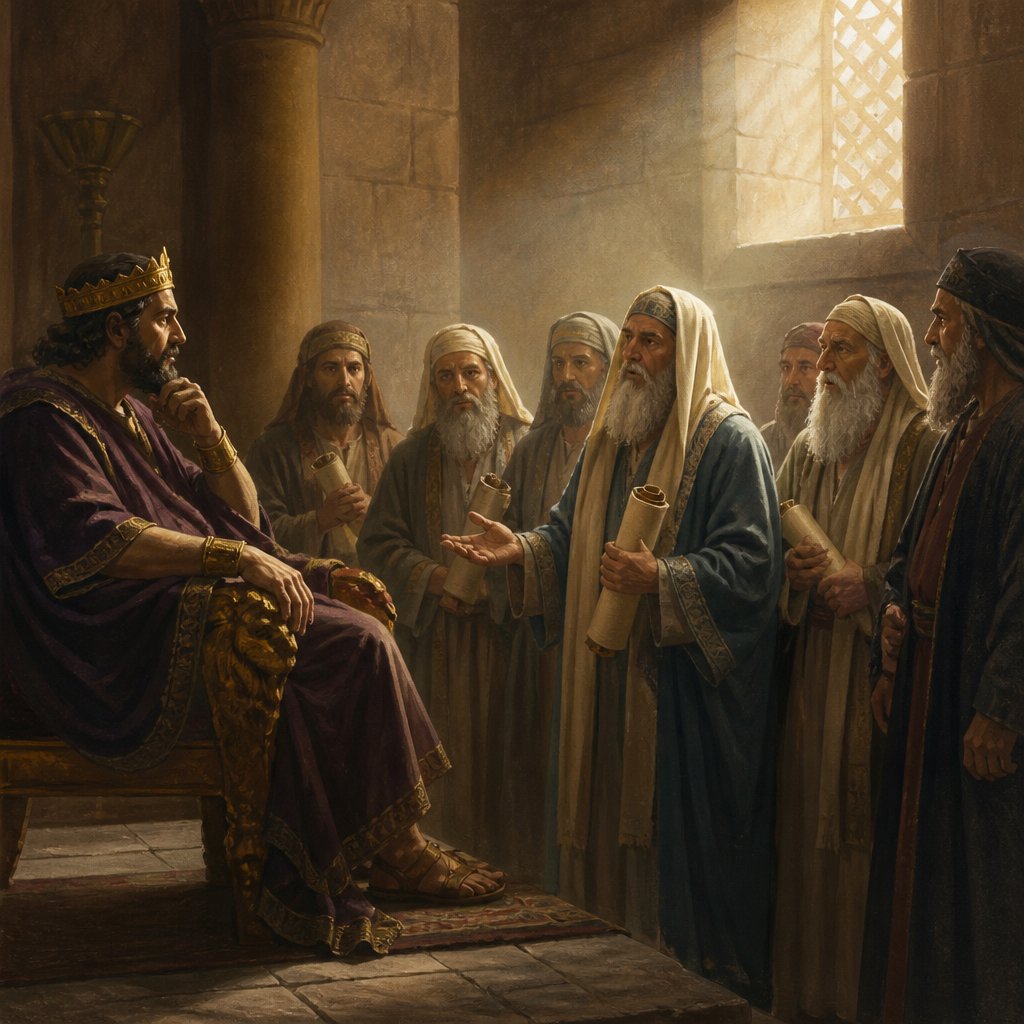
Matthew 2:4 (KJV) reads, "And when he had gathered all the chief priests and scribes of the people together, he demanded of them where Christ should be born."
This verse is found in the second chapter of the Gospel of Matthew, which focuses on the events surrounding the birth of Jesus and the early years of his life. In this particular passage, Herod, the king of Judea, is troubled by the news of the birth of Jesus, the prophesied Messiah. In an attempt to eliminate the potential threat to his reign, Herod gathers the chief priests and scribes of the people and demands to know where the Christ should be born.
The primary theme of this verse is the fulfillment of prophecy. The scribes and chief priests were able to provide Herod with the answer he sought because they were familiar with the prophecies of the Old Testament. Specifically, the prophet Micah had foretold that the Messiah would be born in Bethlehem, which the scribes and chief priests were able to confirm for Herod. This theme of prophecy fulfillment is crucial in establishing Jesus as the long-awaited Messiah and demonstrating the divine nature of his birth.
Another important theme in this verse is the contrast between earthly power and divine authority. Herod, as the king of Judea, held significant political power and sought to maintain his position by eliminating any potential threats. However, the scribes and chief priests, who were knowledgeable about the prophecies concerning the Messiah, held a different kind of authority. Their authority was derived from their understanding of God's word and their role as spiritual leaders. This interaction highlights the tension between human authority and divine sovereignty, as well as the ultimate authority of God's plan.
The context of this verse is essential for understanding its significance. The wise men from the East had come to Jerusalem seeking the newborn King of the Jews, as they had seen his star in the east and followed it to worship him. This news troubled Herod and all of Jerusalem with him. Herod's reaction to the news of a newborn king reveals his fear and insecurity, as he saw this child as a potential threat to his own power and authority. It also sets the stage for the tragic events that would follow, including the massacre of the innocents in Bethlehem as Herod sought to ensure the elimination of any potential rival to his throne.
In terms of symbolism, this verse represents the clash of spiritual forces. On one hand, there is the tyrannical power of Herod, representing the flawed and corrupt nature of human authority. On the other hand, there is the wisdom and knowledge of the scribes and chief priests, representing the divine authority of God's word and the fulfillment of prophecy. The contrast between these two forces serves to highlight the inevitability of God's plan and the futility of human attempts to thwart it.
Overall, Matthew 2:4 is a pivotal verse in the Gospel of Matthew, as it sets the stage for the unfolding of the events surrounding the birth of Jesus. It also serves to establish Jesus as the long-awaited Messiah, fulfilling the prophecies of the Old Testament. This verse highlights the themes of prophecy fulfillment, the clash of spiritual forces, and the contrast between human and divine authority. Its significance lies in its contribution to the overall narrative of Jesus' birth and the establishment of his identity as the Son of God.
Have questions about Matthew 2:4?
Dive deeper into this scripture with Bible Chat — an AI-powered tool for exploring God's Word through conversation. Ask questions, get context, and grow in your understanding of the Bible.
Get Our Apps


Matthew 2:4 Artwork

Matthew 2:4 - "And when he had gathered all the chief priests and scribes of the people together, he demanded of them where Christ should be born."
"And when he had gathered all the chief priests and scribes of the people together, he demanded of them where Christ should be born." - Matthew 2:4

Matthew 2:3-4

Matthew 2:3-4

Matthew 2:3-4

Matthew 2:3-4

Matthew 10:2-4…Matthew 10:2-4 New International Version 2 These are the names of the twelve apostles: first, Simon (who is called Peter) and his brother Andrew; James son of Zebedee, and his brother John; 3 Philip and Bartholomew; Thomas and Matthew the tax collector; James son of Alphaeus, and Thaddaeus; 4 Simon the Zealot and Judas Iscariot, who betrayed him.

Matthew 10:2-4…Matthew 10:2-4 New International Version 2 These are the names of the twelve apostles: first, Simon (who is called Peter) and his brother Andrew; James son of Zebedee, and his brother John; 3 Philip and Bartholomew; Thomas and Matthew the tax collector; James son of Alphaeus, and Thaddaeus; 4 Simon the Zealot and Judas Iscariot, who betrayed him.

Matthew 4:2 - "And when he had fasted forty days and forty nights, he was afterward an hungred."

Matthew 4:10

Matthew 4:1

Matthew 6:4
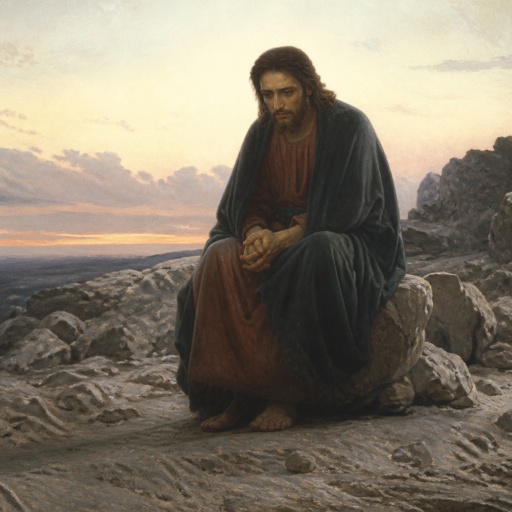
"And when he had fasted forty days and forty nights, he was afterward an hungred." - Matthew 4:2

Matthew 8:1-4

Matthew 5:4 - "Blessed are they that mourn: for they shall be comforted."

Matthew 4:20 - "And they straightway left their nets, and followed him."

Matthew 25:4 - "But the wise took oil in their vessels with their lamps."

Matthew 2:1-2

Matthew 4:4 - "But he answered and said, It is written, Man shall not live by bread alone, but by every word that proceedeth out of the mouth of God."

Matthew 4:22 - "And they immediately left the ship and their father, and followed him."

Matthew 4:14 - "That it might be fulfilled which was spoken by Esaias the prophet, saying,"

Matthew 26:4 - "And consulted that they might take Jesus by subtilty, and kill him."

Matthew 4:1 - "Then was Jesus led up of the Spirit into the wilderness to be tempted of the devil."

Matthew 14:4 - "For John said unto him, It is not lawful for thee to have her."

Matthew 28:4 - "And for fear of him the keepers did shake, and became as dead men."

Matthew 21:4 - "All this was done, that it might be fulfilled which was spoken by the prophet, saying,"

Matthew 10:4 - "Simon the Canaanite, and Judas Iscariot, who also betrayed him."

Matthew 2:23

Matthew 2:9

Matthew 2:13