What does Matthew 28:6 mean?
"He is not here: for he is risen, as he said. Come, see the place where the Lord lay." - Matthew 28:6
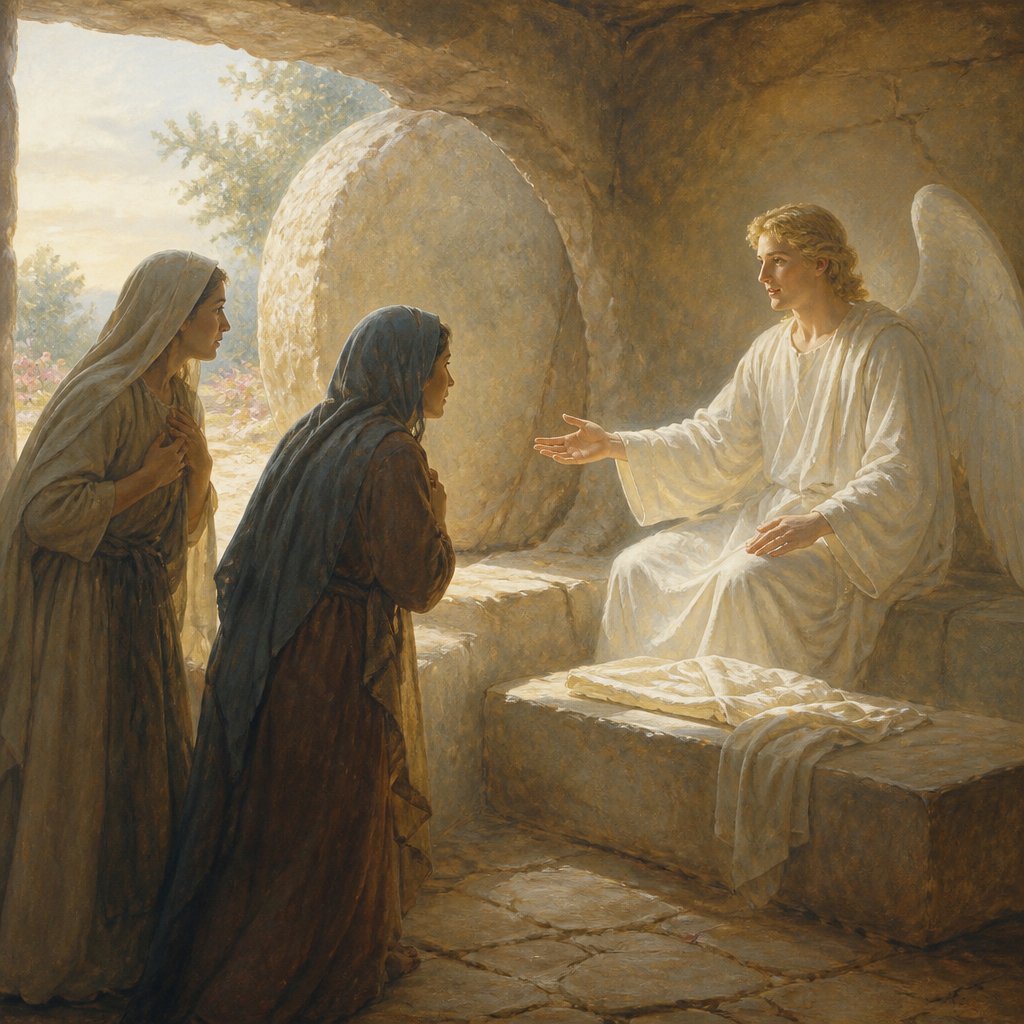
Matthew 28:6 in the King James Version reads, “He is not here: for he is risen, as he said. Come, see the place where the Lord lay.” It stands at the doorway between the sorrow of the crucifixion and the proclamation that changes everything: Jesus Christ, who truly died and was truly buried, is no longer among the dead. The verse is spoken at the sepulchre on the first day of the week, when the women come seeking Jesus, expecting to find a sealed tomb and a body to mourn over. Instead, the messenger of God answers their fear and confusion with a declaration and an invitation. The meaning of the verse unfolds through both of those movements: first, the announcement of the resurrection, and then the call to verify the emptiness of the grave.
The immediate context is the morning after the sabbath, when “Mary Magdalene and the other Mary” come “to see the sepulchre.” The preceding scenes in Matthew have emphasized the certainty of Jesus’ death, the reality of his burial, and the efforts of men to keep him in the tomb. Matthew records that the chief priests and Pharisees remembered Jesus’ words about rising again, and therefore secured the sepulchre with a stone, with a seal, and with a watch. That background matters for Matthew 28:6 because it highlights that the empty tomb is not presented as a private religious impression but as a public fact set in the open light of opposition, guarded by human authority. The sentence “He is not here” is not a poetic way of saying Jesus lives on in memory; it is a literal statement about the absence of his body from the place where it had been laid.
The first theme in the verse is triumph over death. “For he is risen” proclaims that death did not hold Jesus. In Matthew’s Gospel, Jesus had spoken repeatedly of his coming suffering, death, and resurrection, and the verse draws attention to that purposefulness with the phrase “as he said.” The resurrection is not an unexpected turn that rescues a failed mission; it is the fulfillment of Jesus’ own words and therefore the confirmation that his identity and authority are true. The one who foretold his rising has done what he promised. That detail turns the resurrection into a seal upon all his teaching: if he is risen “as he said,” then his words carry the weight of divine truth, and his claims are not empty.
A second theme is faith anchored in God’s promise. “As he said” connects the events at the sepulchre to the earlier sayings of Christ, and therefore to the reliability of God’s word. The women came looking for the dead because death seems final, but the angel directs them to remember the speech of Jesus. In Scripture, remembrance is often the bridge between fear and faith. The resurrection does not ask the hearers to believe without ground; it points them to the prior promise, showing that God’s acts are consistent with God’s word. In that light Matthew 28:6 becomes a witness that the gospel is not merely a moral system but a history of fulfillment: what was spoken has been done.
A third theme is the reversal of human expectation. “He is not here” shocks the natural assumption that the grave is the end. The women’s presence at the tomb is an act of devotion, but it also reveals their expectation of decay and loss. The verse overturns that expectation and shows that God’s power exceeds both human grief and human control. The sealed stone, the posted watch, and the fear of the authorities all testify that men can confine a corpse, but they cannot confine the Lord of life. In Matthew’s narrative, the empty tomb silently answers both Roman force and religious hostility: the kingdom of God is not stopped by the apparatus of death.
The symbolism in the verse is also rich. The sepulchre represents the realm of the dead, the place where hopes are buried and where human strength ends. The announcement that Jesus is not there means that the dominion of death has been breached. When the messenger adds, “Come, see the place where the Lord lay,” the symbolism becomes even sharper: the place remains, the grave remains, the evidence remains, but the Lord is not contained by it. The tomb is transformed from a monument to defeat into a witness of victory. It is “the place where the Lord lay,” not the place where the Lord remains. Even the wording “the Lord” is significant, for it identifies the crucified and buried Jesus as the sovereign one; the same Jesus who submitted to death is nonetheless Lord, and therefore his rising is not merely a return to life but an exaltation that reveals his true rank.
The invitation “Come, see” also carries meaning. Christianity in Matthew is not presented as a faith that avoids examination. The messenger does not merely announce; he beckons the women to look. It is a call from fear into assurance, from rumor into sight, from confusion into witness. By inviting them to see the place where Jesus lay, the verse establishes them as responsible witnesses of what God has done. They are not told to invent comfort for themselves, but to observe that the burial place is empty. This also prepares for the next command in the passage, where they are sent to tell the disciples. The verse therefore functions as a hinge: it moves the story from private sorrow to public testimony. The women came to the tomb as mourners; they will leave it as messengers.
Matthew 28:6 also carries theological significance within the whole Gospel. The crucifixion in Matthew is portrayed as the climax of rejection and suffering, yet Jesus’ death is not presented as meaningless tragedy. The resurrection vindicates him and confirms that his death is part of God’s saving design. While the verse itself does not explain atonement in detail, it stands as God’s declaration that the one who died is the one God has raised, and therefore his cross is not the end of his mission. In Matthew’s storyline, Jesus is “Emmanuel, which being interpreted is, God with us.” The resurrection is the ultimate statement that Emmanuel is not overcome by the world’s worst violence; God is still with his people, and the Lord who laid down his life is alive again.
Finally, the verse has enduring significance for hope. By stating that Jesus is risen, it declares that death is not ultimate for him, and therefore not ultimate for those who belong to him. The empty tomb becomes the foundation for Christian confidence in God’s power, the trustworthiness of Christ’s words, and the certainty that God can turn places of despair into places of testimony. Matthew 28:6 does not allow the reader to keep Jesus as a merely noble martyr; it confronts the reader with the living Lord. The place where the Lord lay is shown, not to preserve a shrine of loss, but to announce that the Lord has left the grave behind and calls others out of fear into faith.
Have questions about Matthew 28:6?
Dive deeper into this scripture with Bible Chat — an AI-powered tool for exploring God's Word through conversation. Ask questions, get context, and grow in your understanding of the Bible.
Get Our Apps


Matthew 28:6 Artwork

Matthew 28:6 - "He is not here: for he is risen, as he said. Come, see the place where the Lord lay."
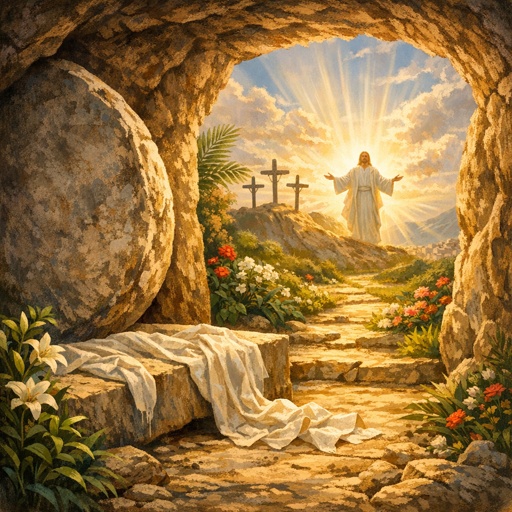
"He is not here: for he is risen, as he said. Come, see the place where the Lord lay." - Matthew 28:6
"He is not here: for he is risen, as he said. Come, see the place where the Lord lay." - Matthew 28:6

Matthew 6:28 - "And why take ye thought for raiment? Consider the lilies of the field, how they grow; they toil not, neither do they spin:"

Matthew 6:28-29 - "And why do you worry about clothes? See how the flowers of the field grow. They do not labor or spin. Yet I tell you that not even Solomon in all his splendor was dressed like one of these."

matthew 28:19

matthew 28:19

Matthew 28:5-6 - "The angel said to the women, “Do not be afraid, for I know that you are looking for Jesus, who was crucified. He is not here; he has risen, just as he said. Come and see the place where he lay."

MATTHEW 28: 23

Matthew 23:28

matthew 8:28

Matthew 28:11

Matthew 23:28

Matthew 28:19-20

Matthew 6:6

Matthew 28:19-20

Matthew 28: 19-20

Matthew 28:19-20
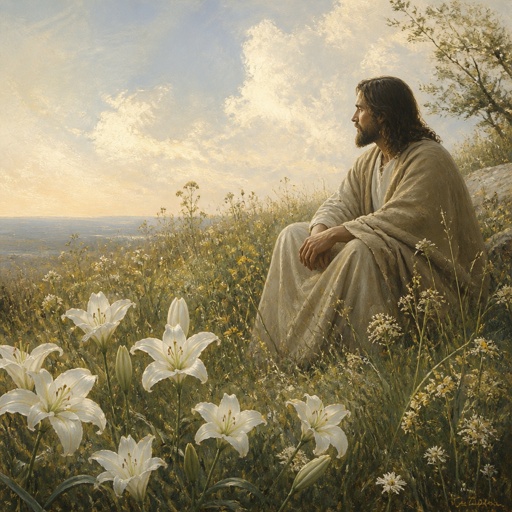
"And why take ye thought for raiment? Consider the lilies of the field, how they grow; they toil not, neither do they spin:" - Matthew 6:28

Matthew 24:28 - "For wheresoever the carcase is, there will the eagles be gathered together."

Matthew 27:28 - "And they stripped him, and put on him a scarlet robe."

Matthew 28:17 - "And when they saw him, they worshipped him: but some doubted."

Matthew 28:3 - "His countenance was like lightning, and his raiment white as snow:"

Matthew 28:4 - "And for fear of him the keepers did shake, and became as dead men."

Matthew 28:14 - "And if this come to the governor's ears, we will persuade him, and secure you."

Matthew 26:28 - "For this is my blood of the new testament, which is shed for many for the remission of sins."

Matthew 6:23

Matthew 22:28 - "Therefore in the resurrection whose wife shall she be of the seven? for they all had her."

Matthew 12:28 - "But if I cast out devils by the Spirit of God, then the kingdom of God is come unto you."

Matthew 18:6