What does Matthew 28:20 mean?
"Teaching them to observe all things whatsoever I have commanded you: and, lo, I am with you alway, even unto the end of the world. Amen." - Matthew 28:20
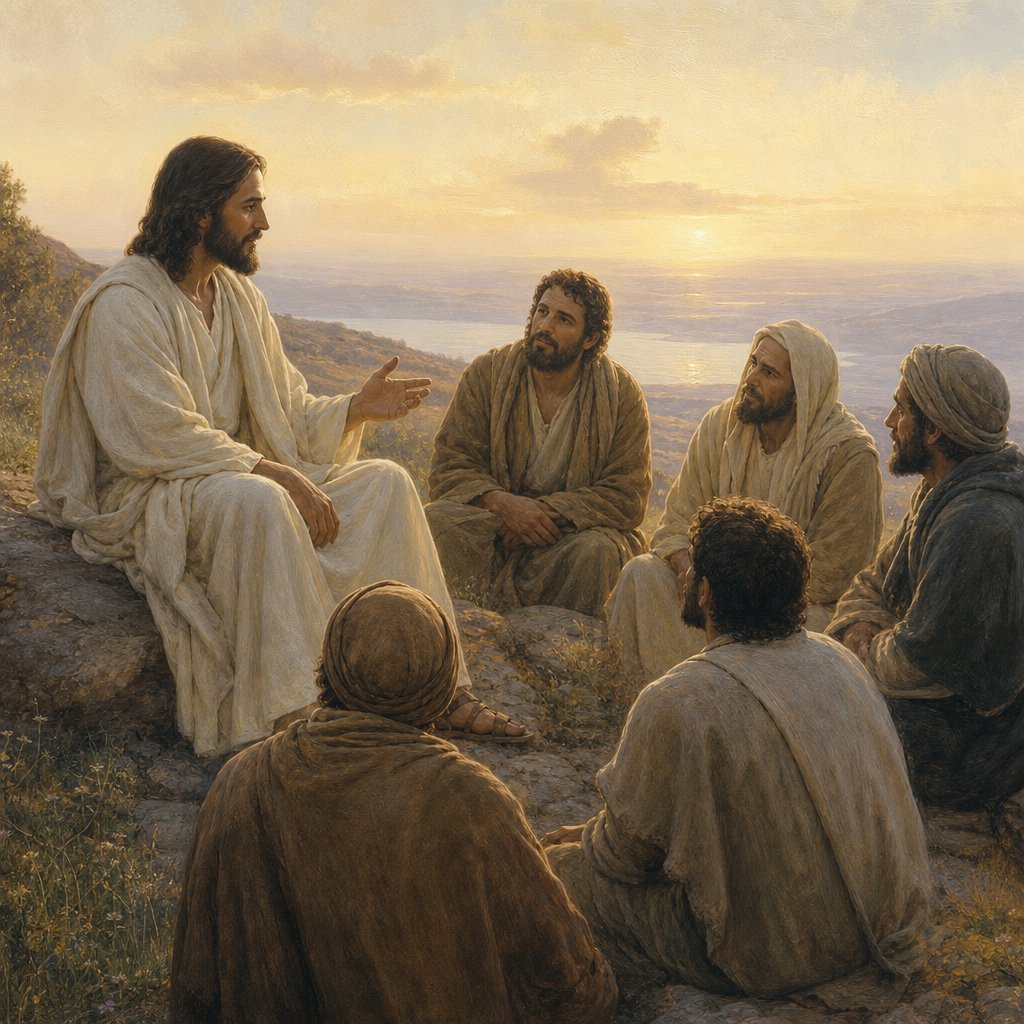
Matthew 28:20 in the King James Version reads, “Teaching them to observe all things whatsoever I have commanded you: and, lo, I am with you alway, even unto the end of the world. Amen.” It stands at the close of Matthew’s Gospel, not as a detached promise but as the final note of the risen Christ’s commission to his disciples. The verse is the culmination of a scene charged with resurrection authority: Jesus, having conquered death, speaks as Lord, and his words gather up the whole direction of Christian discipleship—what it is, how it is sustained, and why it endures.
The immediate context is the Great Commission. Just before this line, Jesus declares, “All power is given unto me in heaven and in earth,” and he commands his followers to “teach all nations” and to baptize “in the name of the Father, and of the Son, and of the Holy Ghost.” Matthew 28:20 completes the thought by describing what the mission looks like in lived practice: it is not merely the spreading of information or the making of converts, but “teaching them to observe all things whatsoever I have commanded you.” The word “observe” is the hinge of the sentence, because it moves the focus from hearing to doing, from admiration to obedience, from a moment of decision to a way of life. In Matthew’s Gospel, Jesus has been presented as the authoritative teacher—seen in the Sermon on the Mount and in repeated moments where he contrasts mere outward religion with inward righteousness—so it is fitting that his last instruction is that his own commands must be kept. The disciples are not sent to invent a new message, nor to teach their preferences, but to pass on what he “commanded,” which implies both continuity and authority. The significance is that Christianity, in Matthew’s framing, is not only confession but apprenticeship: a life shaped by the words and ways of Christ.
At the same time, this command to teach obedience is balanced—indeed, made possible—by the promise that follows: “and, lo, I am with you alway.” The “lo” functions like a signal flare in the narrative, calling attention to the weight of what is being said. Jesus does not merely send; he accompanies. The disciples are commissioned outward into “all nations,” but they are not cast off from the presence of their Lord. This is especially meaningful in Matthew because of the Gospel’s opening symbolism. Early in the book, Jesus is identified as “Emmanuel,” which Matthew interprets as “God with us.” The final verse echoes that opening name without repeating it, showing that the story’s beginning and end are held together by the same theme: God’s nearness in Christ. The promise “I am with you” is not simply emotional comfort; it is the theological center of the mission. The One who commands is the One who remains present, not intermittently, not only in moments of triumph, but “alway”—in ordinary days, in danger, in exile, in growth, in failure and restoration, in the long labor of teaching others to keep what Christ has said.
The phrase “even unto the end of the world” sets the horizon of that presence. In KJV language, “world” here carries the sense of an age reaching its appointed conclusion, so the promise stretches as far as time itself stretches within God’s plan. The disciples standing on the mount in Galilee would not live to see the whole course of the church’s future, yet the promise is intentionally larger than their lifespan. It tells them that the mission is not a temporary campaign but a sustained work that continues through generations, under the same faithful presence of Christ. The verse therefore binds together immediacy and endurance: Jesus is with them now, and he will be with his people until history reaches its God-appointed boundary.
Symbolically, the verse also gathers up Matthew’s recurring mountain imagery. Matthew often places decisive revelations on mountains: teaching, transfiguration, and now commissioning. The mountain becomes a kind of literary sign of divine authority and covenant instruction, recalling how God’s purposes are often declared from heights in Scripture. From that place, the disciples are directed outward to the nations, suggesting a movement from concentrated revelation to worldwide witness. Yet the heart of that outward movement is not geographic expansion for its own sake; it is the reproduction of obedient discipleship—people learning to “observe” Christ’s commands—and the assurance that Christ’s presence sanctifies and empowers that work.
There is also a covenantal undertone in the structure of the sentence. Christ gives commands, as a king gives statutes, but he also pledges presence, as God pledged to be with his servants throughout Scripture. In this light, the verse is not simply an ending; it is a foundation. The church’s teaching is anchored in “whatsoever I have commanded you,” guarding it from drifting into mere human tradition, and the church’s courage is anchored in “I am with you alway,” guarding it from collapsing under the weight of its assignment. The “Amen” seals the statement with solemn finality, not as a casual sign-off, but as a confirmation that what has been spoken is sure.
The meaning of Matthew 28:20, then, is that the risen Jesus commissions his followers to form lives of obedience around his own commands, and he underwrites that lifelong, world-reaching task with the unbroken promise of his presence until the close of the age. It is both duty and comfort, command and companionship, mission and assurance, and it brings Matthew’s Gospel to a close by returning to its opening claim: in Jesus Christ, God is truly with his people.
Have questions about Matthew 28:20?
Dive deeper into this scripture with Bible Chat — an AI-powered tool for exploring God's Word through conversation. Ask questions, get context, and grow in your understanding of the Bible.
Get Our Apps


Matthew 28:20 Artwork

Matthew 28:20 - "Teaching them to observe all things whatsoever I have commanded you: and, lo, I am with you alway, even unto the end of the world. Amen."

"Teaching them to observe all things whatsoever I have commanded you: and, lo, I am with you alway, even unto the end of the world. Amen." - Matthew 28:20

Matthew 28:20 - "Teaching them to observe all things whatsoever I have commanded you: and, lo, I am with you alway, even unto the end of the world. Amen."

"Teaching them to observe all things whatsoever I have commanded you: and, lo, I am with you alway, even unto the end of the world. Amen." - Matthew 28:20
"Teaching them to observe all things whatsoever I have commanded you: and, lo, I am with you alway, even unto the end of the world. Amen." - Matthew 28:20

Matthew 28:19-20

Matthew 28:19-20

Matthew 28: 19-20

Matthew 28:19-20

Matthew 20:28 - "Even as the Son of man came not to be ministered unto, but to minister, and to give his life a ransom for many."

"Even as the Son of man came not to be ministered unto, but to minister, and to give his life a ransom for many." - Matthew 20:28

"Even as the Son of man came not to be ministered unto, but to minister, and to give his life a ransom for many." - Matthew 20:28

Matthew 28:19-20 - "Therefore go and make disciples of all nations, baptizing them in the name of the Father and of the Son and of the Holy Spirit, and teaching them to obey everything I have commanded you. And surely I am with you always, to the very end of the age."

matthew 28:19

matthew 28:19

Matthew 20:26-28 - "It shall not be so among you. But whoever would be great among you must be your servant, and whoever would be first among you must be your slave, even as the Son of Man came not to be served but to serve, and to give his life as a ransom for many."

MATTHEW 28: 23

Matthew 23:28

matthew 8:28

Matthew 28:11

Matthew 23:28

Genesis 28-20

Luke 20:28

2 Chronicles 20:28

Matthew 24:28 - "For wheresoever the carcase is, there will the eagles be gathered together."

Matthew 18:20

Matthew 17:20

Matthew 27:28 - "And they stripped him, and put on him a scarlet robe."

matthew 20:3

Matthew 18:20