What does Matthew 28:18 mean?
"And Jesus came and spake unto them, saying, All power is given unto me in heaven and in earth." - Matthew 28:18
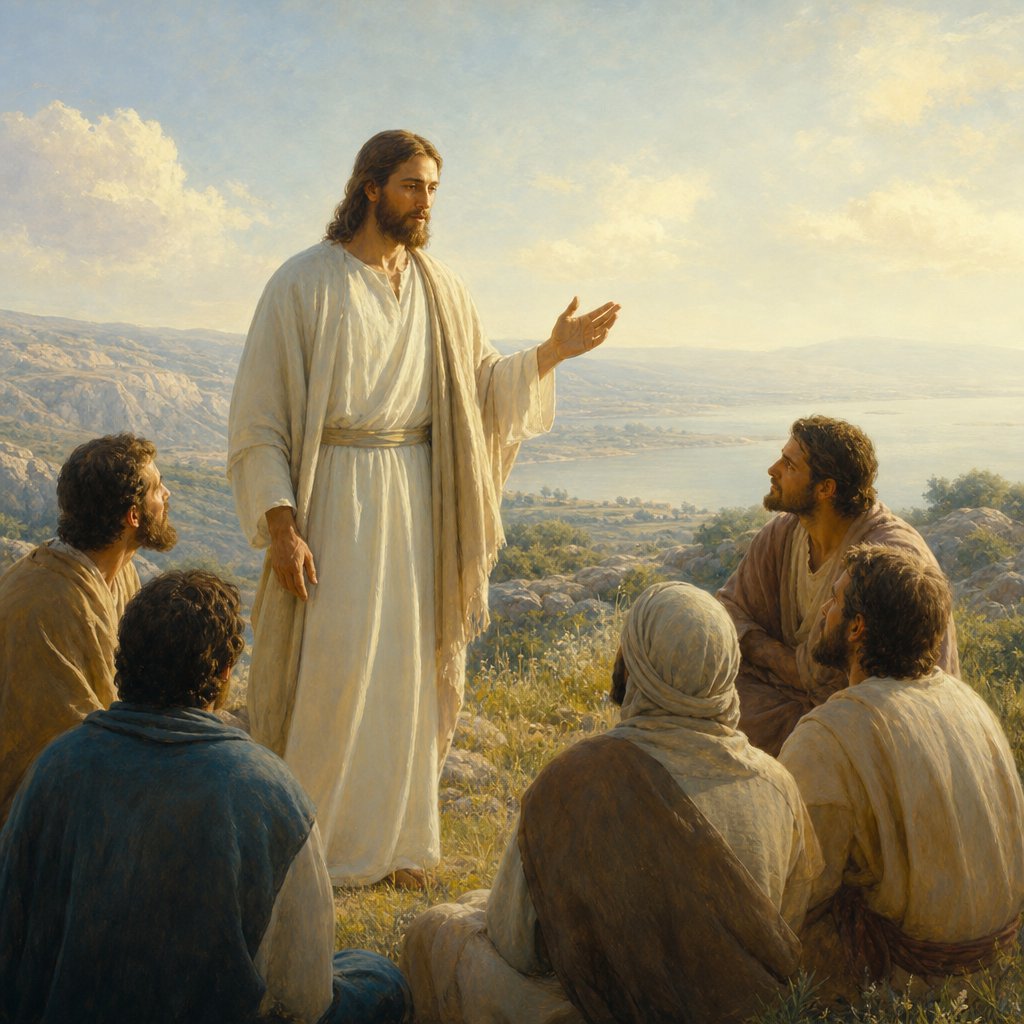
“Matthew 28:18” in the King James Version reads: “And Jesus came and spake unto them, saying, All power is given unto me in heaven and in earth.”
This sentence stands at the threshold between the resurrection and the commission. It is spoken by the risen Christ, not as a teacher still moving toward his hour, but as the One who has passed through death and now addresses his disciples from the vantage point of accomplished redemption. The verse is set on a mountain in Galilee, a setting that in Scripture often signals revelation, covenant, and divine authority. Jesus “came and spake unto them,” a simple phrase that carries the tenderness of nearness and the weight of majesty: he closes the distance, draws near to those who will be sent out, and grounds their future work in what is now true about him.
The heart of the verse is the declaration, “All power is given unto me.” In the language of the KJV, “power” is not merely physical force or influence; it carries the sense of authority, right, and rule. Jesus is announcing that the final say over all things belongs to him. Yet he frames it as a gift received: “is given unto me.” This does not weaken his divinity; rather, it highlights the order of salvation and the mission of the Son. The One who eternally is the Son has, as the incarnate Redeemer, fulfilled obedience, borne judgment, risen in victory, and now stands publicly invested with royal authority. The phrase reveals a profound theme of Scripture: God’s kingdom is not seized by human ambition but bestowed according to God’s covenant purpose. The resurrected Christ speaks as the rightful King whose reign is confirmed and conferred in the accomplishment of his saving work.
When Jesus says “All,” the scope is deliberately without remainder. There is no corner of reality outside this grant. This totality matters because the next words (in the verses that follow) will send the disciples outward to all nations; the mission’s reach is matched by Christ’s reign. The church does not go forth on the strength of its own wisdom, numbers, or cultural power, but on the basis that Christ already possesses universal authority. The verse therefore functions like the foundation stone of Christian witness: the gospel is proclaimed not as one opinion among many, but as the message of the enthroned Christ.
The paired realms, “in heaven and in earth,” deepen the claim by spanning the entire created order. “Heaven” represents the invisible sphere: the dwelling of God, the realm of angels, and the spiritual dominion where God’s throne is acknowledged without dispute. “Earth” represents the visible and historical sphere: nations, rulers, institutions, daily life, and the concrete circumstances in which disciples will suffer, labor, and die. By joining these together, the verse asserts a cosmic kingship. Jesus’ authority is not restricted to the “religious” realm or to private spirituality; it is not confined to Israel’s land or to the disciples’ small circle. It covers the unseen battles and the seen empires, the interior world of conscience and the exterior world of events. The risen Christ claims sovereignty over both the spiritual and the material, over worship and politics, over destiny and history.
There is symbolism and irony in the way this authority is presented. The One who was rejected by earthly authorities now declares authority over earth; the One who was condemned under human courts now speaks as judge and king. The cross looked like the stripping away of power, but the resurrection reveals that what appeared as weakness was the very pathway to dominion. In that sense the verse gathers up the entire Gospel narrative and turns it into a royal proclamation. The crucified Nazarene is not merely vindicated; he is enthroned. The disciples, who had fled and faltered, are now addressed by the victorious Lord; their frailty will be met by his sufficiency.
The wording “is given unto me” also points to the harmony within the Godhead and the fulfillment of divine promise. Authority is “given” in a way that echoes the Scriptures’ portrayal of God granting dominion to his appointed king. Without needing to quote elsewhere, the idea resonates with the biblical pattern of an anointed ruler receiving kingdom authority from God. Matthew’s Gospel in particular has traced Jesus as the promised King, “Emmanuel,” and the true Son. Now, after resurrection, the story’s royal thread comes to its summit: the Messiah’s reign is not delayed or merely future; it is declared as present reality.
In immediate context, this verse is the opening line of Jesus’ final charge to his disciples. It explains why they can go, why they can teach, why they can baptize, why they can expect his continuing presence. If “all power” belongs to him, then the mission is not ultimately a human project; it is an extension of his own authority into the world. Their obedience is not an attempt to make Jesus Lord; it is submission to the Lord who already reigns. The verse therefore calls for worship as much as for work: before there is outward action, there is inward recognition of who Jesus is.
The significance of Matthew 28:18, then, is that it announces the risen Christ’s universal, granted, and comprehensive authority, spanning heaven and earth, standing as the theological hinge between resurrection and worldwide mission. It assures the disciples that the One who sends them is not merely alive again but reigning. It confronts every rival claim to ultimate power, comforts believers facing hostile realities on earth, and anchors Christian proclamation in the kingship of Jesus Christ as the final authority over all creation.
Have questions about Matthew 28:18?
Dive deeper into this scripture with Bible Chat — an AI-powered tool for exploring God's Word through conversation. Ask questions, get context, and grow in your understanding of the Bible.
Get Our Apps


Matthew 28:18 Artwork

Matthew 28:18 - "And Jesus came and spake unto them, saying, All power is given unto me in heaven and in earth."
"And Jesus came and spake unto them, saying, All power is given unto me in heaven and in earth." - Matthew 28:18
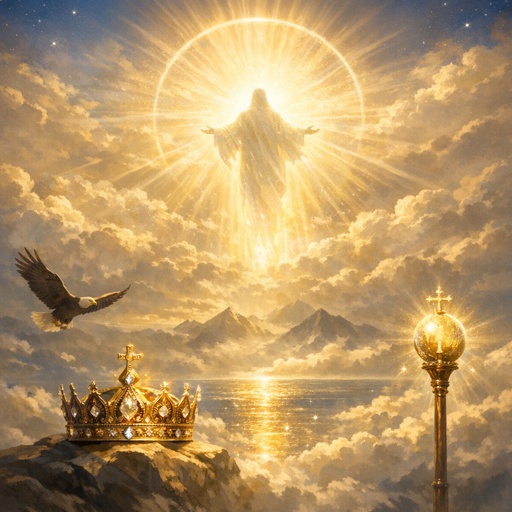
"And Jesus came and spake unto them, saying, All power is given unto me in heaven and in earth." - Matthew 28:18

Matthew 28:18-20 - "And Jesus came and said to them, 'All authority in heaven and on earth has been given to me. Go therefore and make disciples of all nations, baptizing them in the name of the Father and of the Son and of the Holy Spirit, teaching them to observe all that I have commanded you. And behold, I am with you always, to the end of the age.'"
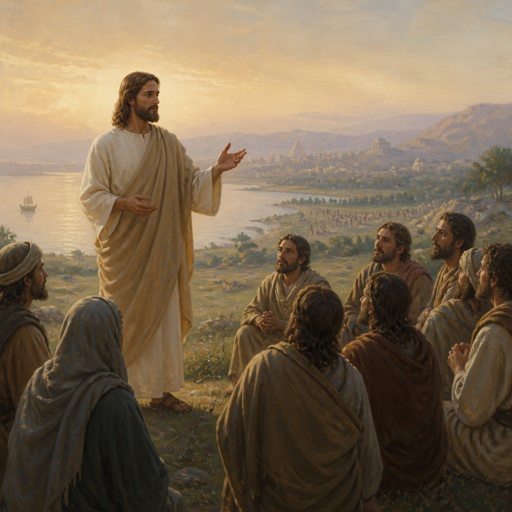
"And Jesus came and said to them, 'All authority in heaven and on earth has been given to me. Go therefore and make disciples of all nations, baptizing them in the name of the Father and of the Son and of the Holy Spirit, teaching them to observe all that I have commanded you. And behold, I am with you always, to the end of the age.'" - Matthew 28:18-20
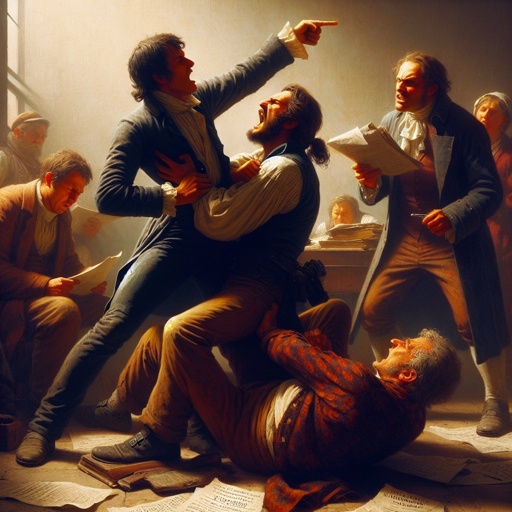
Matthew 18:28 - "But the same servant went out, and found one of his fellowservants, which owed him an hundred pence: and he laid hands on him, and took him by the throat, saying, Pay me that thou owest."

matthew 28:19

matthew 28:19

MATTHEW 28: 23

Matthew 23:28

matthew 8:28

Matthew 28:11

Matthew 23:28

Genesis 18-28

Matthew 28:19-20

Genesis 28:18

Genesis 28:18

Matthew 28:19-20

Matthew 28: 19-20

Matthew 28:19-20

Matthew 24:28 - "For wheresoever the carcase is, there will the eagles be gathered together."
![Matthew 18:28
“But when that servant went out, he found one of his fellow servants who owed him a hundred silver coins.[a] He grabbed him and began to choke him. ‘Pay back what you owe me!’ he demanded.](https://media.bible.art/0a749226-a6ff-4bd4-a473-04c4db45c2c9-thumbnail.jpg)
Matthew 18:28 “But when that servant went out, he found one of his fellow servants who owed him a hundred silver coins.[a] He grabbed him and began to choke him. ‘Pay back what you owe me!’ he demanded.

Matthew 18:6

Matthew 27:28 - "And they stripped him, and put on him a scarlet robe."

Matthew 18:10

Matthew 18:6

Matthew 18:20

Matthew 6:18

Matthew 28:17 - "And when they saw him, they worshipped him: but some doubted."

Matthew 6:18